
Water level of Mettur Dam decreased, situation changed due to less inflow of water.
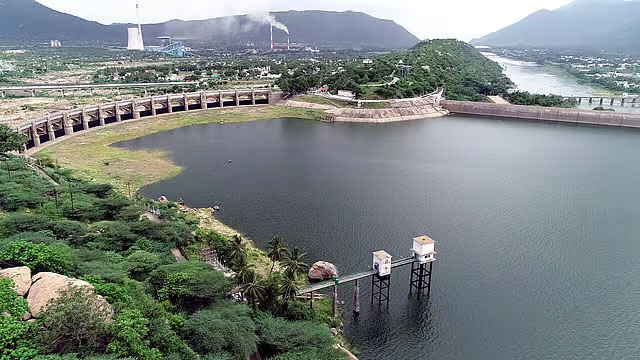
Tamil Nadu: The Mettur Dam recorded a decline in its water level on Saturday (June 27). Inflows into the dam remained at 193 cubic feet per second for the second consecutive day, while water discharges from the dam are being maintained at a rate of 1,000 cubic feet per second to meet drinking water needs. The dam’s water level is gradually decreasing due to the increasing difference between inflows and outflows.
According to information received, the Mettur Dam’s water level decreased from 79.09 feet to 79.00 feet on Saturday morning. This decrease was recorded due to lower inflows and higher outflows. According to officials, water flow into the dam remains relatively low, while water is being released continuously to meet needs.
Water being withdrawn from the Mettur Dam is primarily used for drinking water supply. To maintain the water supply system in the area, water is being released from the dam at a rate of 1,000 cubic feet per second. However, water inflow from natural sources and upstream remains stable at only 193 cubic feet per second, significantly lower than the discharge. This is why the water level is declining.
The dam’s total water storage is currently reported to be 40.96 TMC (Thousand Million Cubic Feet). This water reservoir is considered vital for the region’s irrigation and drinking water needs. However, due to the current situation, low inflow and high discharge, the water level is constantly fluctuating.
The local administration and the Water Resources Department are constantly monitoring the dam’s situation. Experts believe that if there is no rainfall in the catchment areas or water flow does not improve in the coming days, the water level may decline further. However, the situation is currently under control and drinking water supply has not been disrupted.
Mettur Dam is a major reservoir on the Cauvery River, playing a vital role in irrigation and drinking water supply in Tamil Nadu. Agricultural activities in the areas connected to this dam also depend heavily on this water supply. Consequently, changes in water levels can directly impact local farmers and the general public.
Currently, officials have stated that water supply is being prioritized and water is being managed as needed. Water storage in the dam remains at 40.96 TMC, which is considered sufficient for the time being, but the long-term situation will depend on rainfall and inflows.
The administration has also indicated that water levels will be regularly monitored in the coming days and changes in water discharges may be made as needed. Experts say that monsoon conditions and the amount of rainfall in the catchment areas will influence the dam’s water level in the future.
Overall, the current situation at Mettur Dam shows a decline in water levels due to an imbalance between inflows and outflows, but this is not considered a critical situation at this time. The administration is continuously monitoring the situation so that the water supply system remains normal.