
Chennai: The discussion has once again intensified regarding the report of excavation of important bush related to the ancient cultural heritage of Tamil Nadu. It is reported that the Tamil Nadu Archeology Department has decided to officially request the Archaeological Survey of India (ASI) to expeditiously complete the process of publishing the detailed research report of the Keezhadi excavation prepared by archaeologist Amarnath Ramakrishnan. The state government believes that making this report public will not only be historically important, but will also give a new direction to the study of ancient urban civilization in the Indian subcontinent.
According to the information, archaeologist Amarnath Ramakrishnan had submitted his detailed research report related to the Keezhadi excavation to the Archaeological Survey of India (ASI) in January 2023. In this report, many important findings are said to be presented on the basis of antiquities, structures, cultural remains and scientific analysis found during the excavation. However, even after the report was submitted, its official publication has not been done yet, due to which questions are being raised continuously among historians, archeology experts and Tamil cultural organizations.
It is being told that due to the report being pending for a long time, the Tamil Nadu Archeology Department has now decided to formally request the ASI to complete the process of examination and publication of the report at the earliest. The department believes that by making the research report public, evidence-based information will be available to the academic and scientific community and the ongoing debate on this topic will get a factual basis.
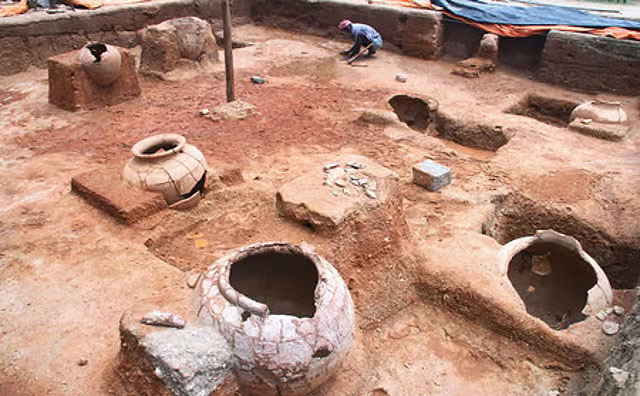
Keezhadi is an important archaeological site located near Madurai, where various phases of excavation work have been carried out over the years. During these excavations, structures made of bricks, drainage systems, earthen pots, beads, iron tools, craft remains, fragments of clay with inscriptions and many items used in daily life have been found. These discoveries have created new possibilities in the study of the ancient social and cultural structure of South India.
Experts related to the field of history and archeology believe that if Amarnath Ramakrishnan’s report is published, then clear information can be revealed from the scientific point of view on many important aspects related to the antiquity of Keezhadi civilization, its dating, urban development, business activities, craft traditions and social life. This is likely to provide a new basis to the study of the ancient urban tradition of the Tamil region at the international level.
There is special interest in the publication of the report because the findings related to Keezhadi excavation are considered very important in the study of the development of Tamil civilization. Many researchers believe that the evidence found here provides important clues about early urbanization, education, crafts, trade and cultural development in South India. However, a final assessment of these findings will be possible only after the detailed scientific report is made public.
According to sources, the Tamil Nadu Archeology Department believes that the research work is being affected by the inordinate delay in publishing the report. Universities, research institutes and independent historians are also unable to access the original findings. In such a situation, if the report is published soon, it will pave the way for wider academic discussion and further research.
Archaeological experts say that presenting the findings from any excavation to the scientific community is an important process of archaeological research. This also allows other experts to review the findings, conduct new studies, and present comprehensive historical analyzes based on the available evidence. Therefore, the publication of Keezhadi Report is not only an administrative process but is also considered very important from the academic point of view.
Various social and cultural organizations in Tamil Nadu have also raised the demand for making this report public from time to time. He says that if scientific evidence related to Keezhadi comes to light, it will give new strength to the study of the ancient history and cultural heritage of the Tamil region. At the same time, some experts also say that before accepting any historical conclusion, it is necessary to go through scientific review and established procedures.
Currently, the issue has gained momentum again with the Tamil Nadu Archeology Department preparing to make an official request to the Archaeological Survey of India. Now the eyes of historians, archaeologists, researchers and cultural organizations are fixed on the next step of ASI. If the report is published, it is expected that the scientific findings related to the Keezhadi excavation will be widely available and will provide an important basis for fresh research and discussion on the ancient civilization of South India and its historical development.


