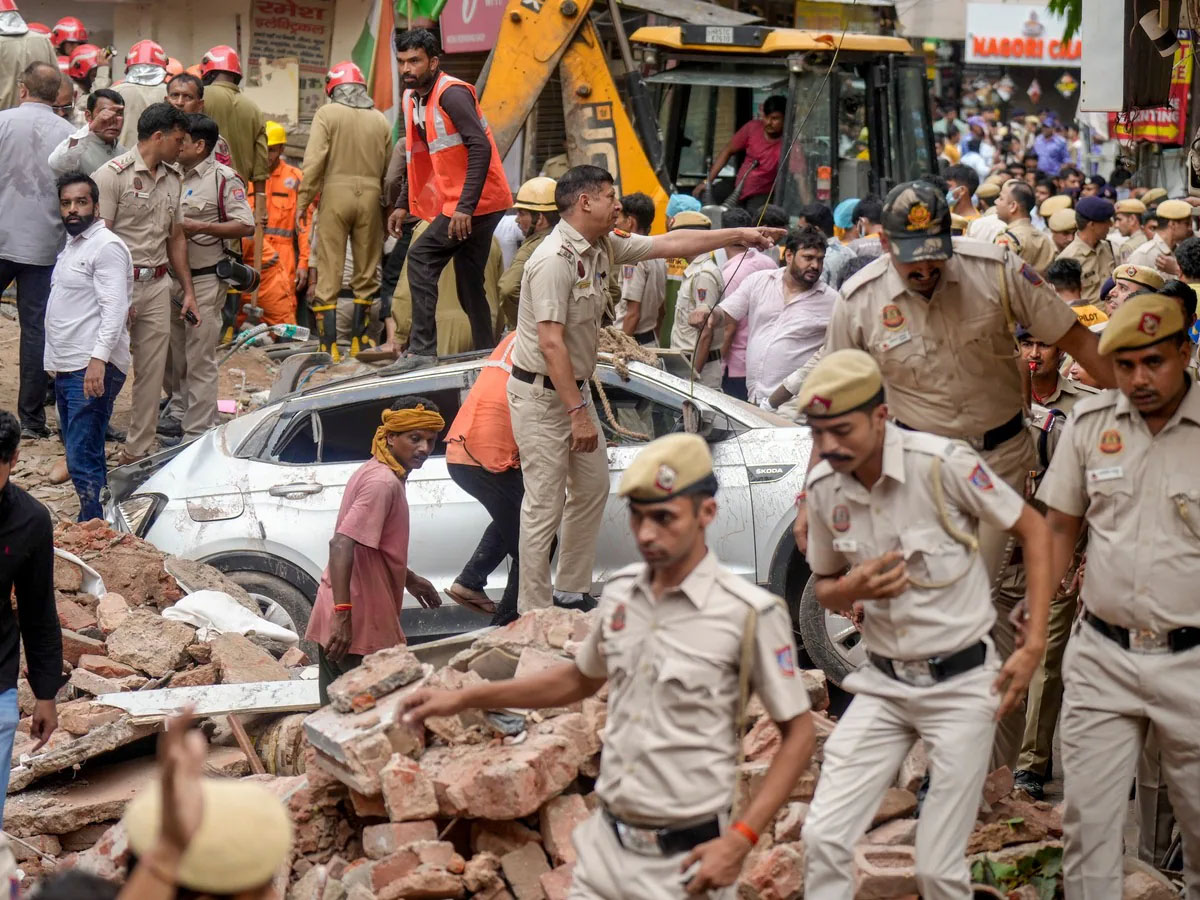
New Delhi. Serious questions have been raised regarding the functioning of government departments following the collapse of a multi-story hostel in Delhi’s Satya Niketan area, an incident that claimed the lives of seven people, including five students. The Delhi Police has now revealed that, about three months prior, they had expressed concerns regarding safety measures and potential fire hazards in the area’s buildings. The police had even written to the concerned administrative official advising immediate action in Satya Niketan; however, the warning was allegedly not heeded in time.
Last Sunday, a multi-story hostel in the Satya Niketan area suddenly collapsed, causing panic in the locality. A large number of students resided in the hostel. Upon receiving news of the accident, police, fire department personnel, and rescue teams rushed to the scene. A rescue operation was launched to retrieve those trapped under the debris, but seven individuals—including five students—could not be saved.
Following the tragedy, questions arose regarding building safety, construction quality, and the oversight provided by relevant departments. Amidst this, details of a letter previously sent by the police have come to light. It has been reported that the Station House Officer (SHO) of the South Campus police station wrote to the Sub-Divisional Magistrate (SDM) of Mehrauli on June 17. The letter highlighted concerns regarding public safety in the Satya Niketan area and emphasized the need for immediate action.
This police warning was based on information gathered during an investigation following a massive fire at a ‘bed and breakfast’ establishment in the Hauz Rani area—an incident that had resulted in 23 deaths. After that fire, safety measures in hostels, guest houses, and similar commercial buildings across various areas were inspected. It was during this process that concerns regarding several buildings in Satya Niketan had surfaced.
Approximately two weeks after the Hauz Rani fire, the SHO of the South Campus police station sent the letter to the Mehrauli SDM. That letter highlighted the condition of buildings in the Satya Niketan area, fire safety measures, and the risks associated with housing a large number of students. The police had advised an immediate inspection and necessary action in the area. Now, following the hostel collapse, that same letter points towards a lack of administrative vigilance.
Satya Niketan is a prominent student-dominated area in South Delhi, with around 13 colleges located in its vicinity. A large number of students from various states and cities reside here in rented rooms, paying guest (PG) accommodations, and private hostels. Due to the high student population, residential buildings in the area are frequently used as hostels or PG facilities. Complaints regarding overcrowding—where the number of occupants far exceeds the available space—have also surfaced from time to time.
The rising number of students has created a high demand for multi-story buildings and hostels in Satya Niketan. In such a scenario, factors like structural integrity, approved building plans, evacuation routes, fire-fighting equipment, and the availability of emergency staircases become crucial. When large numbers of people reside in a single building, even minor negligence can lead to a major tragedy.
Demands are now being raised to investigate the actions taken by the relevant administrative departments following the police letter. It is essential to determine whether inspections of the area’s buildings were conducted after the letter was received. If inspections did take place, how many buildings were found to be in violation of regulations, and what steps were taken against them? A critical question is whether the building that collapsed in Satya Niketan was included in any list of properties subject to inspection or enforcement action.
Following the incident, the families of the affected students are demanding accountability. They argue that had the police warning been acted upon seriously and in a timely manner, this accident could likely have been prevented. For the families of the deceased, this incident represents not merely an accident, but a failure of safety systems and administrative oversight.
Moving forward, an examination of the letter sent by the police, the administration’s response, and documents related to the collapsed building will be crucial. The investigation will seek answers to questions such as whether the building was constructed according to the approved plan, whether any unauthorized alterations were made subsequently, and whether there was permission to operate it as a hostel. The liability of the building’s owner and operator may also be determined.
This incident has also highlighted the broader issue of safety regarding PGs and hostels operating in student-dominated areas of Delhi. Large numbers of students reside in small rooms and multi-story buildings not only in Satya Niketan but also in areas like Mukherjee Nagar, Laxmi Nagar, and Kalu Sarai. Regular inspections concerning fire safety, emergency evacuation, and structural integrity are essential for these buildings.
The deaths of seven people in the Satya Niketan incident serve as a renewed reminder that mere correspondence between government departments is insufficient; timely inspections and action are crucial once a department flags a potential hazard. The investigation will clarify the extent of action taken in response to police warnings and at what level negligence occurred. Alongside fixing accountability for those responsible, conducting a comprehensive safety audit of all buildings in student-dominated areas is also deemed necessary.