
SC Affirms Power to Define Superstitious Practices
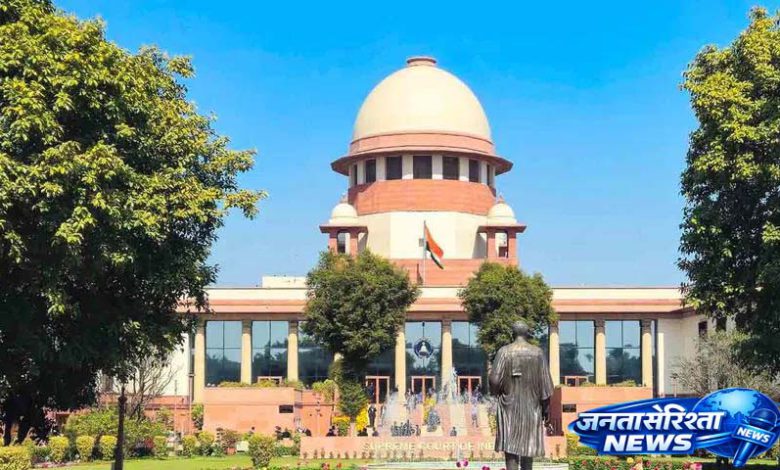
New Delhi: The Supreme Court has said that it has the right to point out the superstitions in religions. The court also said that it has the right to pronounce justice on religious beliefs. It is known that arguments are being held in the Supreme Court in the case of restrictions on the entry of women into the Sabarimala temple. On the second day today, interesting arguments were made in the court from many angles. The Supreme Court rejected the argument made by the Center. The Center said that judges are experts only in the field of law, not in religious matters, and that it is not right for a secular court to pronounce its decision on traditions. A 9-member bench headed by Chief Justice Suryakant is hearing arguments in the case.
The court discussed various religions and their beliefs at length. Solicitor General Tushar Mehta, appearing for the Centre, questioned how the court would pronounce its verdict on superstitions in religion. He said that even if there is a superstition policy, the court has not decided that issue and that the legislature should do that as per Article 25(2)(b) of the Constitution. He said that a particular policy is superstition and reforms can be made in it through the legislature. He said that there are many laws to prevent occult education as well as other policies. In this context, Justice Amanullah responded by saying that the statement was very simple and that the court has the right to say to what extent a policy is superstitious, and that falls within our purview. After that, it goes within the purview of the legislature.
Justice Amanullah said that the matter decided in the legislatures cannot be said to be final, that cannot happen. Tushar Mehta said that the court does not have the right to decide a religious process based on superstition. Because there are no religious experts in that court, he said. He said that judges are experts in legal matters, but not in religious matters. Tushar Mehta said that he personally considers a religious system in Nagaland to be a superstition, but that we live in a different society. Maharashtra has a law against occult education, but they say that the education is popular there, which is why it is being protected under Article 25(2)(b).
At that time, Justice Bagchi responded that if witchcraft is also a part of the religious system, then he asked whether it can be considered as superstition. If it is said that the right to regulate witchcraft lies with the legislature, then can it be prohibited under Article 32 of the Constitution on the grounds of health and welfare of the people? Justice Bagchi asked. To this, the Solicitor General responded that if the matter comes within the ambit of health, morality and public welfare, then it can be judicially reviewed, but it should not be considered only in terms of superstition. Justice Nagaratha said that a practical policy in a religion should be viewed from the perspective of that religion. Justice Nagaratha said that the opinion of one religion should not be attributed to another and that only that religion should be taken into account by the court.