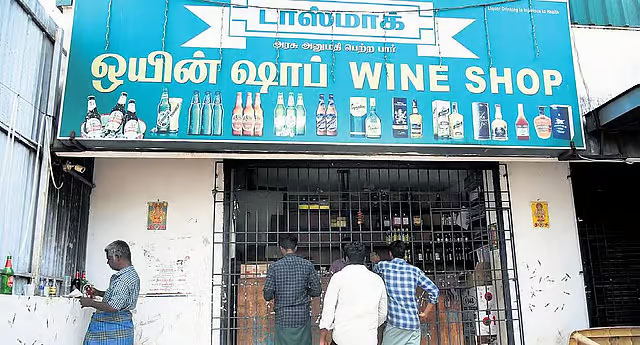
Chennai. The Tamil Nadu government is preparing to make significant changes to the state’s liquor retail system. According to media reports, the government is considering a plan to gradually withdraw from the retail sale of liquor. If this proposal is implemented, the state-owned TASMAC (Tamil Nadu State Marketing Corporation) would function solely as a licensing authority, while the operation of retail outlets would be handed over to private companies.
TASMAC, established in 2003, was granted exclusive rights for the wholesale and retail sale of liquor in Tamil Nadu. Currently, approximately 4,048 TASMAC retail outlets operate across the state, generating substantial revenue for the government. In the 2024-25 fiscal year, the Tamil Nadu government earned approximately ₹48,344 crore from excise duty and VAT alone, making it a crucial source of state revenue.
However, the government has long faced criticism and complaints regarding its direct involvement in liquor sales. Common grievances include the charging of prices above the Maximum Retail Price (MRP), mismanagement at outlets, issues regarding staff behavior, and a lack of transparency. Furthermore, opposition from social organizations and political parties demanding prohibition is often directed squarely at the government, given its role in managing liquor sales.
Reports indicate that, in light of these factors, the state government is considering ending its direct role in liquor retailing. Under the proposed system, the government would act only as a regulator and licensing authority, while private companies would operate the liquor shops subject to prescribed terms and conditions. It is believed that this shift could alleviate the pressure caused by direct accusations and public protests against the government.
According to available information, if the plan receives approval, it will be implemented in a phased manner. In the first phase, the operation of approximately 2,500 TASMAC shops located within urban local bodies could be handed over to private companies. These companies would be selected through a licensing process. The government would oversee the operations of these shops and ensure compliance with necessary regulations.
Experts believe that allowing the private sector to enter liquor retail could benefit customers through better service, greater transparency, and increased competition. There is also an expectation that adopting modern management systems would improve the operational efficiency of the shops. However, concerns have also been raised that private companies might seek to boost sales to maximize profits—a trend whose social impact would require the government’s close attention.
Political analysts observe that this proposal is significant not only from an economic standpoint but also from a political one. Controversies and protests surrounding liquor sales have historically impacted the government’s image. If the government transitions to acting solely as a licensing authority, the responsibility for addressing daily operational grievances would shift to the private operators, while the government would retain a regulatory role.
As of now, the state government has made no official announcement regarding this proposal. However, various media reports suggest that serious deliberations are underway and relevant departments are working on a potential model. If implemented, this plan would mark the most significant change to Tamil Nadu’s liquor sales system since 2003.
All eyes are on the final decision the government will take in this regard. If the privatization plan is implemented, it could bring about sweeping changes not only to the state’s revenue system but also to the entire administrative framework and regulatory structure governing liquor sales.