
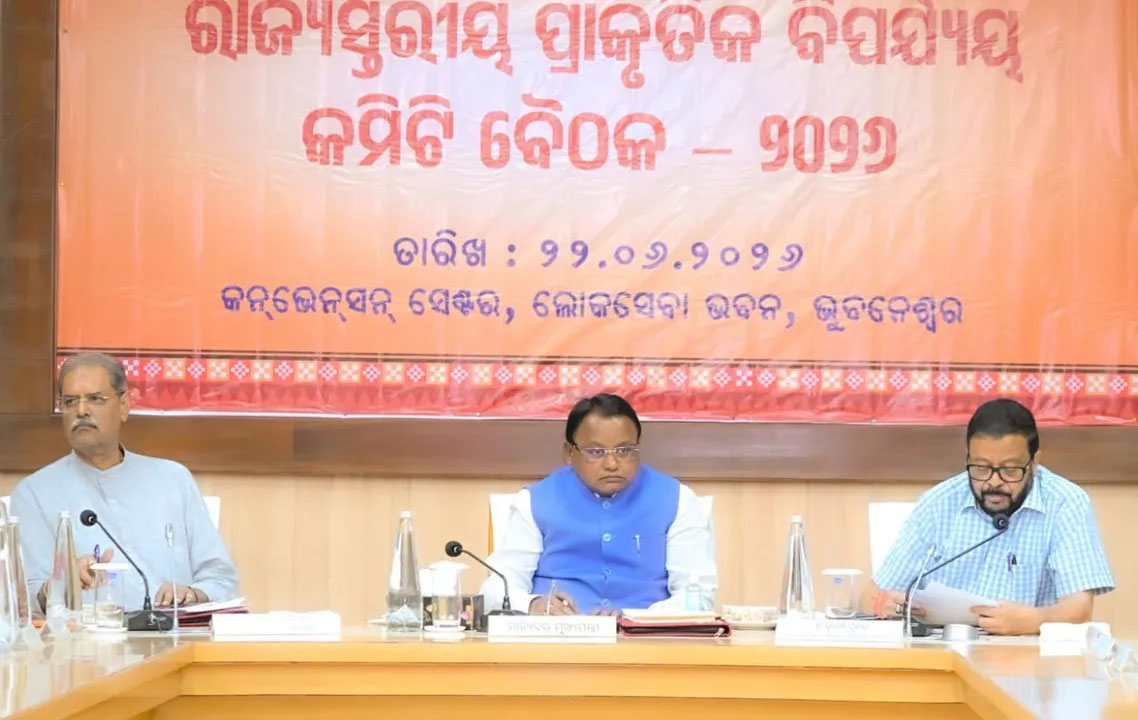
Odisha: Chief Minister Mohan Charan Majhi stated on Monday that the state has developed a robust and effective disaster management system, which needs to be further strengthened. He emphasized that continuously improving preparedness to tackle natural disasters is a priority for the state government.
The Chief Minister made these remarks while presiding over a review meeting of the State-Level Natural Disaster Committee in Bhubaneswar. The meeting involved detailed discussions on the state’s existing disaster management framework, preparedness levels, and future challenges.
According to the Chief Minister’s Office (CMO), special attention was paid to how the state would handle the potential impacts of El Niño in the near future. Concerns were raised regarding anticipated changes in rainfall patterns due to El Niño, which could directly affect Kharif season farming.
Senior officials from the Agriculture, Irrigation, and other related departments participated in the meeting. Discussions highlighted that El Niño conditions could lead to uneven rainfall distribution, potentially impacting agricultural production and creating new challenges for farmers.
Chief Minister Mohan Charan Majhi directed all departments to work with better inter-departmental coordination. He stated that adopting a “whole-of-government approach” is essential to tackle disaster-like situations, ensuring swift and effective action during emergencies.
He instructed the Agriculture Department to prepare a comprehensive contingency plan keeping potential El Niño conditions in mind. The plan aims to minimize adverse effects on the agricultural sector and ensure timely assistance for farmers.
The Chief Minister also emphasized the critical need to continuously monitor weather and agricultural conditions across the state. A robust monitoring mechanism has been established to regularly track rainfall, water levels, crop planning, and the supply of seeds and fertilizers.
According to government officials, the objective of this monitoring system is to identify potential crises early and take necessary measures to minimize the impact of disasters on farmers and the general public. The meeting also addressed the rapid changes in weather patterns caused by climate change, highlighting the need to make the disaster management system more modern and proactive.
The Chief Minister stated that the state government does not view disaster management merely as a reactive system; instead, it is being developed into a proactive and preparedness-oriented framework.
He directed officials to ramp up awareness programs in rural and agricultural areas so that farmers can adjust their crop planning in a timely manner based on weather conditions.
It was also noted that the state government is working on data sharing and enhancing coordination among various departments to expedite decision-making during any disaster situation.
Experts believe that disaster management is crucial for a coastal state like Odisha, which frequently faces cyclones, floods, and erratic rainfall. Consequently, this government initiative is considered vital for the state’s safety and agricultural stability.
At the conclusion of the meeting, the Chief Minister instructed all departments to regularly review their preparedness and ensure there is no negligence. He emphasized that swift decision-making and coordinated action are the most effective measures for dealing with disasters.


