
New Crowd Management Systems at the Grand Mosque During Ramadan
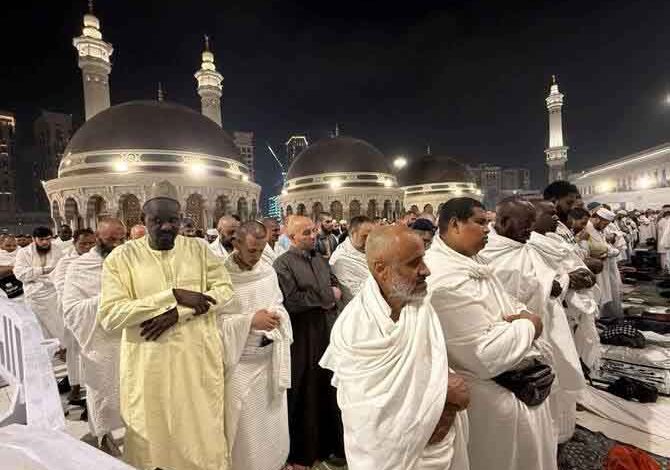
Mecca: During the month of Ramadan, millions of pilgrims and worshippers flock to the Grand Mosque, making crowd management at this holy site one of the most complex operational challenges.
Officials state that this year, new systems are being utilized to monitor and control the movement of people entering the mosque and its surrounding courtyards; these systems are driven by real-time data and coordinated planning.
The General Authority for the Affairs of the Grand Mosque and the Prophet‘s Mosque told Arab News that all operations conducted during peak hours are coordinated through a central engineering command and control center.
Indicators regarding crowd density and flow velocity—gathered from various sections of the mosque complex—are continuously fed into this system in real time, enabling supervisors to adjust entry and exit routes and take immediate action at congestion hotspots.
Cleaning and emergency teams are also deployed based on anticipated crowd patterns, rather than waiting for a specific call-out. An integrated system guides these decisions by assessing three key factors: current crowd density, the operational sensitivity of a specific location, and the associated risk level. Interactive digital maps issued by the Authority provide supervisors stationed in the area with real-time visual data, thereby facilitating their decision-making process.
A spokesperson for the Authority told Arab News, “This year has witnessed a significant shift in the approach to managing the movement of people within the Grand Mosque.” They added, “We have moved away from the traditional reactive approach to congestion and have transitioned toward a new model based on ‘operational anticipation.’ Under this model, we utilize real-time density analysis and smart route diversions to take necessary actions before congestion-related bottlenecks even arise.” The Authority stated that the implementation of this system has significantly improved the movement of people between the mosque’s entrances, prayer areas, and the ‘Mataf’ (the area where pilgrims perform the circumambulation of the Kaaba).
In the evaluation conducted following the conclusion of the Ramadan season, the effectiveness of this system is measured based on several indicators; these include waiting times, crowd flow rates, incidents related to overcrowding, and emergency response times. This evaluation process also incorporates data obtained from the command center, as well as surveys regarding pilgrim satisfaction.
Dr. Fawwaz Al-Dahas, Head of the Makkah History Center, remarked that the operations currently underway at the Grand Mosque represent the latest chapter in a centuries-old tradition of serving and caring for pilgrims—a tradition that has been completely revitalized by modern technology.
He told Arab News, “The progress Makkah is witnessing today, in the form of advanced operational systems, reflects the deep and accumulated expertise that relevant authorities have acquired over generations of serving pilgrims and worshippers.” He added that tools such as real-time density monitoring and digital mapping facilitate rapid decision-making and assist in mitigating risks associated with large crowds.
“Throughout its history, the Grand Mosque has served as a unique model for managing human crowds,” he noted. “However, today’s technological and organizational advancements make the worshippers’ experience safer and more comfortable—particularly during peak seasons such as Ramadan.”