
Arunachal: Tezu Phase and Waste Audit of Himalayan Cleanup-2026 Drive
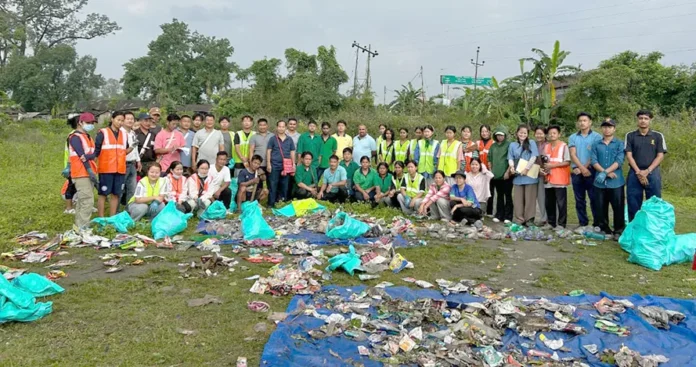
TEZU: A two-day cleanup drive and waste audit under the Tezu phase of “The Himalayan Cleanup 2026” was organized by Team Amala, in collaboration with the NGO AMYAA, at Bamboosa Library and near the Tezu Nala bridge area in Lohit district recently.
The Himalayan Cleanup 2026, a Himalayan-wide movement, was initiated by Zero Waste Himalaya and the Integrated Mountain Initiative to address the growing plastic waste crisis in the Himalayan region.
At Bamboosa Library, around 40 participants, including representatives from student organizations, welfare societies, teachers, business owners, youth volunteers, and concerned citizens, took part in interactive discussions and awareness sessions on waste management and responsible consumption.
During the session, participants discussed practical measures such as reducing the use of single-use plastics, promoting waste segregation, carrying reusable water bottles, and adopting environmentally responsible lifestyles. The event emphasized that waste management is a shared community responsibility rather than solely a municipal concern.
Volunteers were trained in waste segregation and waste audit procedures to help identify the composition and sources of waste generated in the locality.
Around 60 volunteers, including members of the Lohit Green Foundation, ex-SSB Welfare Society, students, and community members, participated in collecting and segregating waste materials during the cleanup drive and waste audit exercise conducted near Tezu Nala bridge.
Approximately 42.4 kilograms of plastic wrappers, 12.8 kilograms of glass bottles, and 12 kilograms of PET bottles were collected. Single-use packaged drinking water bottles, chips packets, beverage containers, and instant food packaging were among the most common waste items identified during the drive.
Following the audit exercise, all segregated waste materials were handed over to the Material Recovery Facility (MRF) in Tezu for recycling and proper resource recovery.
The organizers emphasized that cleanup drives alone cannot solve the waste crisis and highlighted the importance of sustained behavioural change, responsible consumption, and collective community action under the guiding principle of “My Waste, My Responsibility.”