
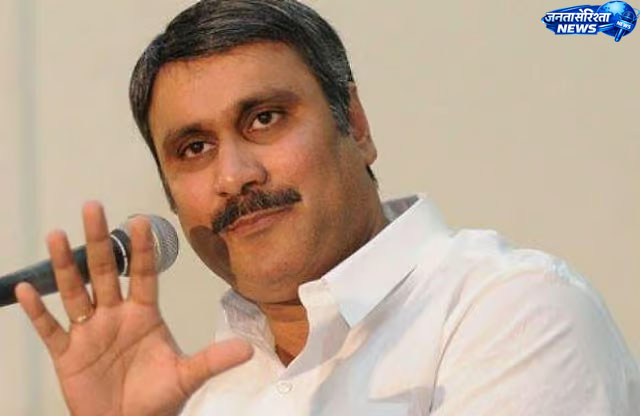
Chennai: Pattali Makkal Katchi (PMK) leader Anbumani Ramadoss has urged Tamil Nadu Chief Minister Joseph Vijay not to visit Karnataka or hold any discussions with his counterpart there regarding the Mekedatu dam project. He stated that the issue concerns Tamil Nadu’s farmers, drinking water security, and the state’s water rights; therefore, the government must adopt an extremely cautious and firm stance on the matter.
Speaking to reporters at Chennai International Airport on Friday, Anbumani Ramadoss remarked that the Mekedatu dam project has long been a cause for concern for Tamil Nadu. He argued that if the project proceeds, it could impact the flow of the Cauvery River, potentially disrupting irrigation and drinking water supplies across several districts of Tamil Nadu.
Appealing to Chief Minister Joseph Vijay, he emphasized that Tamil Nadu’s interests must be given top priority before considering any visit to Karnataka for talks on this issue. According to him, the state government should avoid any move that might convey the impression that Tamil Nadu is softening its stance on the Mekedatu project. He added that the sentiments of all political parties in the state and the farming community must be respected regarding this matter.
Anbumani Ramadoss stated that the Mekedatu dam is not merely a development project but a sensitive issue involving the sharing of inter-state river water. He believes that any new project on the Cauvery River could directly affect the livelihoods of Tamil Nadu’s farmers and the state’s water requirements. Consequently, any decision on this matter should be reached only after extensive consultation and in accordance with legal provisions.
He further urged the Tamil Nadu government to maintain its clear opposition to the issue, as it has done in the past. If necessary, the state government should protect its rights through legal and constitutional channels. He noted that Tamil Nadu’s stance on Cauvery water disputes has always been rooted in safeguarding the interests of the state’s farmers and the general public, and this policy should continue in the future. A PMK leader alleged that while discussions regarding the Mekedatu project have taken place at various levels over time, Tamil Nadu’s concerns have not been fully addressed. He stated that lakhs of farmers in the state depend on the waters of the Cauvery River, and any reduction in water flow could severely impact agricultural production. Additionally, the drinking water supply for numerous cities and towns could also be affected.
Political analysts observe that the Mekedatu dam issue has long been a subject of political and legal debate between Tamil Nadu and Karnataka. Whenever a new initiative or meeting concerning this project is discussed, political parties in Tamil Nadu typically emphasize the need to safeguard the state’s water rights. Anbumani Ramadoss’s statement is viewed in this context.
He urged the Chief Minister to formulate a future strategy only after consulting all stakeholders in the state, particularly farmers’ organizations and water experts. He insisted that the state government must ensure there is no adverse impact on Tamil Nadu’s share of the water.
Anbumani Ramadoss reiterated that his party has consistently advocated for protecting Tamil Nadu’s water rights and will continue to firmly uphold this stance in the future. He added that the state government should effectively convey its concerns to the central government to ensure that Tamil Nadu’s interests are not overlooked in any decisions regarding the Cauvery basin.
So far, there has been no official response from the Chief Minister or the state government regarding Anbumani Ramadoss’s appeal. However, his statement has once again brought the Mekedatu dam project to the forefront of discussions concerning state politics and water management. All eyes—including those of political parties, farmers’ organizations, and the general public—are now fixed on the state government’s next move and the strategy it adopts regarding this sensitive inter-state issue.


