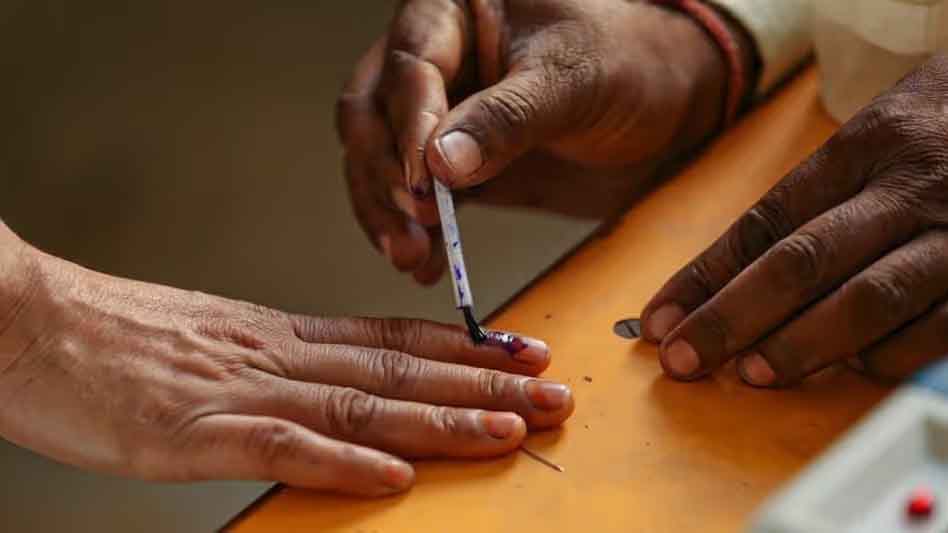
Assam: Senior officials stated on Monday that improved infrastructure and robust security arrangements played a pivotal role in the decision to conduct the upcoming Assembly elections in Assam in a single phase. This statement came a day after the Election Commission of India announced that voting in the state would take place on April 9.
Officials informed that the civil and police administrations are fully prepared to ensure the smooth conduct of elections across all 126 Assembly constituencies. Addressing a press conference, Assam’s Chief Electoral Officer, Anurag Goel, remarked that improvements in physical infrastructure have significantly bolstered the confidence to hold the elections in a single phase.
Goel stated, “Improved infrastructure—including the availability of more buildings and bridges, as well as better connectivity—has enhanced our confidence in conducting the elections in the state in a single phase.”
Inspector General of Police (Law and Order) Akhilesh Kumar Singh, who also serves as the nodal security officer for the elections, noted that the state administration is now better equipped to handle the logistics required for single-phase voting. He pointed out that the law and order situation has improved significantly, particularly following the withdrawal of the Armed Forces (Special Powers) Act from most parts of the state.
Singh said, “Single-phase voting necessitates extensive preparations and logistics. Compared to previous years, we are now fully prepared. Both the civil and police administrations are ready to ensure the smooth conduct of the elections.”
Regarding security arrangements, the state has requested 828 companies of Central Armed Police Forces, 200 of which have already arrived. Additionally, over 74,000 personnel from the Assam Police—including Home Guards—will be deployed for election duty.
Security measures have been heightened across the entire state. Strict vigilance is being maintained at inter-state and inter-district borders, and CCTV coverage has been expanded in sensitive areas. A total of 134 border outposts are being established, where flying squads and static surveillance teams will maintain round-the-clock vigilance.
Officials also stated that the security of international borders is being handled by various security agencies, and these borders will be sealed during the voting period in accordance with established electoral protocols. Security forces are actively conducting ‘area domination’ exercises and confidence-building measures to ensure that voters can exercise their franchise freely and without any fear or intimidation.
Efforts are also underway to curb the movement of illicit items—including illegal liquor—during the elections. The State CID has established a dedicated social media monitoring cell to keep a watch on fake news and AI-generated content, which could potentially disrupt public peace. A dedicated helpline number has also been launched to address public grievances.
CEO Goyal further informed that, following the Governor’s approval, the election notification has been issued, thereby formally commencing the electoral process.
As of March 15, the total number of voters in Assam stands at 25,021,413. However, this figure is subject to change until the final deadline for filing nominations. Since the publication of the final voter list on February 10—following a special revision exercise—more than 164,000 new voters have been added, while over 100,000 names have been removed. Consequently, there has been a net increase of approximately 64,000 voters.
The largest demographic of voters falls within the 20–29 age group, numbering over 6.6 million. The state also has 2,482 voters aged over 100 years, and approximately 100,000 voters aged over 85 years. Meanwhile, the 18–19 age group comprises over 600,000 voters. Currently, there are plans to set up 31,486 polling stations across the entire state. The CEO’s office has requested four additional auxiliary polling stations. The Dalgaon Assembly constituency has the highest number of voters, exceeding 300,000. Conversely, Amri has the lowest number of voters, totaling just over 100,000.
More than 150,000 civil polling personnel will be deployed to conduct the electoral process. In addition to these staff members, micro-observers and sector officers will also be deployed. Goyal further stated that, for the first time, the EVM ballot papers will feature color photographs of the candidates. Furthermore, 100 percent webcasting will be implemented at all polling stations. To ensure the confidentiality of voting, facilities for depositing mobile phones will also be made available at every polling station.