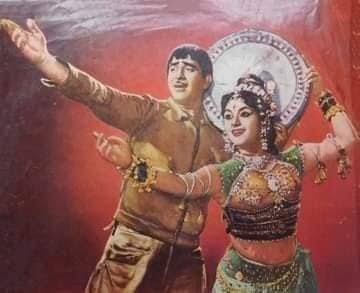
Raj Kapoor, the ‘Showman’ of Indian cinema, was not merely a successful actor and director; he was also deeply influenced by art, literature, and painting. A hallmark of his films was his ability to craft on-screen visuals that transcended mere entertainment, evoking the feel of a living painting. It is often said that Raj Kapoor brought the aesthetic image of the Indian woman—as depicted in the famous paintings of Raja Ravi Varma—to life on the silver screen through his camera.
Heroines bathing beneath waterfalls, lovers embracing trees, the silhouette of a wet sari, and romantic scenes filmed amidst nature—these elements became the signature style of Raj Kapoor’s films. Film historians believe that these visuals clearly reflect the aesthetic vision found in Raja Ravi Varma’s paintings.
The Influence of Raja Ravi Varma’s Art
The 19th-century master painter Raja Ravi Varma gave Indian art a new identity through his realistic portrayal of Indian deities, mythological figures, and women. Nature, feminine beauty, emotions, and Indian attire were key elements in his paintings.
Raj Kapoor sought to translate these artistic elements into the visual language of cinema. He treated nature not merely as a backdrop but as an active participant in the storytelling.
Romantic Use of Waterfalls and Rain
In Raj Kapoor’s films, waterfalls, rain, rivers, and mountains were not just locations but mediums for expressing emotion. Many of his films featured heroines filmed beneath waterfalls or in the rain, rendering the visuals both artistic and symbolic.
This style eventually became a hallmark of Hindi cinema and was adopted by numerous filmmakers.
Heroines Embracing Trees
Scenes filmed amidst trees, flowers, and natural surroundings became immensely popular with audiences. The image of a heroine embracing a tree or standing amidst nature evokes the traditional style of Indian painting.
In these scenes, camera angles, lighting, and costumes were orchestrated to make the entire frame resemble a painting. The Cinematic Expression of Female Beauty
Raj Kapoor portrayed the heroines in his films not merely as symbols of glamour, but as embodiments of emotion and beauty. Elements such as the white sari, flowing water, natural light, and slow camera movements became hallmarks of his cinematic style.
However, over time, differing perspectives emerged regarding these sequences. While some film critics hailed them as artistic expressions of Indian aesthetics, others viewed them critically in terms of how female characters were portrayed.
A Unique Confluence of Art and Cinema
Raj Kapoor believed that cinema was not just a medium for storytelling but also a form of visual art. This is why many scenes from his films are remembered today much like classic paintings.
This fusion of an aesthetic sensibility inspired by Raja Ravi Varma’s paintings and Raj Kapoor’s cinematic vision is considered a unique chapter in the history of Indian cinema. It not only enriched the visual language of films but also demonstrated how painting and cinema could draw inspiration from each other to create new forms of artistic expression.