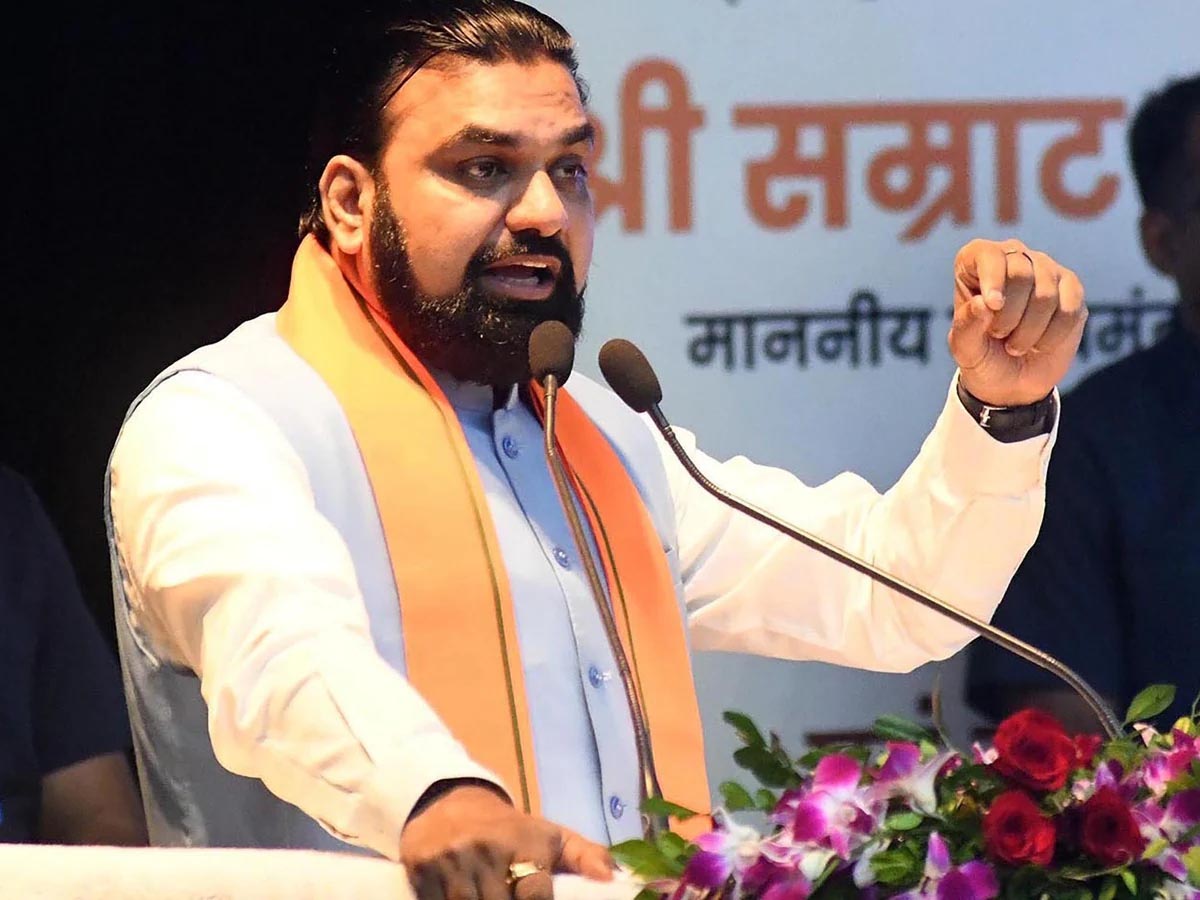
Patna. The state government has taken a significant step to ensure transparency in competitive and recruitment examinations in Bihar and to effectively curb incidents like paper leaks. The Samrat Chaudhary government has issued a notification to constitute a five-member expert committee aimed at bringing about comprehensive reforms in the state’s examination system. This committee will study the existing procedures of examinations conducted by various state boards, commissions, universities, and recruitment agencies, and suggest measures for improvement.
According to the notification issued on Sunday, the expert committee is required to submit its recommendations to the state government within three months. The committee will be chaired by either a retired Supreme Court judge or a serving or retired High Court judge. The government’s objective is to develop a system that strengthens candidates’ confidence and makes the entire process—from the conduct of the exam to the declaration of results—more secure and transparent.
The five-member committee will examine several crucial aspects of the examination process. These include the preparation of the examination calendar, question paper setting, security of question papers, arrangements at examination centers, and technical as well as administrative measures to prevent paper leaks. Additionally, the committee will study the procedures currently followed by various recruitment agencies and recommend changes where necessary.
Incidents of paper leaks are considered a major challenge to the credibility of competitive examinations. When a question paper is leaked prematurely, the hard work of lakhs of candidates is jeopardized. Often, the cancellation or rescheduling of exams causes financial and mental distress to the candidates. The government aims to strengthen security measures at every stage of the examination process to prevent such incidents.
The expert committee will also deliberate on how to make the process—from setting the question paper to transporting it to the examination center—more secure. It may suggest measures such as the use of modern technology, digital surveillance, restricted access to confidential material, and ensuring the accountability of responsible officials. However, the final system will be determined only after the committee submits its recommendations and the government makes a decision.
The committee will also offer significant suggestions regarding the examination calendar. For candidates preparing for competitive exams, the timely conduct of examinations and the availability of a clear, pre-announced calendar are of utmost importance. Candidates’ preparation is often disrupted when exams are not held on schedule or dates are repeatedly changed. Consequently, the committee will examine how examinations conducted by various commissions and recruitment agencies can be organized systematically and held on time.
The quality of question papers will also be a key focus of the committee’s study. Issues such as errors in questions, incorrect answer options, translation flaws, and disputes regarding answer keys frequently arise in various examinations. Such issues can lead to delays in declaring results and trigger legal disputes. The expert committee may propose a framework for setting and vetting question papers that minimizes the likelihood of errors.
Strengthening security arrangements at examination centers is another government priority. Existing systems will be evaluated to curb activities such as cheating, the use of electronic devices, and external interference. The committee may also offer recommendations regarding the selection and monitoring of examination centers and the fixing of accountability for officials deployed there.
Various examination boards, commissions, universities, and recruitment agencies in the state conduct exams at different levels. In this context, the committee will assess whether minimum common standards can be established for conducting examinations. Implementing uniform standards for exam security and transparency could foster better coordination among these various institutions.
This government initiative is viewed as a significant decision directly impacting the youth and candidates preparing for competitive examinations. A large number of young people in the state prepare for government jobs; any irregularities or paper leaks jeopardize years of their hard work. Through this move, the government aims to bolster candidates’ confidence in the examination system.
The five-member expert committee will submit its report to the government within three months. Subsequently, the government may review the recommendations and decide on necessary changes to the examination system. If concrete reforms based on these recommendations are implemented, the entire system—ranging from the confidentiality of question papers and security at exam centers to timely recruitment—could undergo significant transformation.
For now, the process of exam reform in Bihar has commenced with the constitution of this expert committee. All eyes will now be on the committee’s report and its recommendations. The biggest challenge before the government will be to effectively implement these recommendations and develop an examination system that minimizes the scope for paper leaks and irregularities, while ensuring fair opportunities for deserving candidates.