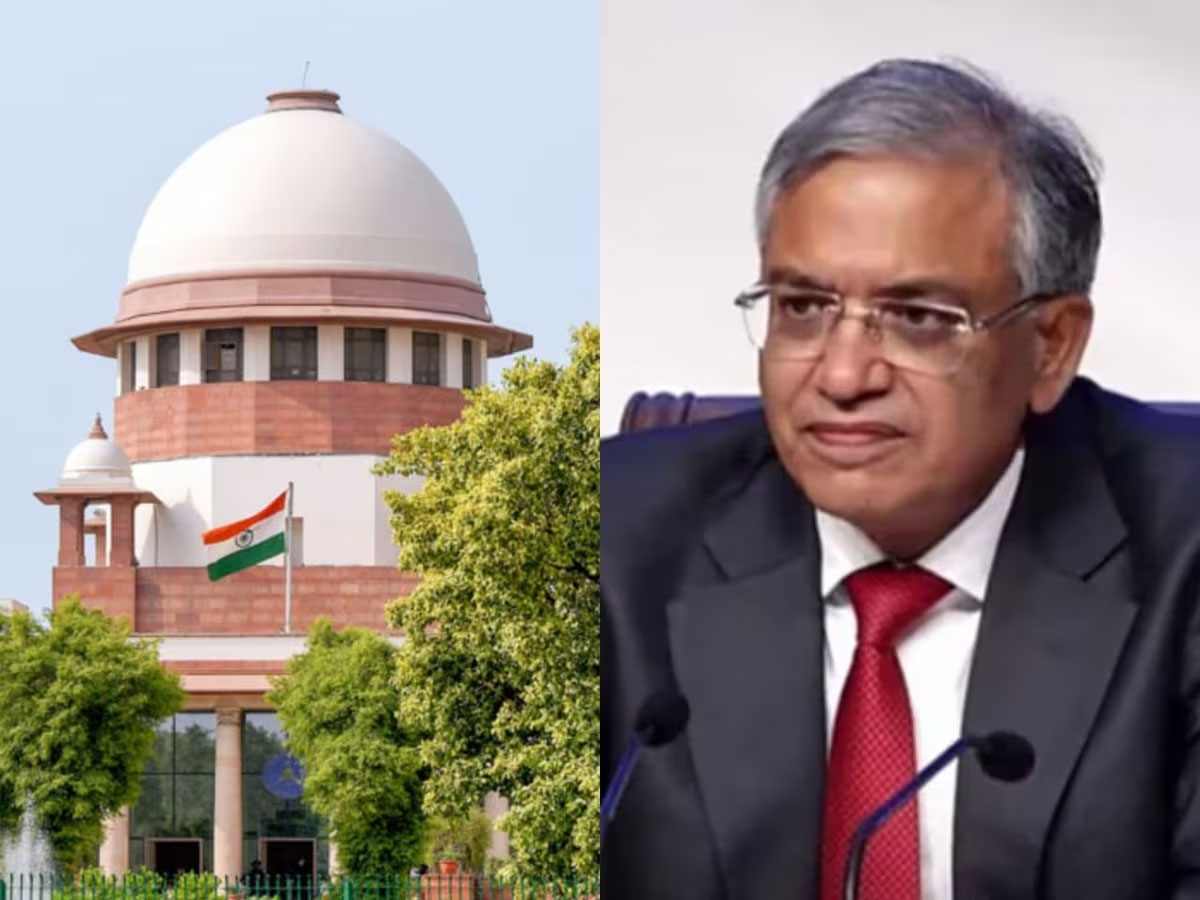
New Delhi. An important hearing is to be held in the Supreme Court on Monday on the petitions challenging the functioning of the country’s Chief Election Commissioner (CEC) Gyanesh Kumar. The petitions sought interim suspension of Gyanesh Kumar from the post along with allegations that some decisions of the Election Commission were taken without the consent of the other two election commissioners. A petition also sought initiation of criminal proceedings against the CEC and other officials for alleged breach of official duties.
The case will be heard by a three-member bench comprising Chief Justice of India Justice Surya Kant, Justice Joymalya Bagchi and Justice V Mohana. The petitions filed by Rakesh Kumar Singh and advocate Shailendra Mani Tripathi are listed before the Supreme Court. In these petitions, important legal questions related to the collective decision process of the Election Commission have been raised.
The main allegation of the petitioners is that the Chief Election Commissioner allegedly exercised such powers at an individual level, which are vested in the Election Commission as an institution. The petition has sought the court to determine whether the prescribed role and consent process of all members of the Election Commission was followed in the impugned decisions.
Rakesh Kumar Singh’s petition seeks to stop Gyanesh Kumar from discharging the functions of the Chief Election Commissioner till the final hearing of the case. The petitioner has argued behind this to maintain the multi-member nature of the Election Commission. Also, during this period, a demand has been made to give instructions to conduct the work of the Commission with the unanimous decision of the other two Election Commissioners Sukhbir Singh Sandhu and Vivek Joshi.
A significant part of the controversy is over decisions related to Special Intensive Revision of Electoral Rolls or SIR. The petitions alleged that the other two election commissioners had raised objections to several decisions and orders related to SIR in the last 10 months or so. According to the petitioners, despite this some instructions were issued. However, at present these are the allegations made in the petitions and their legal validity and factual position has to be considered by the Supreme Court.
The Election Commission’s side has also come forward on this controversy. The Commission has said that different opinions and comments are part of the normal process during deliberations in any institution. According to the Commission, its orders have legal sanction and prescribed statutory procedures have been followed. Therefore, the allegations made in the petitions cannot yet be considered as established facts.
The issue of alleged changes in Form-6 used for voter registration has also been raised in the case. The petition alleges that certain information like information related to ancestors and relation to previous SIRs were added through the Election Commission’s software, even though necessary statutory amendments were not made in the election rules for this. The petition claims that the other two election commissioners had also raised objections to the process.
The petitioners have asked the Supreme Court to investigate the legality of the decisions, guidelines, instructions and software changes, which they claim were implemented without the consent of the entire Commission. There is a demand that if such decisions are found contrary to the statutory procedure then they should be declared invalid.
In the second petition, demands like constituting an independent judicial inquiry commission or a special investigation team to investigate the case have also been raised. Along with this, a demand has been made to cancel the alleged unilateral decisions and investigation of related records.
The petitions have also raised questions on certain procedures related to the revision of voter lists in Goa and West Bengal. A petition regarding West Bengal has claimed that more than 16.10 lakh appeals were filed in the name of the Election Commission and the other two Election Commissioners and the Chief Electoral Officer of the state were allegedly not aware of them. This is also a claim of the petitioner, which is yet to be tested in court.
The central legal question of this entire controversy is related to the decision process of the Election Commission. Section 18 of the Chief Election Commissioner and Other Election Commissioners Act, 2023 deals with the decision-making process within the Commission. In case of disagreement, there is a provision for decision to be taken on the basis of majority vote. The petitioners argue that the Election Commission is a multi-member constitutional body, hence important decisions taken in its name should be in accordance with the prescribed collective process.
Now all eyes are on the Supreme Court hearing. The legal questions currently before the court are related to the allegations made in the petitions, the interim relief sought and the decision process of the Election Commission. Only after the hearing will it be clear what stand the court takes on these demands and whether any interim action is ordered against the Chief Election Commissioner.