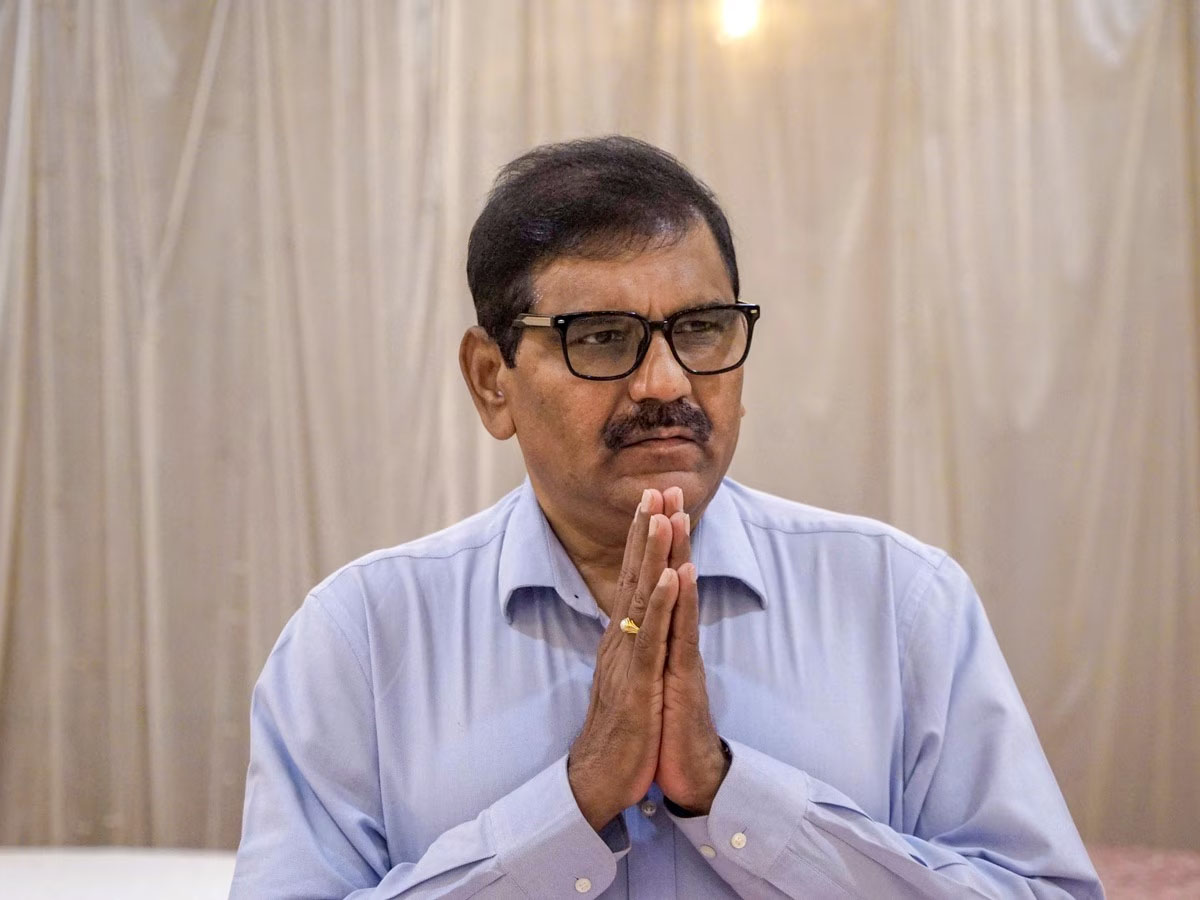
Varanasi. Former Central Bureau of Investigation (CBI) Director M. Nageswara Rao has stepped into active politics. Notably, he did not begin his political journey by joining an existing party; instead, he announced the formation of his own new political party, named the ‘Sarvajan Sanatan Party’ (SSP). He has assumed leadership of the party and will serve as its National President. He made the announcement regarding the new party from Varanasi, the parliamentary constituency of Prime Minister Narendra Modi.
Alongside the announcement of the new party, M. Nageswara Rao outlined the ideological direction of his future political endeavors. He stated that his extensive experience in government service convinced him that the reconstruction of India cannot be limited merely to administrative reforms. To propel the nation forward, administrative improvements must be accompanied by a commitment to keeping society and the nation rooted in their civilizational heritage.
Rao advocated for advancing by integrating modern development with Indian civilization. He believes that while India should embrace modern concepts of development, it must not abandon its cultural and civilizational identity in the process. This stance suggests that the Sarvajan Sanatan Party may prioritize issues related to Indian culture and civilization alongside development in its future political agenda.
The choice of Varanasi for the party’s launch is also considered significant. Varanasi is not only Prime Minister Narendra Modi’s parliamentary constituency but also one of the country’s major religious and cultural hubs. Kashi is synonymous with ancient Indian civilization, religion, and spiritual traditions. Consequently, launching the ‘Sarvajan Sanatan Party’ from this location can be viewed as a politically symbolic move.
All eyes will now be on Rao’s political innings following his long career in administration and investigative services. Having observed governance and administration closely during his time in government service, he now faces the challenge of translating his administrative experience and ideas into a concrete political program and organizational structure. The first major challenge facing the new party will be building a robust organization. Several influential regional parties, alongside national-level ones, are already active across the country. In such a political landscape, it is no easy task for a new party to reach out to voters, assemble a team of dedicated workers, and establish a distinct identity. How the Sarvajan Sanatan Party navigates these challenges will become clear in the near future.
The party’s name incorporates both ‘Sarvajan’ and ‘Sanatan’. There is considerable interest regarding the social and political base the party aims to mobilize through this nomenclature. A clearer picture of its ideology and political strategy will emerge once its detailed policies and programs are announced.
The theme of India’s reconstruction features prominently in M. Nageswara Rao’s announcement. He believes that sweeping change cannot be achieved merely by altering the administrative framework; instead, a balance must be struck between India’s civilizational identity and modern development. This concept appears to form the foundation of his new political journey.
It will be crucial to observe the policies the party adopts regarding issues such as the economy, employment, education, healthcare, agriculture, law and order, and national security. For any new political party, it is vital to present clear policies on the everyday issues faced by the common people alongside its ideological identity. The party’s stance on these matters will become evident once its detailed manifesto and program are released.
Equally important is the question of when the party will enter electoral politics. For now, only the announcement of the new party and M. Nageswara Rao’s appointment as National President have been made public. Future announcements are awaited regarding which states the party will organize in, whether it will field candidates in upcoming elections, and what its stance will be towards other political parties.
Since the new party is being launched from Varanasi, it is likely to spark discussion within the political circles of Uttar Pradesh as well. Uttar Pradesh holds the highest number of Lok Sabha seats in the country, and its role in national politics is considered pivotal. Consequently, if the Sarvajan Sanatan Party begins its organizational expansion from Uttar Pradesh, it will face the challenge of carving out a niche amidst already entrenched national and regional political parties.
Given the former CBI officer’s entry into active politics, his administrative background will also be a focal point of discussion. It remains to be seen how effectively his experience in the bureaucracy and investigative agencies translates into his political career; working within an administrative framework and leading a political organization are two distinct roles.
For now, M. Nageswara Rao has embarked on his new political journey. By announcing the Sarvajan Sanatan Party in Varanasi and assuming the role of its national president, he has made it clear that he intends to advance in politics through his own organization rather than through an established political party. His vision of modern development, rooted in India’s civilizational heritage, has emerged as the new party’s initial political message. All eyes will now be on how the Sarvajan Sanatan Party translates this vision into grassroots politics and electoral strategy.