
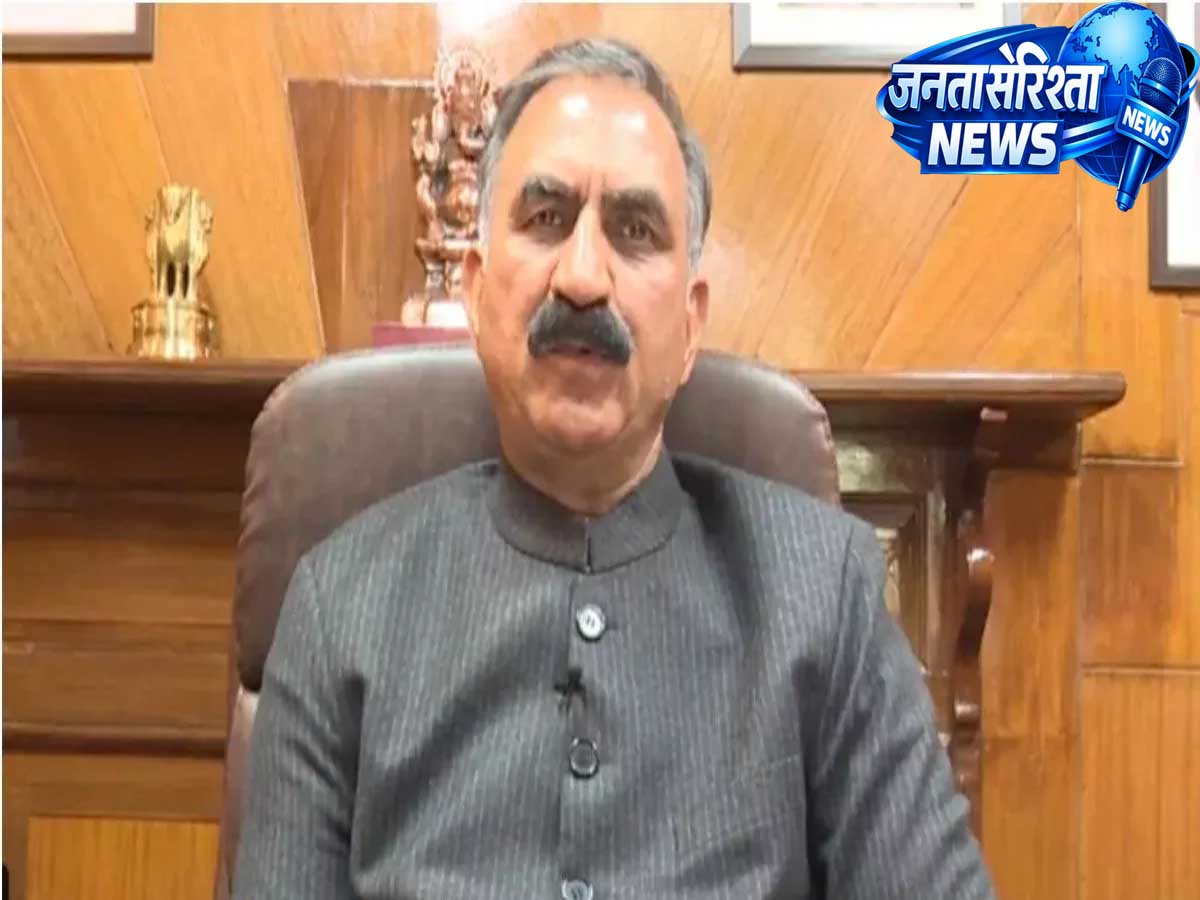
HIMACHAL-PRADESH : The government has suffered a significant setback on the financial front. The state government failed to meet its revenue collection target of ₹1,800 crore within the stipulated timeframe. Concurrently, the process of restructuring the Water Commission in the state appears to be shrouded in uncertainty. The failure to meet revenue targets and pending administrative decisions have created new challenges for the government.
According to sources, the government was working on several schemes to boost revenue; however, the shortfall in expected income appears to be impacting various proposals and institutional reforms. In this context, a final decision regarding the restructuring of the Water Commission remains pending.
Why was the ₹1,800 crore target significant?
The state government had set a target to mobilize additional revenue from various sources. These funds were earmarked for development projects, infrastructure, water resource management, and other public welfare schemes.
However, available data indicates that the target was not achieved, which could increase pressure on financial planning.
What factors led to the target remaining unmet?
Experts believe that several factors could have influenced revenue collection, including—
Failure to generate income at expected levels.
Delays in certain policy proposals.
Protracted administrative processes.
Slower-than-expected growth in economic activity.
Failure to receive projected revenue estimates from various departments on time.
The state government has initiated a detailed review of these factors.
Why is there uncertainty regarding the Water Commission’s restructuring?
Restructuring the Water Commission was being considered to improve water resource management and conservation, and to make policy decisions more effective. However, financial and administrative circumstances suggest that this process may face delays.
No final decision regarding the Commission’s new structure, powers, or operational framework has been made public yet.
What is the role of the Water Commission?
The primary objective of the Water Commission is to assist the government in the conservation and management of water resources and in formulating long-term plans for the state. Its functions include—
Conservation of water sources. Monitoring of irrigation and drinking water schemes.
Suggestions related to water policy.
Formulating strategies for water-scarce regions.
Establishing coordination among various departments.
If the commission is restructured, changes to its functioning and responsibilities are also possible.
What will be the impact on development projects?
Failure to meet revenue targets does not mean that all development work will come to a halt; however, experts believe that the priority, budget allocation, or implementation timelines for certain new projects could be affected.
The government is also considering ways to optimize the use of financial resources and explore new sources of additional revenue.
The government’s future strategy
The state government is holding review meetings with various departments. Measures such as improving tax collection, optimizing resource utilization, and formulating new policies are being considered to boost revenue. Additionally, a final decision regarding the restructuring of the Water Commission will be taken following an administrative and financial review.
Opposition raises questions
The opposition has questioned the government’s financial strategy and administrative functioning regarding the failure to meet revenue targets. They argue that the government should present a clear roadmap for financial management and resource utilization. Meanwhile, the government maintains that the situation is being reviewed and necessary steps will be taken.
Expert opinion
Experts in economic affairs believe that revenue collection forms the foundation of development plans for any state. If set targets are not met, the government must manage expenditure based on priorities. Furthermore, financial and administrative preparedness is essential when restructuring critical bodies like those managing water resources.


