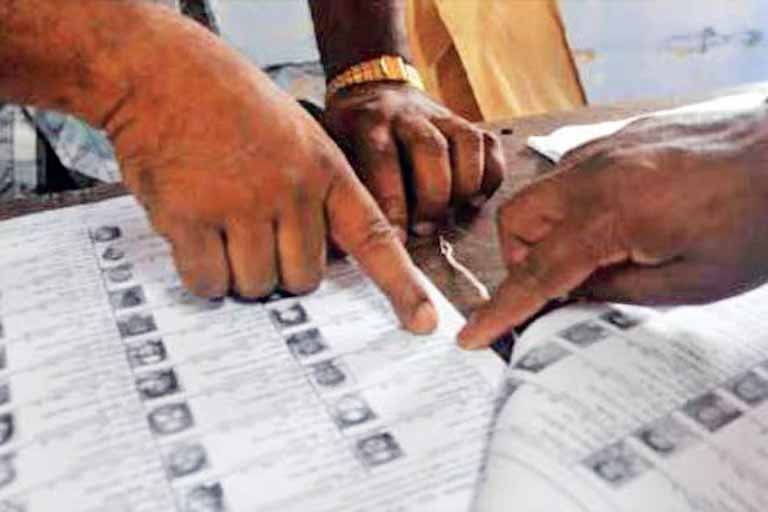
Chennai: The two-month-long Special Intensive Revision (SIR) exercise formally concluded on Monday with the publication of the state’s final voter list. This exercise was as politically significant as it was administratively demanding. The cleanup of the voter list sparked a heated debate on transparency, preparedness, and electoral fairness when it was revealed that 9.737 million names had been deleted from the draft roll. At the root of the controversy was the scale of the deletions. When the draft roll was released, political parties and a section of the public questioned how so many names could be removed in a single revision cycle. Facing mounting criticism, the Election Commission of India (ECI) responded by emphasizing the provisional nature of the draft and opened a long period for claims and objections to address grievances. The SIR process began on November 4th with the counting phase. Approximately 75,000 booth-level officers (BLOs) were deployed across the state to distribute counting forms to voters. However, this initial effort was met with criticism. Allegations of errors in form distribution, inadequate communication, and confusion among voters regarding documentation and timelines emerged—issues that later became part of the political narrative surrounding the deletion. The ruling DMK questioned the quality of field-level verification and the preparedness of BLOs, and attributed the widespread deletions to systemic deficiencies. In contrast, the main opposition AIADMK defended the changes and rejected the ruling party’s allegations. Despite the public debate, prominent political parties were deeply involved in the process at the grassroots level. The DMK and AIADMK deployed 68,260 and 67,462 booth-level agents, respectively, to monitor polling stations during the changes. Other parties, including the DMDK and the CPI, also appointed agents—indicating that, beyond the rhetoric, all stakeholders were well aware of the electoral machinations.
The most significant round of reforms occurred between December 19 and January 31, when the ECI conducted six rounds of special camps across the state during the 40-day claims and objections period. During that period, 22.83 lakh applications for inclusion of names were filed—17.10 lakh offline and 5.73 lakh online—reflecting both the concern and mobilization of parties and voters. These figures tell two contrasting stories. On the one hand, the deletion of 97.37 lakh names reflected the magnitude of duplication, migration, deaths, and old entries, which accumulate over time in a large and mobile voter group. On the other hand, the increasing number of new applications suggests that awareness campaigns and political interference significantly shaped the final roll. With the investigation completed and the final roll published, the SIR is now moving from controversy to closure. This revised list will serve as the foundation for the upcoming assembly elections, making this exercise not just a bureaucratic update but also a recalibration of the state’s electoral base.
CHENNAI: 74.07 lakh voters turned out in politically tense clean-up drive