
Andhra: AP moves to conserve peacock tarantula
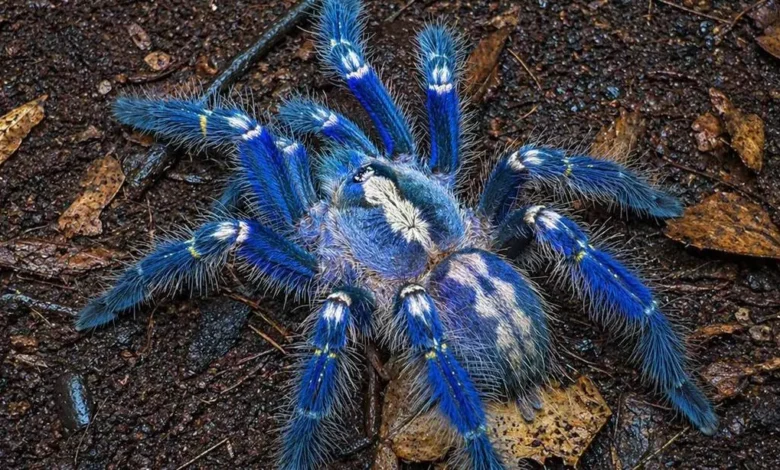
Visakhapatnam: Peacock tarantula (Poecilotheria metallica), known for its striking blue sheen and elusive nature, has recently attracted the attention of conservators in Andhra Pradesh.
Previously overshadowed by iconic animals like tigers and elephants, this critically endangered spider is now the focus of a dedicated survey in the Nagarjunasagar-Srisailam Tiger Reserve (NSTR). Andhra Pradesh Forest department is leading the survey in collaboration with the Eastern Ghats Wildlife Society.
The joint endeavour is to estimate how many of these tarantulas, listed as a Critically Endangered Species by the IUCN (International Union for Conservation of Nature, are left, where do they live and what conditions are necessary for their survival, among others.
Significantly, peacock tarantula, the only blue species of genus Poecilotheria, is also known as Gooty sapphire tarantula. The first specimen of this spider had been discovered by H.C. West, chief engineer of Madras Railway in late 1890s in the deciduous forest of Andhra Pradesh.
Deputy Chief Minister K. Pawan Kalyan has highlighted the importance of the effort to conserve peacock tarantula in a social media post stating, “A rare jewel of the Eastern Ghats is finally getting the attention it deserves… This is one of many such stories to come.”
The Deputy CM’s comments reflect a shift in conservation priorities that recognises the significance of lesser-known species for the vital ecological balance. The survival of peacock tarantula depends on crevices within old-growth trees, which are mature trees in forests that have developed over long periods ranging from 150–1,000 plus years. Their habitat is thus limited, making them vulnerable in the present times.
Additional Principal Chief Conservator of Forests (Wildlife) Dr. Shanti Priya Pandey highlights the urgency of the situation: “This species is restricted to a small area, and we do not yet have reliable estimates of its population. Understanding its numbers is essential before any effective conservation measures can be implemented.”
The survey has garnered international support, with Wingham Wildlife Park in the United Kingdom offering technical expertise. The park’s experience in maintaining captive populations of tarantula is expected to help standardise survey methods and improve documentation.
For researchers, peacock tarantula is more than just a rare specimen. It serves as an indicator of forest health. Its presence suggests the resilience of older ecosystems, while its decline may indicate broader ecological stress.
Conservationists believe that protecting the habitat of peacock tarantulas could benefit a wide range of organisms that depend on similar forest structures.
The findings from this survey will not only guide habitat management but also contribute to the limited knowledge about one of the most restricted range species in the Eastern Ghats.