After a decades-long struggle, the Maharashtra BJP has finally passed the ‘Freedom of Religion Act’.
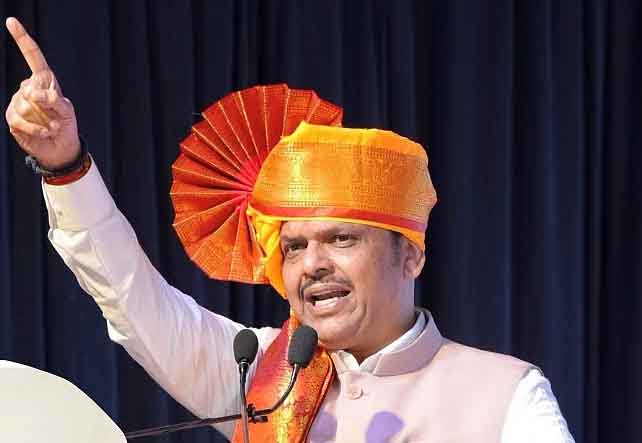
Maharashtra: The introduction of the ‘Maharashtra Freedom of Religion Act, 2026’ by the BJP-led government on Friday marks the culmination of a strategic political endeavor pursued by the BJP since 1967. Over the past several decades, members associated with the party—and its predecessor—have attempted on at least five occasions to persuade successive governments to enact such legislation.
The Use of Private Members’ Bills
On all these occasions, members utilized a ‘Private Members’ Bill.’ This is a legislative mechanism frequently employed by opposition legislators to pressure the government into acceding to their demands. Governments rarely accept such bills, as they typically run counter to the stance of the ruling party. Following a brief debate, the government usually appeals to the member to withdraw the bill. If the member refuses, the bill is put to a vote and is typically defeated due to the ruling party’s majority.
The First Attempt in 1967
The first attempt was made on March 21, 1967, by V.R. Pandit. He was a member of the Bharatiya Jana Sangh and served in the State Legislative Council. This very party later evolved into the Bharatiya Janata Party (BJP). Pandit introduced a ‘Private Members’ Bill’ titled: “A Bill to provide for the compulsory registration of religious conversions in the State of Maharashtra.” Although he did not oppose religious conversions per se, Pandit argued that an individual intending to convert should notify a ‘Registrar of Conversions’ so that the process could be officially recorded.
Government Opposition
The then Minister for Law and Justice, Barrister Sheshrao Wankhede, requested Pandit to withdraw the bill. He argued that the issue was of pan-Indian relevance and that an individual wishing to convert could simply travel to another state for that purpose. Mungantiwar’s Repeated Attempts
Senior BJP leader and former minister Sudhir Mungantiwar subsequently introduced a ‘Private Member’s Bill’ on three occasions—in April 2005, July 2008, and July 2012—demanding an anti-conversion law. Each time, he argued that such legislation was necessary to curb conversions carried out through inducement, coercion, or deception. At the time he introduced this bill, a Congress-NCP government was in power. In 2012, he received support from Vivek Pandit, who was then an Independent member of the State Legislative Assembly.