Washington : Prime Minister Narendra Modi is relying on India’s vast consumer base to cushion the economy as US President Donald Trump’s tariffs put pressure on trade ties between New Delhi and Washington, according to a major financial daily.
The strategy is showing early signs of success, allowing India to hold its ground in negotiations even after the US imposed tariffs of up to 50 per cent in 2025, among the highest applied to any American trading partner, according to a report in The Wall Street Journal.
In India’s capital, consumer spending has begun to respond to government measures. Shrey Dixit, a 22-year-old engineering student, said his family decided to buy a second car after India sharply cut sales taxes in September. “I am very happy we could get the car we wanted at a reduced price,” Dixit told the financial daily.
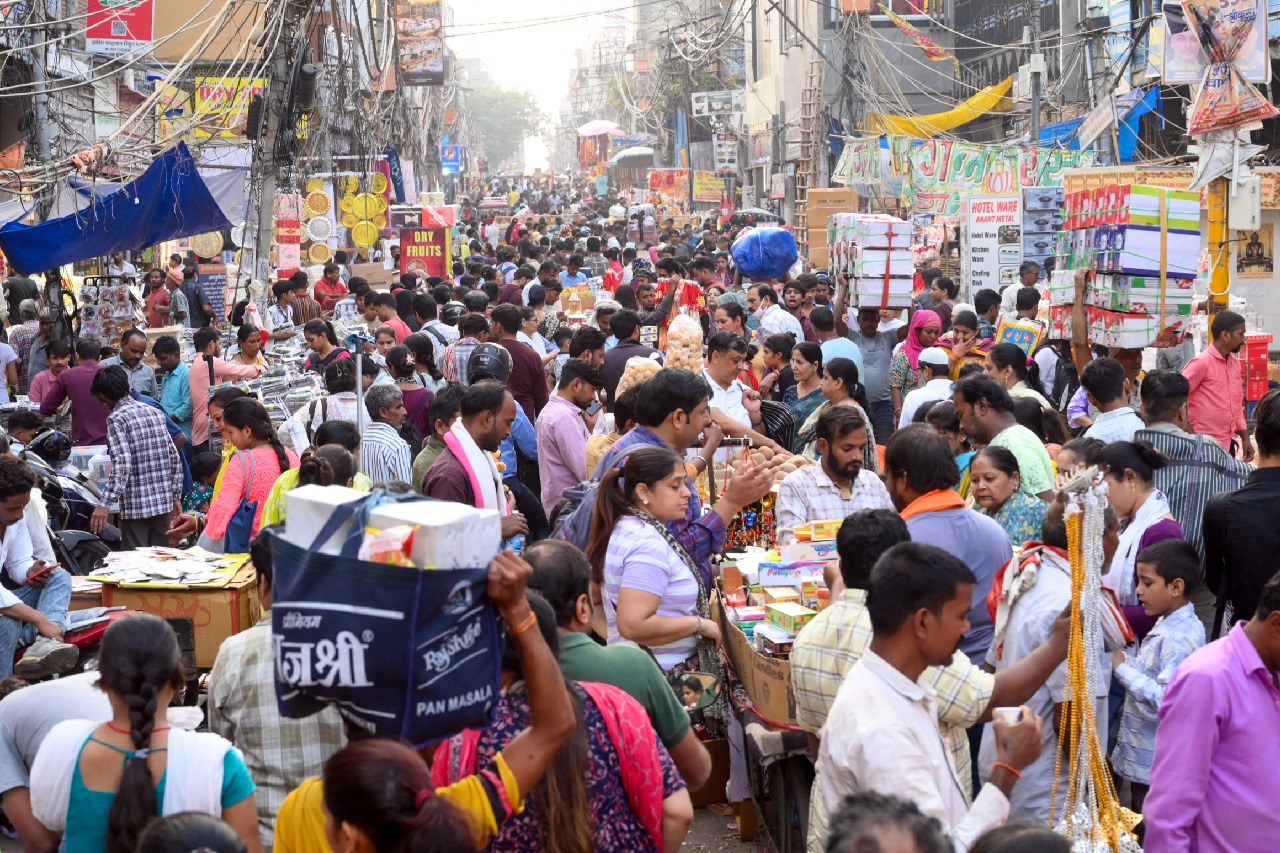
Unlike export-driven economies, consumer spending accounts for roughly three-fifths of India’s economy, giving New Delhi greater insulation from US pressure. India is also less dependent on Washington’s favour than countries such as Japan and South Korea, which offered large investment commitments in the US to ease trade tensions, the daily said.
Trump initially imposed 25 per cent tariffs on India in August, citing the US trade deficit, and later added another 25 per cent to curb India’s purchases of discounted Russian oil. India, however, had already begun shoring up domestic demand, it said.
The Wall Street Journal said the government removed income tax obligations for people earning up to about $13,300 a year, while the central bank cut interest rates several times.
Noting that around the Diwali festival last October, PM Modi urged citizens to buy local goods and share purchases on social media, the daily said India’s economy grew 8.2 per cent in the July–September quarter, with the central bank citing resilient consumer demand and government spending.
India has resisted US pressure to open its market to American dairy and ethanol products, citing the need to protect agriculture, which supports more than 250 million people, The Wall Street Journal said.
Some sectors tied closely to the US market have been hit, but economist Biswajit Dhar was quoted as saying, “Overall, it’s going to be sort of business as usual.” Exports to the US dipped after tariffs took effect, though India has sought new markets, aided by last year’s rupee slide.
India has also moved to address long-standing US concerns by overhauling its nuclear sector to allow private investment and fully opening insurance to foreign investors.
Economists warn growth could slow in the final quarter of India’s fiscal year ending in March, even as the central bank raised its full-year growth forecast to 7.3 per cent. The World Bank has said India is poised to surpass Japan as the world’s fourth-largest economy.