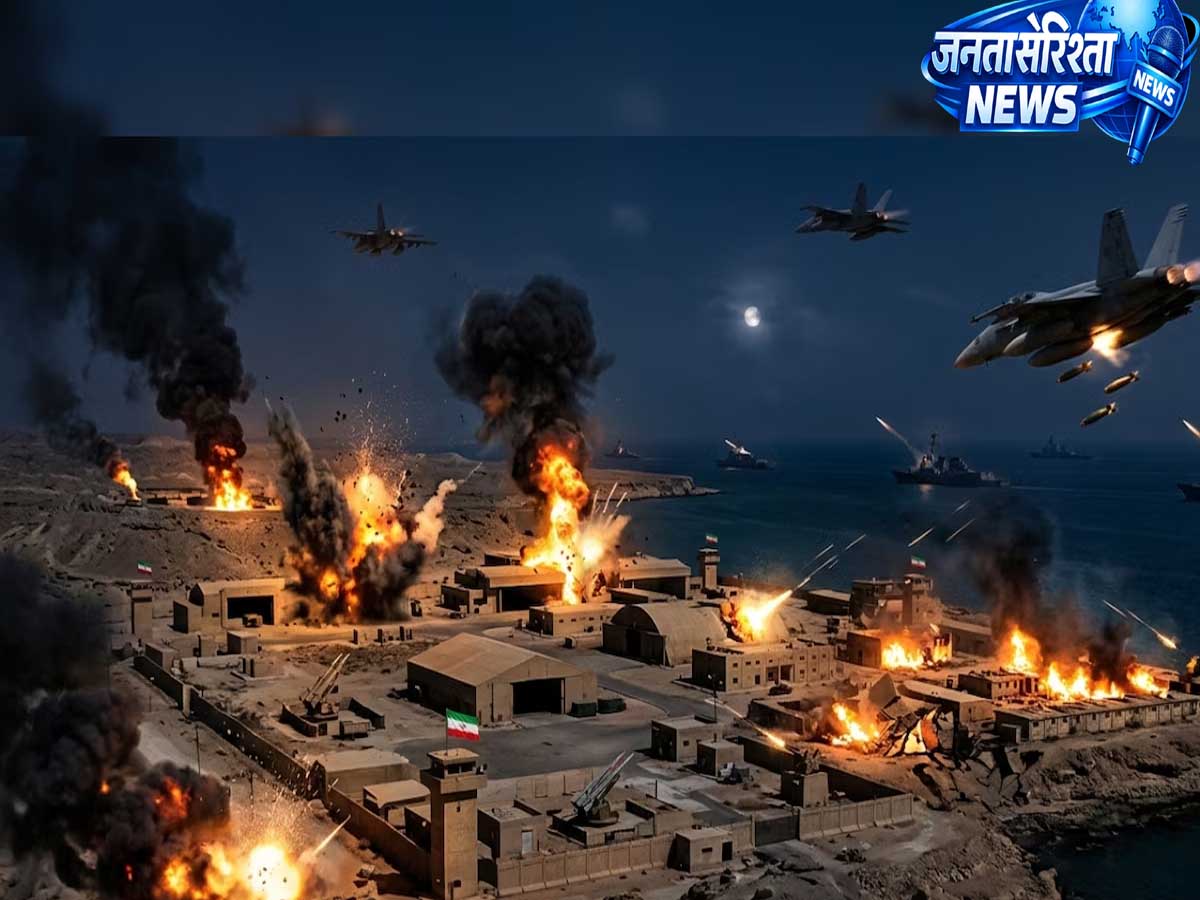
New Delhi : Tensions in the Middle East continue to escalate. A military standoff between the US and Iran has persisted for ten consecutive days. In the latest developments, the US military launched missile and air strikes on several strategic Iranian targets; reports indicate powerful explosions in various areas, including Bandar Abbas. A state of high alert has been declared across the region, and the situation remains extremely volatile.
Meanwhile, reports regarding the closure of the Strait of Hormuz—a critical chokepoint for global trade and energy supplies—have further heightened international concern. A prolonged disruption of this route could directly impact crude oil supplies, global shipping, and international markets.
Explosions in Bandar Abbas and Other Areas
According to reports, US strikes targeted Iranian military and strategic installations. Sounds of multiple explosions were heard in Bandar Abbas, a major port city in southern Iran. Local media reported the activation of air defense systems in some areas, while security agencies cordoned off the affected zones.
However, no official details regarding the extent of the damage or the number of casualties have been released so far.
Why is Bandar Abbas Significant?
Bandar Abbas is considered Iran’s most important seaport. It is situated near the gateway to the Persian Gulf and the Strait of Hormuz. Large quantities of oil, gas, and other commercial goods are imported and exported through this hub. Consequently, any military activity in this region can impact global trade.
Significance of the Strait of Hormuz
The Strait of Hormuz is one of the world’s busiest maritime trade routes. A significant portion of global seaborne crude oil exports passes through this channel. Closure or disruption of this route could trigger a surge in international oil prices and affect the energy supplies of numerous nations. Energy experts believe that any disruption in the Strait of Hormuz could impact Asia, Europe, and other major economies.
Growing Concern Among the International Community
Many nations, including the United Nations, have expressed concern over the escalating tensions in the region and have urged both sides to exercise restraint. Several countries have issued travel advisories for their citizens, and the situation regarding vessels and commercial activities in the area is being closely monitored.
Analysts state that if the scope of military action expands, the impact will not be limited to the Middle East; it could also affect the global economy, energy markets, and maritime trade.
Potential Impact on Global Markets
Amidst the rising tensions in the Middle East, fluctuations in international crude oil prices are likely. Investors are now watching to see how long the Strait of Hormuz remains affected and what further steps the US and Iran take.
Experts say that if the situation does not normalize, costs for oil-importing nations could rise, potentially impacting inflation and global supply chains.
Monitoring the Situation
Currently, military activities by both the US and Iran are ongoing, and the international community continues to monitor the situation closely. The strategies and diplomatic efforts of both nations in the coming days could determine the course of this crisis.