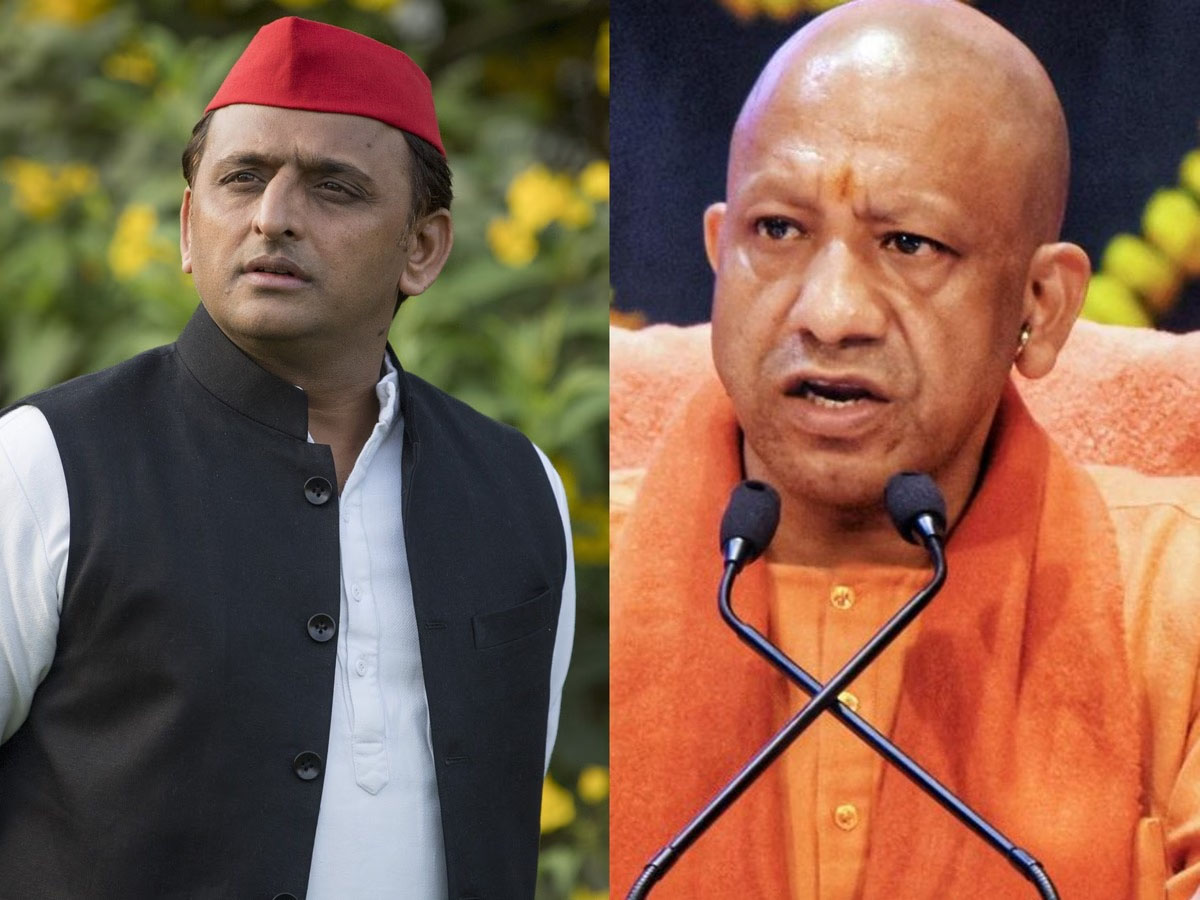
Lucknow. Political activity has intensified regarding the elections to be held on 10 Rajya Sabha seats of Uttar Pradesh. Voting is to be held on October 16. According to numerical strength, Bharatiya Janata Party is in a strong position on seven seats and Samajwadi Party on two seats, but the contest for the tenth seat has become interesting. No single party has enough numbers to win this seat on its own. Meanwhile, the discussion about fielding a third candidate from Samajwadi Party has intensified.
The current numerical strength in the Uttar Pradesh Assembly is most important for the Rajya Sabha elections. There are a total of 403 seats in the assembly, but at present there are 397 MLAs and six seats are vacant. According to the current mathematics, votes of about 37 MLAs will be required to win a Rajya Sabha seat. On this basis, BJP can easily win seven seats and SP can easily win two seats. The real contest is likely to be for the tenth seat.
BJP has its own 255 MLAs. By adding allies, the NDA figure reaches around 288. To make seven candidates win, BJP will need 259 votes, hence its position is strong on seven seats. But to win the eighth seat, a total of 296 votes will be required. Even after including allies and other potential supporters, the math on the final seat is not completely clear. This is why BJP may need additional support.
On the other hand, Samajwadi Party is said to have 101 MLAs. By adding two Congress MLAs, the opposition camp’s figure reaches 103. SP will need 74 votes to win two seats, hence the position of its two candidates is also considered strong. But if SP fields a third candidate then it will need a total of 111 votes. In such a situation, the party will have to go beyond its current numerical strength and garner the support of other MLAs.
After the names of two candidates came forward from Samajwadi Party, now discussions are going on regarding the third candidate. The party has not yet publicly announced the name of the third candidate. However, there is a possibility in political circles that SP may field a third candidate to contest the last seat. The last date for nomination is October 6, so the picture may become clearer in the coming days.
The possibility of a third candidate has made the election more interesting. If SP fields the third candidate and BJP also fields the eighth candidate, then there will be a direct contest for the tenth seat. In such a situation, the role of small parties, independent MLAs and MLAs having different views from both the camps will increase.
Cross voting was also seen in Uttar Pradesh in the last Rajya Sabha elections. This time too, both the major parties are trying to keep their MLAs united and garner additional support. Some SP MLAs have already voted in favor of the BJP candidate. The attitude of such MLAs will also be monitored. At the same time, the voting of all the MLAs of NDA’s allies will also be important in the final mathematics.
This contest for the Rajya Sabha elections is taking place at a time when political preparations for the 2027 assembly elections in Uttar Pradesh have also intensified. In such a situation, the tenth seat of Rajya Sabha is no longer a matter of just one parliamentary seat. Through this election, both the major parties will test the strength of their alliance and their hold on the MLAs.
It may be necessary for both BJP and SP to garner support from other camps or smaller parties to make their additional candidates victorious. This is why the round of meetings and political contacts has intensified before the elections. Both the parties are keeping an eye on their MLAs as well as potential supporters.
It may also be important in SP’s strategy to get the support of those MLAs who are dissatisfied with their current party. However, the situation regarding any additional support will be completely clear only at the time of voting. Similarly, BJP can also try to complete the figure of eighth seat through its allies and other MLAs.
Voting in Rajya Sabha elections takes place under the special system of open ballot, hence the party leadership also keeps an eye on the voting of its MLAs. Despite this, the possibility of cross voting cannot be completely eliminated. For this reason, the contest for the tenth seat seems to depend more on political strategy than numbers.
At present, the mathematics of BJP’s seven seats and SP’s two seats is relatively clear, but the tenth seat has made the entire election interesting. Now everyone’s eyes are on whether Samajwadi Party fields the third candidate or not and what strategy BJP moves ahead with for the eighth seat. More changes may be seen in the political equations before the October 16 voting.