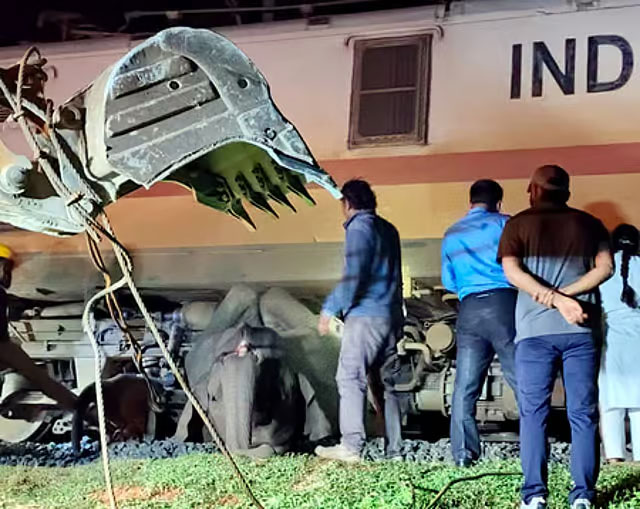
Palakkad. In a tragic accident near the Tamil Nadu-Kerala border, a wild elephant calf and its mother were killed after being struck by a train. The incident occurred late Wednesday night in the Walayar-Chavadipara area of Kerala’s Palakkad district. Following the accident, teams from the Forest Department and Railway authorities arrived at the scene, and the track was cleared after several hours of effort.
According to reports, a herd of four wild elephants—including a calf—had emerged from the Puduppathi forest around 11:30 PM on Wednesday. The group was attempting to cross the railway tracks after leaving the forest area when the Mangalore Express, traveling from Kerala towards Coimbatore, arrived on the scene.
The train was passing along the ‘B’ track when the herd suddenly appeared on the railway line. Although the loco pilot attempted to control the train, it was impossible to avoid the elephants that had suddenly appeared in its path. Struck by the speeding train, both the calf and its mother died instantly.
The train’s engine was also damaged in the accident. Upon receiving news of the incident, officials from the Walayar Forest Department and Palakkad Railway staff immediately rushed to the site. They assessed the situation and began the task of removing the elephant carcasses from the tracks.
The rescue and removal process took several hours. The carcasses were finally cleared from the tracks around 4:00 AM on Thursday with the help of Poclain machines. Subsequently, railway staff inspected the damaged engine and carried out necessary repairs. The train resumed its journey after the engine was repaired.
Forest Department officials stated that surveillance in the area has been stepped up following the incident. The location of the accident is adjacent to the forest and sees frequent movement of wild animals. Both the Railways and the Forest Department have previously implemented various measures to ensure the safety of elephants in such areas. This incident involving the death of elephants has once again raised questions regarding the safety of wildlife on railway tracks. Collisions between trains and elephants frequently occur on rail lines passing through forest areas. Environmental experts emphasize the need to identify the elephants’ traditional migratory paths and strengthen safety measures in those locations.
According to wildlife conservation organizations, elephants are highly sensitive and social animals. The death of a member affects the entire herd. The loss of a calf is particularly devastating for the group, as the entire herd plays a role in the calf’s care.
Railway officials and the Forest Department are already working on various plans to make train operations safer in forest areas. These measures include regulating train speeds, developing systems to alert authorities about the presence of elephants, and increasing surveillance in sensitive zones.
This incident in the Palakkad region comes at a time when there is a nationwide emphasis on mitigating human-wildlife conflict. Expanding railway networks and increasing construction activity near forests often disrupt the natural migratory paths of animals.
Officials have initiated an investigation into the incident to determine the train’s speed at the time of the accident and whether there was any prior information regarding the presence of elephants. Further action will be taken following the investigation.
The deaths of the elephant calf and its mother in this accident have saddened wildlife enthusiasts. The Forest Department and the Railways now face the challenge of making safety measures more effective to prevent such incidents in the future.