
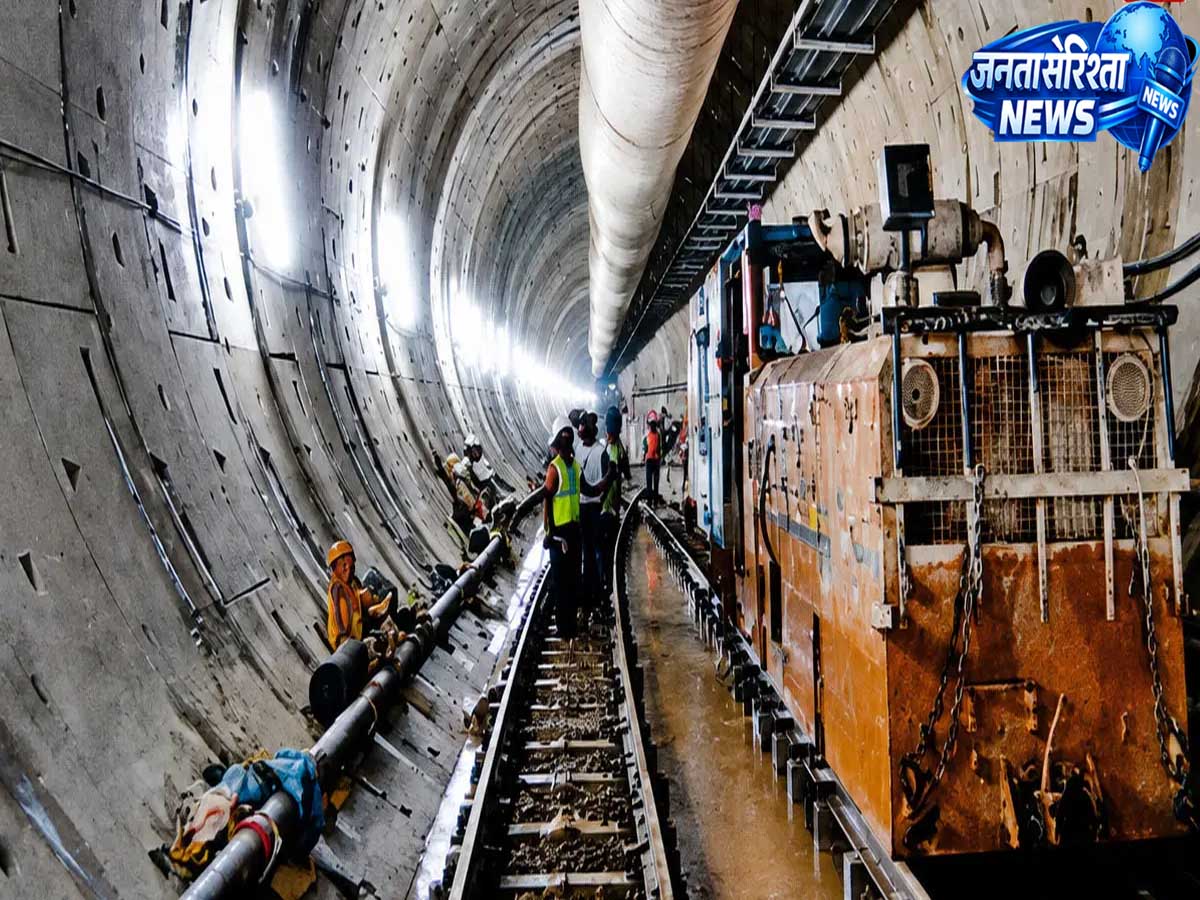
Madhya Pradesh: To deal with the water crisis and irrigation challenges in India, the central and state governments are continuously working on big infrastructure projects. Under these efforts, the country’s largest water tunnel has been completed. This huge tunnel, about 12 kilometers long, will prove to be a lifeline for lakhs of farmers in six districts in the coming years. With the completion of this project, not only will irrigation water reach the fields throughout the year, but the dependence on groundwater will also reduce and agricultural production is expected to increase significantly.
The tunnel is an excellent example of modern engineering, using state-of-the-art technology, high-pressure Tunnel Boring Machine (TBM) and advanced safety standards. After the completion of the project, lakhs of hectares of agricultural land will get irrigation facility, which will help in increasing the income of farmers and strengthening the rural economy.
Why is the country’s largest water tunnel special?
This 12 kilometer long water tunnel is considered to be the largest water transport tunnel in the country due to its size, technology and capacity. It is constructed within the mountains so that water can be directly transported to the canal system without any major surface loss.
According to experts, the biggest feature of this tunnel is that a gravity based water flow system has been developed in it. This will save energy in pumping water and the operating costs will also be much lower.
Which six districts will get the benefit?
Farmers of six districts will directly benefit from this project. There was shortage of water for irrigation in these districts for a long time. Due to farming being highly dependent on monsoon, farmers had to suffer losses every year.
After water reaches through the tunnel—
Lakhs of farmers will get regular irrigation.
Farming will not be affected even in case of drought.
It will be easier to take the second and third crops.
The area of horticulture and cash crops will increase.
Animal husbandry and dairy activities will also benefit.
How much land will be irrigated?
According to government estimates, this project will provide permanent irrigation facility to lakhs of hectares of agricultural land. In areas where earlier only rain-fed farming was done, farming will now be possible throughout the year.
There is a possibility of significant increase in the production of wheat, paddy, sugarcane, pulses, oilseeds, vegetables and horticultural crops especially.
How will this tunnel work?
Through the tunnel, water from the reservoir will be transported to the canal system through a route built within the hilly area.
The entire system consists of several modern structures—
intake structure
high pressure tunnel
control gate
balancing reservoir
distribution canals
monitoring system
Sensor based monitoring system will continuously monitor water pressure, flow and safety.
example of engineering
The construction of this 12 kilometer long tunnel was considered very challenging.
Engineers faced many difficulties during construction—
excavation of hard rocks
underground water leakage
Study of seismic activities
ventilation system
movement of machinery
Despite all these challenges, the project was completed as per the prescribed technical standards.
use of modern technology
State-of-the-art technologies were used in tunnel construction.
These include-
Tunnel Boring Machine (TBM)
laser based alignment
rock bolting technique
concrete lining
digital monitoring system
real time data analysis
These technologies made construction work safer and faster.
What will be the biggest benefits to the farmers?
- Irrigation throughout the year
Now farmers will not depend only on monsoon. - Crop production will increase
Availability of adequate water will increase productivity. - Increase in income
The ability to harvest more than one crop will develop. - Ground water conservation
Dependence on tube wells and borewells will reduce. - Cost of farming will decrease
The cost of extracting water from diesel and electricity will be less.
Rural economy will get a boost
Increasing water availability will not only benefit agriculture but also rural industries.
dairy industry
food processing
fruit and vegetable production
cold storage
agriculture based employment
New opportunities will arise in all these areas.
environmental benefits
The purpose of the water tunnel is not only irrigation but also better management of water resources.
Its main environmental benefits-
improvement in ground water level
water conservation
Relief to drought affected areas
increase in green area
maintain soil moisture
New thinking in water management
Experts believe that merely building dams will not be enough to deal with the water crisis in future.
Such tunnels that transport water from one area to another in a scientific manner can become an important part of future water policy.
Expectations of local farmers
After the completion of the project, enthusiasm is being seen among the farmers.
Many farmers say that now they will not have to worry about rain every year. By getting timely water, they will be able to adopt modern farming and achieve better production.
Government’s long term plan
The aim of the government is not only to increase irrigation but also to-
proper use of water resources
increase in agricultural productivity
increasing farmers’ income
rural development
water conservation
All these goals have to be achieved together.
future prospects
According to experts, after the successful operation of this project, similar underground water tunnels can be constructed in other states of the country.
Such projects can become a new model of water management, especially in hilly and drought-affected areas.


