New Delhi. The future of the historic treaty signed about 30 years ago between India and Bangladesh on sharing of Ganga river water seems to be uncertain. The duration of this agreement signed between the two countries on 12 December 1996 is going to expire on 12 December 2026. However, formal bilateral talks regarding renewal of the treaty have not yet started. In such a situation, it is feared that if no consensus is reached soon, then this three decade old important treaty may end after the completion of its stipulated period. However, there remains a possibility of a last-minute solution with the intervention of the top political leadership of both the countries.
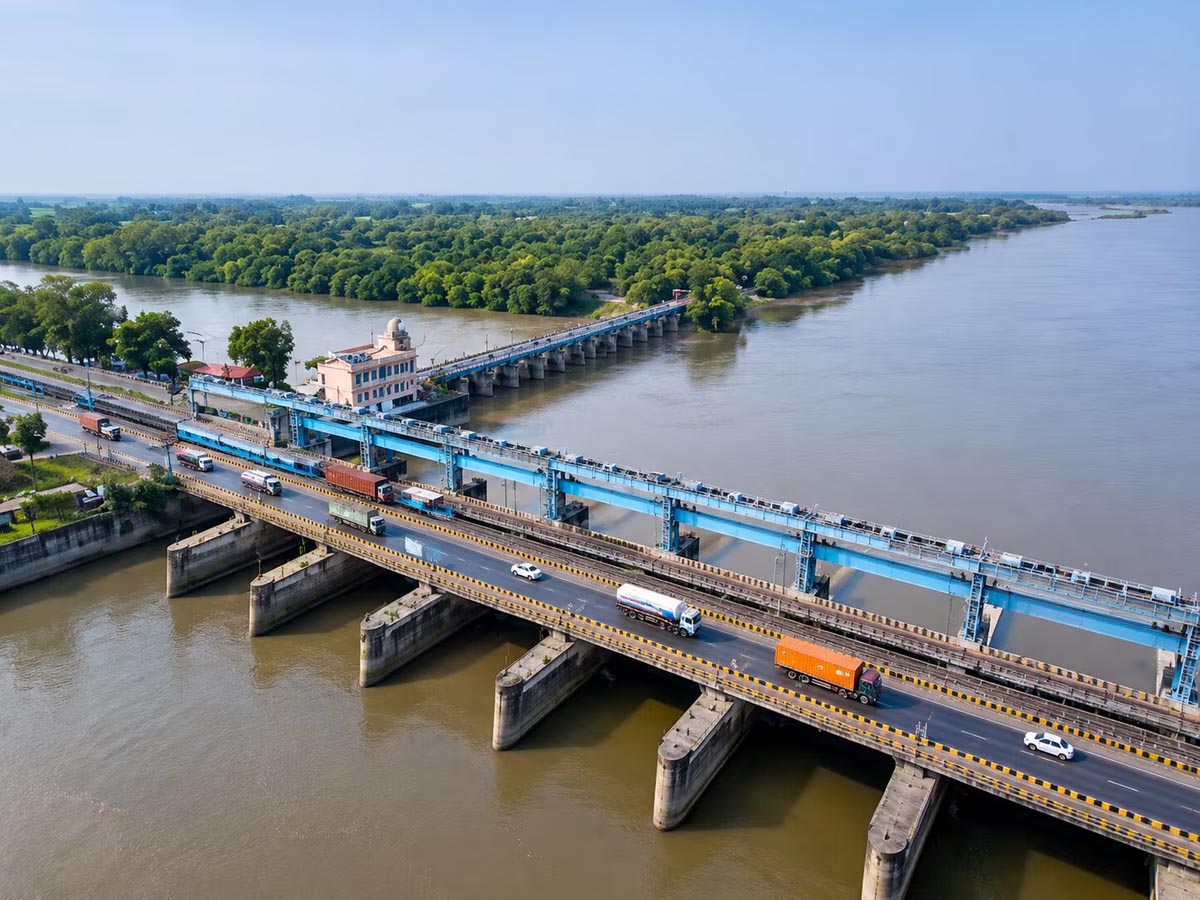
Ganga water sharing between India and Bangladesh has long been a sensitive issue. This agreement is considered an important basis for mutual cooperation and management of river water resources between the two countries. In the year 1996, this historic agreement was signed by the then Indian Prime Minister HD Deve Gowda and Bangladesh Prime Minister Sheikh Hasina. Its main objective was to ensure distribution of Ganga water available at Farakka Barrage in West Bengal between the two countries as per the prescribed arrangement.
Under the treaty, the water of the Ganga is distributed on the basis of a prescribed formula every year during the dry season from January 1 to May 31. During this period, the share of both the countries is decided for every ten day period keeping in mind the quantity of water available at Farakka Barrage. This arrangement is especially important because the demand for water for irrigation, drinking water and other needs increases due to low river level in summer.
Despite the expiry date of the treaty approaching, the non-start of formal talks between the two countries has become a matter of concern. According to reports, Bangladesh Water Resources Minister Shahiduddin Chowdhury Ani sent a letter to India’s Jal Shakti Minister CR Patil on November 17 requesting him to initiate discussions on renewal of the treaty. Even before this, efforts were made by Bangladesh to start talks, but till now no definite timeline for talks has been revealed.
Meanwhile, a delegation of Indian officials is proposed to visit Dhaka from 21 to 23 November. During this time, technical and other issues related to Ganga water can be discussed in the joint committee meeting. However, as per available information, formal renewal of the treaty is not on the agenda of this meeting. In such a situation, the possibility of taking a final decision on the future of the agreement only through technical level meetings is considered limited.
There has also been a demand from Bangladesh for a new agreement or amended provisions instead of merely extending the existing treaty. Bangladesh wants explicit guarantee provisions to be included to ensure availability of its share of water during the dry season. At the same time, it is important for India to keep in mind its domestic water requirements. For this reason, the renewal process can be challenging in agreeing to the new conditions rather than simply repeating the old terms.
Even within India, questions related to sharing of Ganga water are being raised. There has been a demand to keep in mind the water needs of Bihar. Apart from this, the needs of West Bengal are also important. Water management associated with the Farakka Barrage impacts agriculture, industrial activities and other river-related systems. Therefore, in any new agreement, India will have to balance the concerns of its states and its international obligations with Bangladesh.
According to experts, the importance of the Ganga Water Treaty is not limited to the sharing of water only, but it is also linked to the bilateral relations of the two neighboring countries. Many rivers are shared between India and Bangladesh. In such a situation, reaching agreement on a new agreement regarding Ganga can also give a positive message for the resolution of other river water disputes in the future. On the contrary, ending the treaty may increase uncertainty in water management.
Climate change has also emerged as a major challenge related to the future of this agreement. Experts consider it important to review the old water sharing formula in view of issues like changing monsoon, uneven distribution of rainfall and availability of water in the dry season. In the new circumstances, it is considered necessary to prepare a long-term arrangement keeping in mind the needs of both the countries.
At present, the biggest challenge before both the countries is to find an acceptable solution before the deadline of December 12. If a permanent agreement is not agreed upon within the stipulated period, then options such as a temporary arrangement or extending the period of the treaty can be considered at the political level. However, no such arrangement has been officially announced yet.
Now all eyes are on the next steps of New Delhi and Dhaka. In the coming days, the initiative of the top leadership of both the countries may play an important role in deciding whether the three decade old arrangement of Ganga water sharing will continue or the two neighboring countries will need additional time and negotiations for a new agreement.