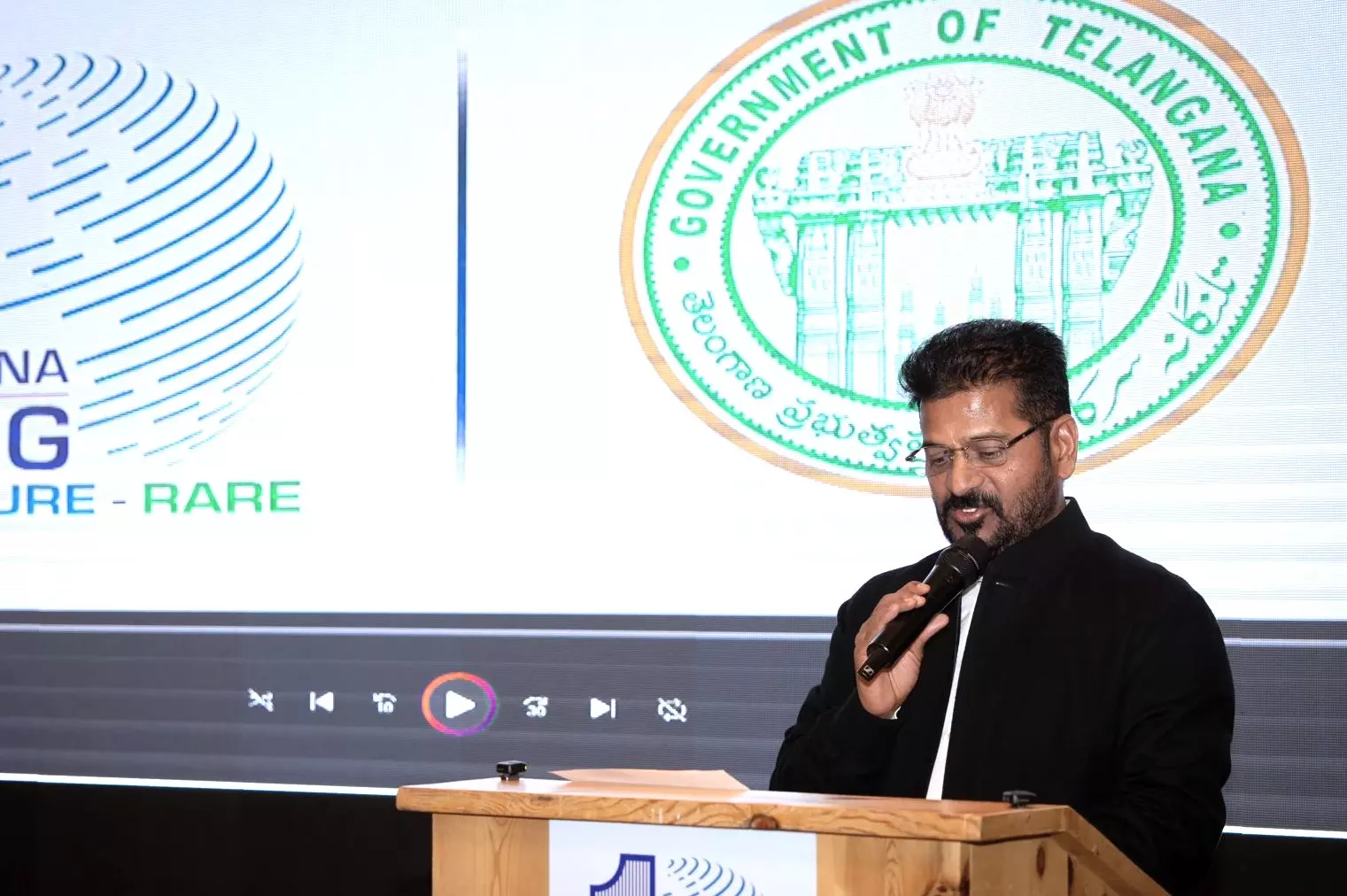
Hyderabad: Chief Minister A. Revanth Reddy’s dream project, Bharat Future City, received a significant boost when the Telangana government aggressively promoted it during the World Economic Forum 2026 in Davos.
It garnered strong support from the cash-rich United Arab Emirates, whose minister, Abdullah bin Touq Al Marri, proposed the formation of a joint task force of officials from both sides to expedite the project’s implementation.
During his interaction with the UAE minister, Revanth Reddy highlighted the immense growth potential of the Bharat Future City project – India’s first net-zero greenfield smart city. Spread across 30,000 acres, the city is envisioned as a multi-sectoral, sustainable urban-industrial hub with dedicated zones for AI, education, healthcare, industries, residential areas, and entertainment.
The Chief Minister informed the UAE minister that global companies like Marubeni and Sembcorp have already partnered with the project. He added, “Recently, we signed an MoU with Reliance Group’s Vantara to establish a new zoo in Future City.”
Also read – Phone-tapping probe: Sajjanar issues notice to RS Praveen Kumar over criminal case allegations
Netherlands-based UPC Volt has announced plans to build a 100 MW AI-ready data center in Bharat Future City with an investment of ₹5,000 crore. The project, which will be developed over a five-year period, will be closely integrated with renewable energy sourcing under Telangana’s Green Open Access framework.
UPC Volt is a joint venture between Netherlands-based UPC Renewables Group and VOLT Data Centers, focusing on building high-performance, energy-efficient data centers specifically designed to meet the growing demands of artificial intelligence workloads. An MoU was signed to formalize the investment and project framework. Also read – High Court overturns death sentence for woman convicted of child murder
This project is expected to create significant employment opportunities, with over 3,000 direct and indirect jobs during the construction phase and more than 800 direct and indirect jobs after operations begin.
It is also likely to attract ancillary investments in advanced technology components, cooling systems, power management solutions, and digital services, further strengthening Telangana’s technology ecosystem.