
Supreme Court takes a stern view of post against CJI; issues notices to Congress leaders
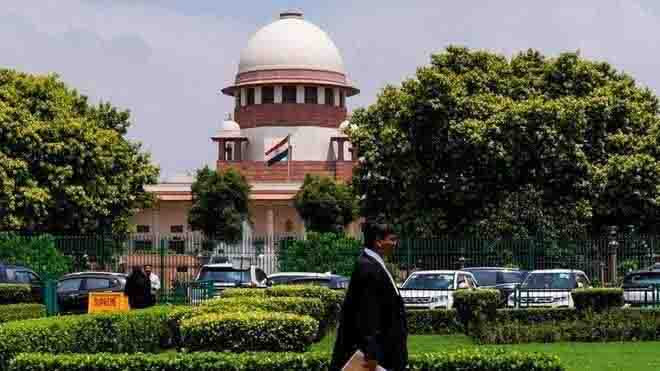
New Delhi. The Supreme Court has taken a tough stance regarding the controversial remarks made on social media against Chief Justice of India (CJI) Justice Surya Kant. On Friday, 6 November 2026, the apex court has issued a contempt notice to all the office-bearers of Kerala Pradesh Congress Committee (KPCC) and sought their reply. The court clarified that freedom of expression cannot be used to intimidate the judiciary, harm its dignity or interfere with judicial proceedings. After this decision, the legal troubles of the Kerala unit of Congress have increased.
The case was heard by a bench of Justice Arvind Kumar and Justice Vipul M. Pancholi. The court said that the Constitution is supreme in the country and no person or political organization can be above the Constitution. Criticizing judicial decisions is a democratic right, but it is important to understand the difference between criticism and attempts to intimidate the judiciary. The Supreme Court said that the independence of the judiciary cannot be a matter of convenience or choice of any political party. The credibility of the courts comes from the rule of law and the Constitution. This does not require the approval of any political organization. It is necessary to deal sternly with efforts to weaken the authority of the judiciary.
Actually, this dispute started on 12 October 2026. That day, a post regarding Chief Justice Surya Kant was published on the official social media platform X (formerly Twitter) of the Kerala unit of the Congress. Objections were raised to the language and message of this post. The related post was removed from social media after the controversy escalated and criticism. According to the report, this controversy came to light when the leaders of the opposition INDIA alliance were protesting near the Supreme Court demanding the resignation of Chief Election Commissioner Gyanesh Kumar. During this incident, a controversy arose over the remarks made by the Chief Justice.
After the post surfaced, it was criticized in legal and political circles. Many people raised the question whether it is appropriate to make such comments from the official social media account of a political party against a person holding the highest position in the judiciary. As the controversy escalated, the Kerala Pradesh Congress Committee had given a clarification. The party informed that the disputed post has been removed. Along with this, the person responsible for publishing the post was also said to be removed from the related responsibility.
Kerala Congress state president Sunny Joseph had also apologized unconditionally in this matter. However, despite the post being removed and an apology, the matter reached the court. On the basis of the complaint by advocate Vineet Jindal regarding this controversy, contempt proceedings were demanded in the Supreme Court. The petition alleged that the comments published on social media were likely to affect the reputation of the judiciary. The case was then registered for judicial consideration.
The issue of political demonstration and sloganeering that took place in the Supreme Court premises on October 12 was also raised in the complaint. It sought to find out whether permission was taken for the demonstration and whether it caused trouble to lawyers, officials or others visiting the court. During Friday’s hearing, the Supreme Court stressed the need for a balance between freedom of expression and respect for the judiciary. The court said that it is a different thing to disagree with a judicial order and criticize it, but attempts to intimidate judicial institutions or hinder their functioning cannot be accepted.
The bench decided to seek the assistance of a senior advocate in the matter to examine whether the incident in question falls within the ambit of criminal contempt or civil contempt. The court asked Attorney General R. Cooperation has also been sought from Venkataramani. Contempt of court is a serious matter from the legal point of view. There are separate provisions for civil and criminal contempt under the Contempt of Court Act. Willful violation of a judicial order may attract civil contempt, while in case of acts obstructing the judicial process or unduly weakening the authority of the court, question of criminal contempt may arise.
However, the issuance of notices to Kerala Congress officials does not mean that they have been convicted. Through the notice, the parties concerned have been given an opportunity to present their views and respond to the allegations. The court will take further decision after considering all the aspects. This entire incident has also raised questions regarding the operation of the official social media accounts of political parties and the responsibility of the content published on them. Comments published from an organization’s official account may be viewed as a public message from the organization rather than a personal opinion.
This is the reason why it is considered important for political parties to take care of the factuality of the content published on social media, language and respect for constitutional institutions. At present, after the notice issued by the Supreme Court, all eyes are on the response of the officials of Kerala Pradesh Congress Committee. In the upcoming judicial proceedings, it will be clear who bears what responsibility for the disputed post and whether there are grounds to pursue contempt action in this case.