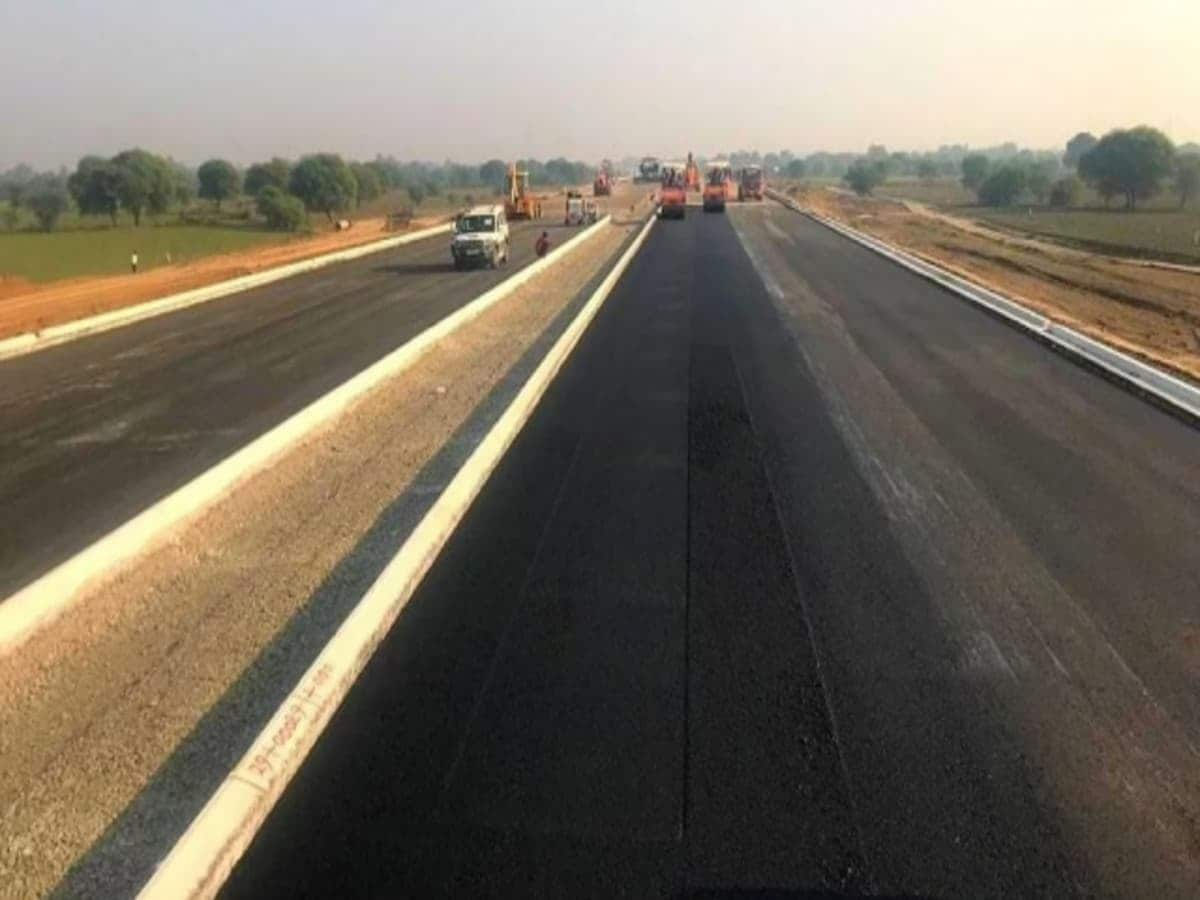
Lucknow. The quality of construction of the Lucknow-Kanpur Expressway has once again come under scrutiny. Following two days of light rain, incidents of road subsidence and damage have been reported at two locations along the expressway. At one spot, a section approximately 50 meters long has sunk, while at another, a stretch of about 70 meters is being dismantled and reconstructed. Repair work is also being repeatedly hampered by the rain. The current state of the road has raised questions regarding construction quality and the oversight mechanisms in place.
According to reports, a 50-meter stretch of the road near the 59-kilometer mark has subsided. Repairs became necessary after the road surface became uneven and signs of sinking appeared. Meanwhile, near the 62-kilometer mark, a 70-meter section is being dismantled for reconstruction. Construction and repair activities have had to be halted multiple times due to the rain, slowing down the pace of work.
The expressway is being built to provide better and faster road connectivity between Lucknow and Kanpur. Consequently, the emergence of such issues in various sections during the construction phase naturally raises concerns about the project’s quality. Factors such as the soil layer, proper compaction, drainage, and the quality of the various road layers are critical in road construction. Weaknesses at any of these stages during rainfall can lead to problems like road sinking or subsidence.
Remedial work is required in the area near the 59-kilometer mark following the subsidence of a 50-meter stretch. Elsewhere, near the 62-kilometer mark, the situation has necessitated the dismantling and reconstruction of a 70-meter section. This raises questions about the level of quality checks conducted during construction and whether the necessary standards were adhered to while laying the road layers.
Rainfall has also affected repair operations, as favorable weather conditions are essential for many aspects of road construction and repair work. Continuous rain or excessive moisture can hinder the proper compaction of soil and the layering of materials. This is why repair work had to be halted during the rains; operations are resuming now that the weather has cleared.
The Lucknow-Kanpur route is one of the state’s busiest traffic corridors. Both cities are significant from industrial, commercial, and administrative perspectives, with a large number of people traveling between them daily. The expressway project is considered crucial for easing this congestion and facilitating smoother travel between the two cities. Upon completion, the project is expected to reduce travel time and alleviate traffic pressure on the existing road.
However, incidents such as road subsidence during the expressway’s construction are raising public concern. Vehicles travel at higher speeds on expressways compared to standard roads; therefore, any shortcomings in the road surface, structural integrity, or construction quality could lead to serious safety issues in the future. Consequently, conducting technical inspections and making necessary improvements to every section before fully opening the road to traffic is deemed essential.
According to road experts, there can be several reasons for subsidence on a new route. These include inadequate soil compaction, water accumulation beneath the road, deficiencies in the drainage system, and issues related to construction materials. However, the exact cause of the subsidence in the affected sections of the Lucknow-Kanpur Expressway will only become clear after a technical investigation.
If rainwater does not drain properly from the road under construction, the underlying soil can be compromised. Therefore, robust drainage systems are vital alongside the road in major projects like expressways. Water accumulation in any section during rain poses a risk of weakening the road’s lower layers; this aspect will also need to be examined during the repair of the affected areas.
Following the issues reported near the 59 km and 62 km markers, there is now a growing emphasis on conducting a detailed inspection of the surrounding areas, rather than simply repairing the damaged sections. If the soil or the roadbed is weak in any other section, it must be rectified before the project is completed. This will help prevent future incidents of road subsidence.
The pace of repair work has currently been affected by the rain; however, operations are expected to accelerate once the weather improves. The fact that a stretch of approximately 70 meters is being dismantled and reconstructed indicates a need for extensive remedial work at that location. Similarly, necessary technical corrections are required where a 50-meter section of the road has subsided.
Major projects like the Lucknow-Kanpur Expressway carry the hopes of lakhs of commuters. Its inauguration promises improved connectivity between the two cities and is expected to boost trade and industrial activities. However, ensuring the road’s structural integrity and safety prior to its opening is of paramount importance.
The subsidence of the road at two separate locations and the subsequent reconstruction work have raised questions regarding construction quality. It is now essential to conduct a technical assessment of the affected sections as well as a comprehensive quality check of the entire expressway. Any deficiencies identified in the construction must be rectified promptly to ensure that commuters do not face any risks once the expressway becomes operational.