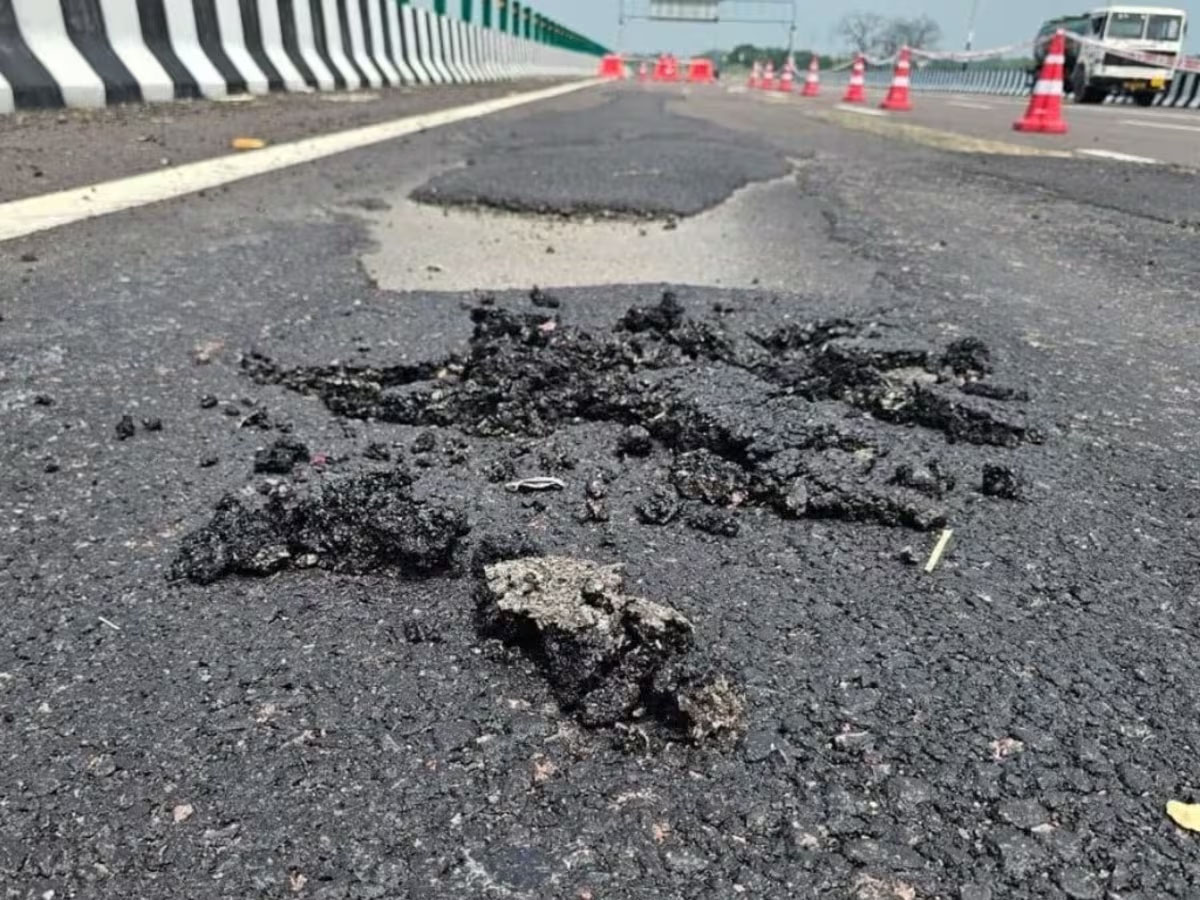
Lucknow. Questions regarding the construction quality of the Lucknow-Kanpur Expressway have surfaced once again. Despite lower-than-expected rainfall during this monsoon season, the condition of the road is deteriorating in several sections. Following Sunday’s rain, the road surface has begun to disintegrate even in areas that had previously been reconstructed after developing potholes. The peeling of the bitumen layer and the appearance of cracks shortly after repairs have raised doubts about the quality of construction.
Defects have reappeared near the 63.8 km and 63.9 km markers—sections that had previously been rebuilt from scratch after potholes emerged. After Sunday’s rainfall, the bitumen on the repaired sections began to peel off again, and cracks have started appearing across the road surface. This raises a critical question: if the repaired road surface cannot withstand even light rainfall, what will be the condition of the expressway during heavy rains?
Potholes first, then repairs, and now renewed deterioration
Questions regarding the quality of the Lucknow-Kanpur Expressway have persisted since its construction. In areas where potholes or other defects appeared, the affected sections were dismantled and reconstructed. It was expected that the road would remain durable and sound following these repairs, yet the same issues have resurfaced after the rain.
The situation observed near the 63.8 km and 63.9 km markers has cast doubt on the quality of the repair work itself. The bitumen on the upper layer of the road is peeling off, and cracks are visible in several places, becoming a cause for concern among motorists. If these defects are not rectified in time, potholes could re-emerge in the near future.
Defects surfaced despite low rainfall
Rainfall during this monsoon season has so far been reported as lower than anticipated. Despite this, issues regarding drainage and the road surface are emerging in certain sections of the expressway. The condition of the road following Sunday’s rainfall has exposed the reality regarding the quality of the expressway’s construction and repair work.
According to experts, the durability of any expressway depends significantly on the quality of the sub-layers, drainage systems, and construction materials, alongside the top surface layer. If rainwater seeps into the road layers or fails to drain away promptly, the surface layer weakens, leading to cracking and disintegration. Consequently, it becomes essential to investigate the cracks and the peeling asphalt observed on the expressway.
Waterlogging at Km 57.5
A distinct issue also surfaced at the 57.5 km mark following the rain. Due to an inadequate drainage system, rainwater was seen accumulating around the road. An effective drainage system is crucial for a vital route like an expressway to ensure proper water runoff; stagnant water increases the risk of damage to the road surface.
If drainage issues persist, there is a likelihood of water seeping into the underlying layers of the road. This can compromise the road’s structural integrity and lead to an increase in potholes and cracks over time. Thus, the water accumulation at the 57.5 km mark has raised questions regarding the expressway’s drainage system.
Risk of Impact on Vehicular Movement
The expressway serves as a crucial link between Lucknow and Kanpur, with a large volume of vehicles traversing it daily. Cracks and peeling asphalt on the road surface could create future traffic complications. If the damaged sections are not repaired immediately while the rainy spell continues, the problem could escalate.
Particular vigilance is required for sections that have previously undergone repairs. The recurrence of defects highlights the need for a technical assessment of the road’s quality, rather than relying solely on superficial patchwork. Additionally, the reasons behind the road surface disintegrating and the shortcomings in the drainage system need to be identified.
Need for Quality Assessment
Following the surfacing of these defects on the Lucknow-Kanpur Expressway, demands have arisen for an inspection of the construction materials, the various road layers, and the drainage system. The recurring disintegration of the road surface at the 63.8 km and 63.9 km marks, along with waterlogging at the 57.5 km mark, indicate that the arrangements for handling rainfall in certain sections of the expressway are inadequate.
The rainy season is not yet over. Given that repaired sections have begun to disintegrate and water is accumulating after just the initial spells of rain, the situation could worsen with further rainfall. It is imperative that the concerned agency immediately inspects these locations, investigates the technical causes, and ensures a permanent solution.
Answers regarding the concerns raised about the expressway’s road quality and drainage system will only be available after an investigation. For now, however, Sunday’s rain has certainly exposed the very flaws that were claimed to have been rectified through repairs.