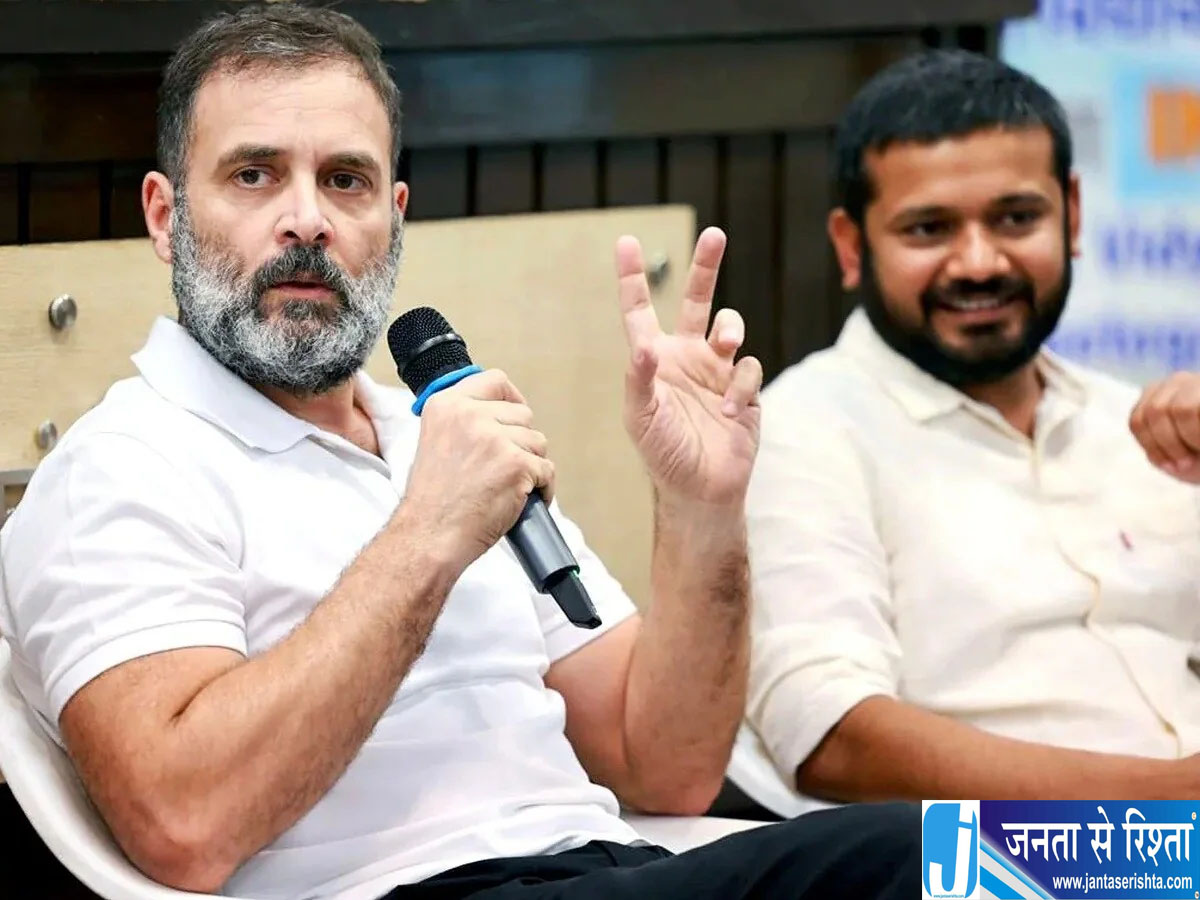
New Delhi. The Congress leadership has initiated a review following the crushing defeat of the party’s student wing, the National Students’ Union of India (NSUI), in the Delhi University Students’ Union (DUSU) elections. Rahul Gandhi, the Leader of the Opposition in the Lok Sabha, held a meeting with NSUI in-charge Kanhaiya Kumar and the organization’s national president, Vinod Jakhar, seeking an explanation for the electoral loss. NSUI failed to secure even a single one of the four key central posts in DUSU this time.
In the election results declared on September 19, the Akhil Bharatiya Vidyarthi Parishad (ABVP) won three of the four central posts. ABVP’s Yash Dabas was elected president, while Riya Chhavri won the post of secretary and Lakshya Raj Singh won the post of joint secretary. Independent candidate Deepanshu Shaukeen secured the vice-president’s post. NSUI failed to win any of the four positions.
The NSUI defeat has concerned the Congress leadership, particularly because the organization was considered a strong contender for the presidency. During the campaign, both the Congress and NSUI had hoped for a strong comeback in the central panel. Despite this, they failed to secure a single seat in the final results. Consequently, questions regarding ticket distribution, election strategy, and organizational coordination have arisen within the party.
Rahul Gandhi questioned Kanhaiya Kumar and Vinod Jakhar about where the organization’s strategy faltered and why victory remained elusive despite a close contest until the very end. Reports indicate that he also sought details regarding candidate selection and the campaign itself. Instructions have been issued to prepare a detailed report on the reasons for the defeat.
The discussion during the meeting focused heavily on independent candidate Deepanshu Shaukeen. Shaukeen was previously associated with NSUI and was known to be active in the organization’s campaigns and student movements. He did not receive the NSUI ticket for this election; subsequently, he contested the vice-presidential election as an independent candidate and won. Rahul Gandhi reportedly asked why Deepanshu Shaukeen had not been given the ticket. Congress leaders explained that Shaukeen was not fielded as a candidate due to certain circumstances and conditions at the time of ticket distribution. However, following his victory as an independent candidate, the decision is being reviewed within the party. It is also being examined whether adequate weightage was given to the opinions of local student leaders and grassroots workers during the ticket allocation process.
The Congress leadership does not view the DUSU election merely as a university-level contest; for the party, it serves as an indicator of its organizational standing among young voters and students. Rahul Gandhi has recently been organizing events focused on issues concerning students and the youth. Consequently, the DUSU results have intensified internal deliberations regarding why the party’s political message failed to translate into votes among students.
Immediately after the election results, the Congress leadership sought a report on the defeat. Party General Secretary K.C. Venugopal was tasked with reviewing the overall electoral performance and gathering information from the organization. Kanhaiya Kumar was also asked to submit a detailed report covering the election campaign, ticket distribution, the student wing’s preparedness, and the strategy employed on polling day.
Deliberations regarding the defeat are also underway within the NSUI. The organization faces the major challenge of strengthening its presence at the campus level and fostering better coordination among student leaders. ABVP’s organizational preparedness and grassroots network are seen as key factors in its performance, whereas questions have been raised within the NSUI regarding ticket distribution and a lack of local-level coordination. These factors currently form part of the party’s internal review.
Following the results, NSUI President Vinod Jakhar stated that the organization had contested the election with full vigor and raised several issues relevant to students, although the final outcome did not meet expectations. The party leadership is now trying to identify the specific colleges and student groups where the organization lagged behind and determine at which level the strategy needs to be altered.
Kanhaiya Kumar’s role is also under review. Upon being appointed in charge of the NSUI, he was expected to strengthen the organization’s hold among the youth. Following the NSUI’s failure to secure any seats in the DUSU elections, the party leadership is now holding detailed discussions with him regarding electoral strategy, organizational decisions, and candidate selection.
As of now, the Congress has not officially announced any disciplinary action against any leader. The primary objective of the meeting is reportedly to understand the reasons behind the defeat and formulate a future strategy. Rahul Gandhi has emphasized the need for the organization to be more active on student-related issues and to strengthen grassroots outreach.
The NSUI’s defeat in the DUSU elections has now prompted an organizational review within the Congress. Losses across all four central posts, coupled with the victory of a former NSUI activist as an independent candidate, have intensified scrutiny regarding ticket distribution and campus strategy. Attention will now focus on whether the Congress leadership implements organizational changes within the NSUI following the review or allows the existing team to move forward with a new strategy.