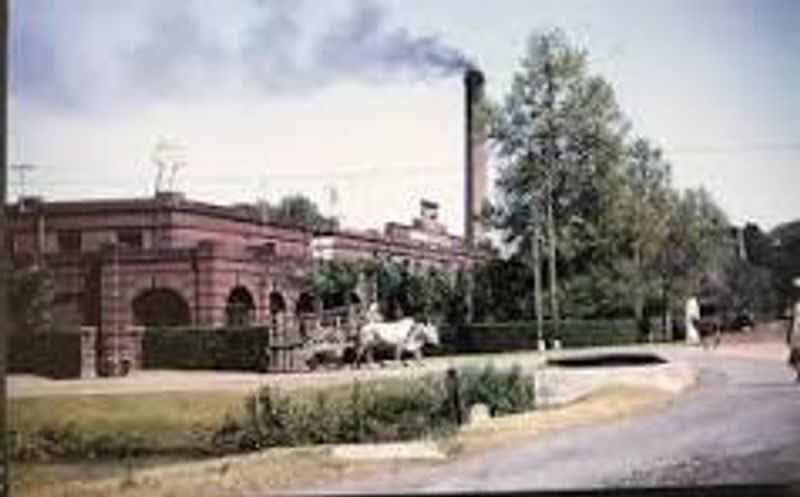
Punjab: ‘My Fair Lady,’ ‘President,’ and ‘Angola’ were some of the brands for which this woolen mill became renowned. These varieties captivated the entire world. Domestic demand for them was immense, yet the factory struggled to keep pace with it. Old-timers recall that this mill was not merely a factory; it was a ceaseless enterprise upon which the prosperity of the entire district depended. Today, its payroll lists barely 120 workers, whereas in the early nineties—prior to its privatization—it employed 3,700 people. Ownership of the mill rested with the Kolkata-based SK Bajoria Group of Industries. Subsequently, in 1991, following its nationalization by the Central Government, the Ministry of Textiles brought it under its administrative ambit. It is frequently cited as a prime example of how private enterprises can outperform their public-sector counterparts.
The primary focus of private enterprise lies in maximizing profits, fostering innovation, and facilitating rapid decision-making, whereas the priorities of state-owned enterprises typically revolve around public welfare, social development, and stability. Workers contend that had this mill remained in private hands, it would have achieved far greater success by now. There was a time when this factory sprawled across hundreds of acres of prime real estate and produced some of the finest woolen fabrics in the country. The Army and paramilitary forces were its principal clientele. Problems began to surface once it transitioned into a government-run entity. Much like numerous other government-managed projects, this enterprise, too—rather than flourishing—began to falter. In stark contrast, private mills emerged in neighboring towns—boasting more modern infrastructure and a more disciplined work culture—and rapidly surged ahead in their growth. At one time, it was hailed as the pride of Punjab and a pivotal contributor to India’s woolen industry. In fact, the entire town had sprung up right around the mill premises. Whenever the mill is discussed, the old-timers still lose themselves in nostalgia to this day. The King is dead; long live the King.
Punjab: The Enduring Legacy of a 155-Year-Old Woolen Mill