Punjab: Even 60 years after the guns fell silent on September 23, 1965, the Indo-Pak war remains etched in the nation’s memory—not just as a military conflict, but as a crucial test of India’s political will, military leadership, and commitment to peace. As the country marks six decades since the ceasefire following one of South Asia’s most brutal conflicts, veterans recall the events and lasting impact of a war that began with a miscalculation and ended with a calculated decision to exercise restraint. From one veteran’s perspective, the 1965 war began due to a major strategic miscalculation by Pakistan. In August 1965, Pakistan launched Operation Gibraltar, infiltrating approximately 3,000 soldiers disguised as civilians into the Kashmir Valley to incite a general uprising. The uprising never occurred. Instead, locals exposed the infiltrators, allowing the Indian Army to swiftly foil the plan. Lieutenant General J.S. Dhillon, VSM (Retd.), who witnessed the war as a young student, recalls how the fighting affected even those far from the frontlines. In his village, Manko, in Jalandhar district, near the Adampur Air Force Station, the fighting unfolded dramatically. Pakistani aircraft attempted to bomb the airbase, while Indian air defense guns lit up the night sky “like Diwali firecrackers,” a sight that left a lasting impression on a generation.
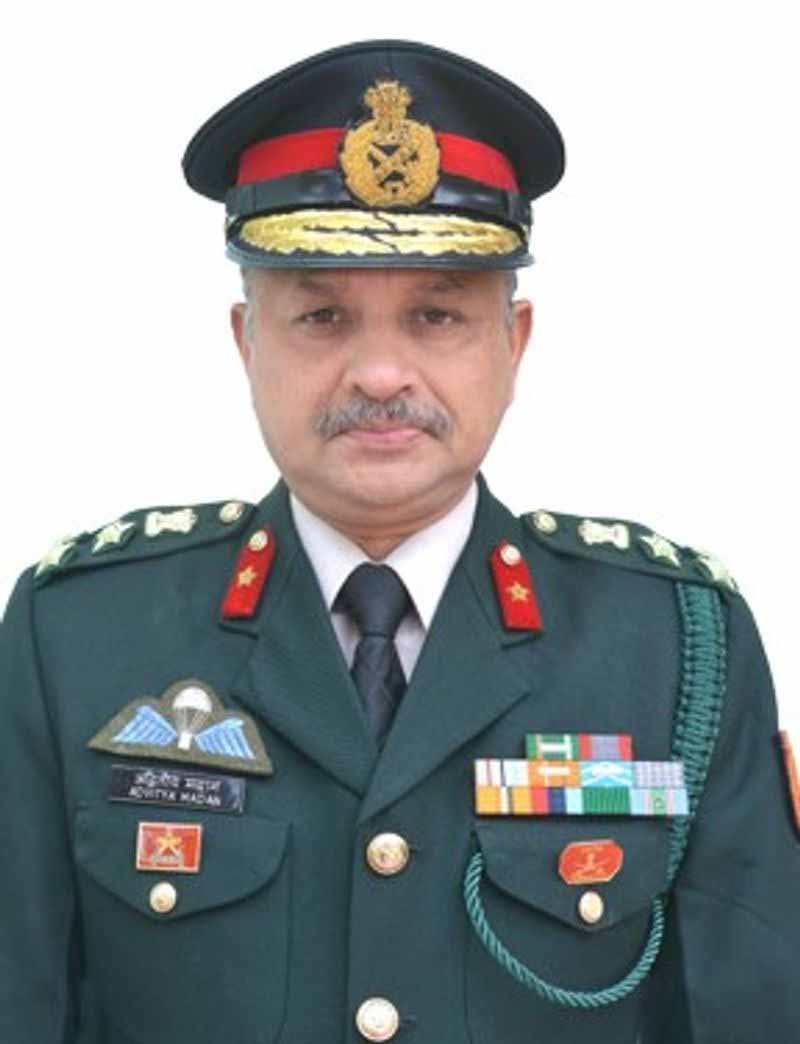
Another reason behind Pakistan’s move was its reliance on numerical strength and US-provided Patton tanks. That reliance proved misplaced. In the plains of Khemkaran and Asal Uttar, Indian troops, equipped mostly with outdated Centurion tanks and anti-tank weapons, inflicted heavy losses, turning the area into a graveyard for Pakistani armor. The war also witnessed extraordinary acts of bravery. CQMH Abdul Hamid of the 4th Grenadiers and Lieutenant Colonel AB Tarapore of the 17th Poona Horse were posthumously awarded the Param Vir Chakra, India’s highest gallantry award, for their courageous actions under difficult circumstances. As Brigadier Aditya Madan (Retd) explains, Pakistan’s failure in Kashmir did not de-escalate tensions. On September 1, 1965, it launched Operation Grand Slam, aimed at capturing Akhnoor and severing India’s land link to Jammu. India’s response was decisive and sudden. On September 6, the Indian Army crossed the international border towards Lahore and Sialkot, transforming a covert operation into a fully conventional war. Seventeen days of intense ground and air combat followed. Despite technological shortcomings, the Indian Air Force held its ground with skill and courage, while the Army repelled Pakistani armored attacks on key battlefields like Phillora. The consequences of the 1965 war extended far beyond the battlefield. It established Prime Minister Lal Bahadur Shastri as a calm, strong, and morally authoritative leader. Equally crucial were military commanders like Lieutenant General Harbakhsh Singh, GOC-in-C of the Western Command, who is remembered for refusing to withdraw Indian troops to the Beas River despite pressure, thereby denying Pakistan any negotiating leverage around Amritsar. For Pakistan, the war was another harsh lesson after the 1947-48 wars: that strategic miscalculations and overconfidence cannot replace popular support or sound military planning. Failing to achieve its objectives, Pakistan demanded a UN-mandated ceasefire, which came into effect on September 23, 1965, under UN Resolution 211, brokered by global powers like the Soviet Union and the United States. The war formally ended with the Tashkent Declaration, signed on January 10, 1966, by Prime Minister Lal Bahadur Shastri and Pakistan’s President Ayub Khan. India agreed to return the occupied territories, expressing its preference for peace over territorial gains. Tragically, Shastri passed away just hours after signing the agreement, a death that remains shrouded in unanswered questions even today.
A Legacy of Lessons
Sixty years later, veterans view the 1965 war as a moment when India displayed courage, unity, and restraint. It shattered the myth that superior weapons alone guarantee victory and reinforced the principle that a nation’s strength lies as much in leadership and moral integrity as in military might. The 1965 ceasefire marks not just the end of a war, but a reminder that even after fierce fighting, the difficult and courageous path often leads to peace.