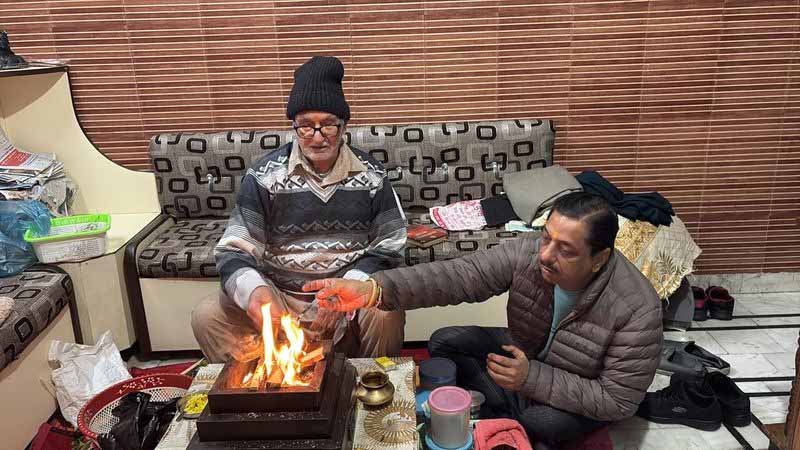
Punjab: Hindu preachers and migrants are keeping alive the tradition of performing Saraswati Puja on Basant Panchami, while locals limit their celebrations to flying kites and organizing community meals. Saraswati is worshipped to attain enlightenment through knowledge and to get rid of laziness and ignorance. This year too, the number of devotees worshipping Goddess Saraswati was low. However, those who did perform the puja cleaned their homes early in the morning and invoked the goddess by chanting mantras and performing havan. Some enthusiastic devotees visited temples despite the inclement weather, as the city witnessed heavy rainfall on Friday. They offered flowers and garlands as a mark of respect to the goddess. Preacher Rajesh Tiwari said that almost all the disciples of his father, preacher Ambe Dutt Tiwari, performed Saraswati Puja at their respective places. Rajesh Tiwari said, “Some families from Uttar Pradesh, Bihar, and Odisha contacted us for information regarding the rituals of Saraswati Puja. However, no local family showed any interest in participating in the puja at the temples here.”
Basant Panchami, originally a day for worshipping Goddess Saraswati, is celebrated on the fifth day of the bright half of the month of Magha, according to the Hindu Gregorian calendar. However, Saraswati Puja is largely absent from most homes in Punjab on Basant Panchami, which was once the most sacred part of the celebrations. Religious leaders have expressed concern that residents of northern states, including Punjab, are becoming indifferent towards honoring the goddess of knowledge, art, and culture. They say this has happened over the past few decades. Mahant Swaroop Bihari, national president of the Akhil Bharatiya Brahmin Morcha, said, “It is truly sad that followers of Hinduism in northern states have almost stopped worshipping Saraswati on Basant Panchami, which is traditionally a festival for praying for knowledge, learning, music, art, science, and technology.” The day also marks the arrival of spring and the end of the winter season, symbolizing a new beginning and spiritual awakening. The festival is celebrated with great pomp and show in West Bengal, Bihar, Assam, Odisha, and Tripura with the installation of idols of the goddess in homes and educational institutions. In Maharashtra and parts of central India, this day is associated with Saraswati Puja, as well as with Lord Shiva and Parvati.
Punjab: Migrants and preachers are preserving a disappearing tradition.