
New strength for an ‘Atmanirbhar Bharat’ (self-reliant India): A major announcement by the Modi government
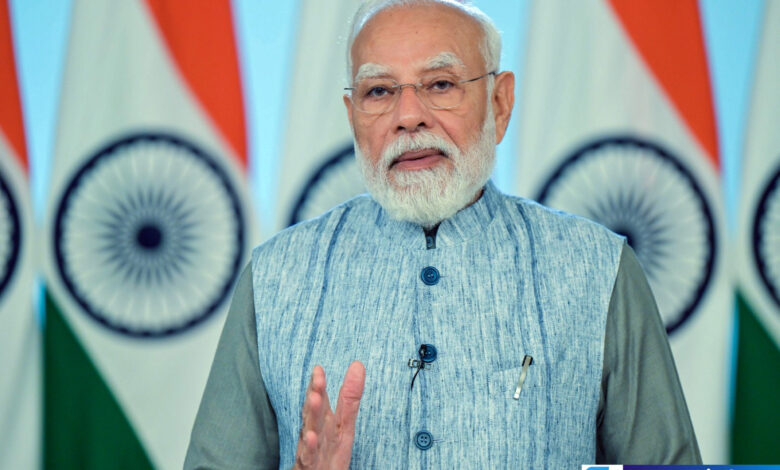
New Delhi. Prime Minister Narendra Modi has welcomed the Union Cabinet’s approval of a Rs 2,814 crore scheme to promote domestic processing of critical minerals. The Prime Minister stressed the need to strengthen India’s capability in developing future technologies. His message is that India should not only become a country that uses new technologies, but also has the capacity to develop them. The Central Government on Wednesday, November 4, 2026 approved the Capital Expenditure Assistance Scheme for Processing of Critical Minerals. The objective of this scheme is to develop the processing capacity of important minerals like lithium and nickel in the country, reduce dependence on imports and strengthen strategic sectors like electric vehicles, batteries, electronics and defence. The scheme was approved in the Union Cabinet meeting chaired by Prime Minister Narendra Modi. Union Information and Broadcasting Minister Ashwini Vaishnav informed about the decisions of the cabinet. The scheme will be implemented over a period of five years from financial year 2026-27 to 2030-31.
Rs 2,814 crore plan for critical minerals
The main objective of this scheme of the Central Government is to set up modern plants for processing of important minerals in India. Presently India is dependent on foreign supplies for refined products and high purity substances of many important minerals. These minerals are used in electric vehicle batteries, energy storage systems, electronic components and defense sector. The government believes that developing the processing capacity of these minerals in the country will improve the availability of essential raw materials to the domestic industries. This will reduce the dependence on imports as well as limit the impact of disruptions in the global supply chain.
Four new processing plants will get support
Under the scheme approved by the government, capital assistance will be given to set up four processing plants of important minerals. Of these, two plants will be for processing lithium and two plants for nickel. The minimum capacity of each lithium plant has been fixed at 30 thousand tonnes and the minimum capacity of each nickel plant has been fixed at 50 thousand tonnes. Under the scheme, up to 30 percent capital subsidy will be given on eligible investment. There is a provision of maximum assistance of Rs 500 crore for Lithium Processing Project and maximum Rs 900 crore for Nickel Processing Project. Apart from this, the possibility of obtaining cobalt as a by-product during the processing of nickel is also included in the scheme.
Electric vehicles and battery industry benefit
The most significant impact this decision could have is on the electric vehicle and battery manufacturing industries. Lithium and nickel are critical minerals for modern battery technology. These are used in electric cars, two-wheelers and energy storage systems. As the market of electric vehicles in India is growing, the demand for minerals required for battery manufacturing is also increasing. According to experts, if the availability of high-quality mineral products increases in the country, it can help Indian companies reduce their dependence on foreign suppliers. However, its real benefit will depend on timely completion of projects, developed technical capacity and production costs.
Prime Minister’s emphasis on future technologies
Prime Minister Narendra Modi has been continuously emphasizing on strengthening India’s capabilities in the field of science, research and innovation. In the recently held Emerging Science, Technology and Innovation Conclave 2026, he had also said that India should play a leading role in the development of future technologies. The Prime Minister had linked scientific research, indigenous technology and innovation to the goal of a developed India. The new scheme for processing of important minerals is part of this broader strategy. Its objective is to create such industrial capabilities in the country, which will be necessary for the creation of new technologies in the coming years.
Efforts to reduce dependence on foreign supplies including China
Processing of important minerals in the world is concentrated in a limited number of countries. In such a situation, many industries may be affected due to tension in international trade relations, export restrictions and supply disruptions.
India is also not completely isolated from these challenges.
Increasing the domestic processing capacity of minerals like lithium, nickel and cobalt is therefore being considered important not only from economic security but also from the strategic point of view. The new scheme of the government is expected to promote value addition of minerals in India. With this, the country will be able to move towards manufacturing of refined products instead of being limited to the import or availability of raw minerals only.
How will the companies be selected?
The companies taking advantage of the scheme will be selected in two phases. In the first phase, the technical qualifications of the applying companies will be evaluated. After this, eligible companies will be able to participate in the financial bidding process. Two beneficiaries will be selected for each mineral. In the selection, the eligible proposals seeking lowest capital assistance from the Government will be given priority. The sanctioned assistance will be paid in three phases linked to the scheduled progress of the project. This will help in monitoring the utilization of government funds and implementation of projects.
National Important Mineral Mission got