
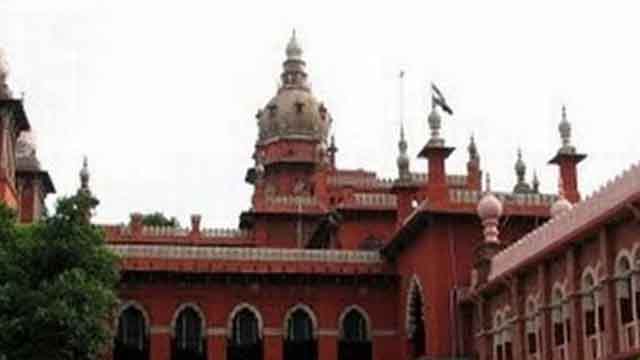
Tamil Nadu: The Madras High Court has ordered the Central Information Commission (CIC) to consider, within two months, a petition filed by Thaveka under the Right to Information (RTI) Act regarding steps taken to prevent the distribution of money for votes in the assembly elections.
A petition filed by the Thaveka legal team in the Chennai High Court had asked several questions under the RTI Act, including: How many complaints have been received under the RTI Act regarding the use of money in election campaigns over the past 50 years? Has a toll-free number been established for filing complaints 24/7 regarding the use of money by political parties in the 2026 assembly elections?
What action has been taken against political parties and candidates who have already distributed money for votes in elections? What action will be taken against those who distribute money for votes in the upcoming 2026 assembly elections? Are there mobile apps and dedicated websites for filing complaints about cash payments? Several questions were raised under the RTI Act.
The Public Information Officer of the Election Commission has answered only two of these questions. The Commission has refused to answer the remaining questions. Despite an appeal to the Central Information Commission in this regard, no action has been taken so far. This is illegal. Therefore, it was argued that answers should also be provided to the other questions related to the use of money in elections.
The case came up for hearing before a bench of Chief Justice M.M. Srivastava and Justice G. Arul Murugan on Tuesday. The judges hearing the case ordered the Central Information Commission to consider and decide on the petition filed by the Thaveka party within two months. They ordered that if no action is taken, the petitioner can request a further hearing of the case.


