Assam: As the state of Assam gears up for the 2026 Assembly elections, the Dhubri district administration has initiated extensive logistical and security exercises to manage one of the state’s most complex electoral landscapes. The district is home to over 1.22 million voters, spread across riverine and border areas.
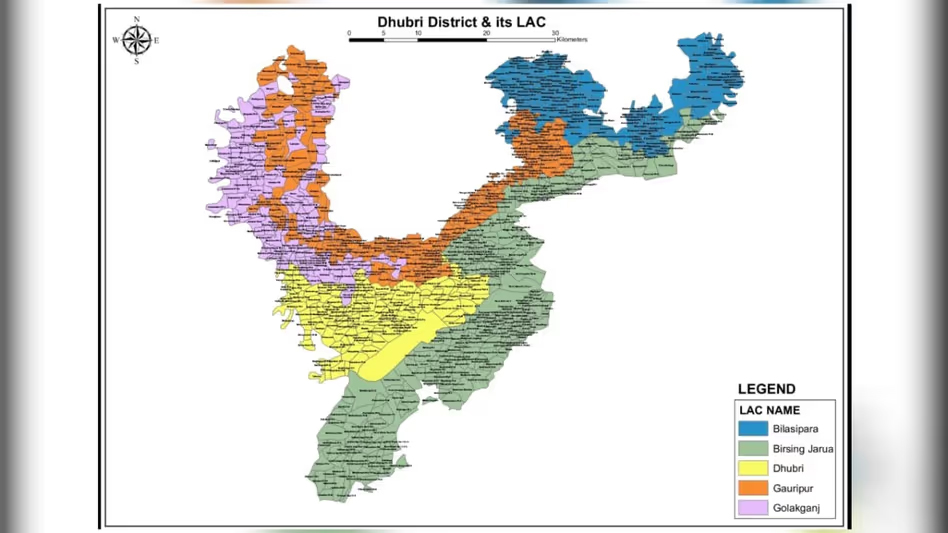
Spanning an area of 2,838 square kilometers and sharing borders with West Bengal and Bangladesh, Dhubri remains a sensitive and strategically vital district. With an estimated population exceeding 2.018 million, preparations are currently underway to ensure the smooth conduct of polling across its five Assembly constituencies: Golakganj, Gauripur, Dhubri, Birsingh Jarua, and Bilasipara.
According to officials, the total number of voters in the district stands at 1,220,384, comprising 629,683 male voters, 590,696 female voters, and five transgender voters. The district also includes 4,890 voters aged over 85 and 3,865 Persons with Disabilities (PWD), for whom special arrangements are being made.
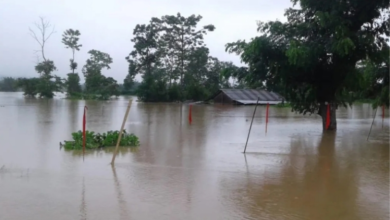
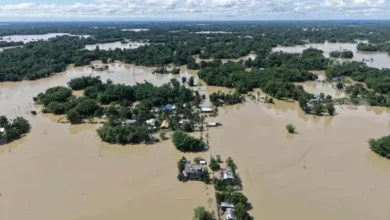
One of the most unique challenges in Dhubri is its heavy reliance on waterways. As 285 polling stations are accessible only by boat, the administration has established a dedicated “Boat Cell” to oversee riverine transport logistics. A survey of boats is currently underway at Mela Ghat, where each vessel is being certified for seaworthiness and assigned specific election duties.
Security measures have been significantly bolstered; every boat has been equipped with life jackets and buoys, and is staffed by a driver and a helmsman. Teams from the State Disaster Response Force (SDRF) and the National Disaster Response Force (NDRF) will be deployed along the river routes to handle any emergencies that may arise during polling operations. Given the district’s proximity to international and inter-state borders, security arrangements have been further tightened. Out of the 1,548 polling stations, 103 are situated along the state borders, and 68 are located near the international border with Bangladesh. Officials have designated 608 polling stations as “critical” and 231 as “sensitive,” necessitating strict surveillance and additional security deployment. Areas such as Nilokhia, Mutakhowa, Bhogdanga, Phaskarkuti, and Patamari have been placed under special surveillance. The District Election Officer, in collaboration with police teams from Dhubri and South Salmara, is conducting grassroots-level awareness campaigns to maintain peace and prevent any untoward incidents.
In an effort to enhance the voter experience and promote inclusivity, the administration is also introducing several special polling stations. Five “model” polling stations will offer superior amenities, while 26 booths will be managed entirely by female staff—including security personnel—marking a step toward promoting gender representation. Dedicated support mechanisms are also being implemented to ensure barrier-free voting for voters with disabilities.
Officials stated that the first phase of the randomization of polling personnel was completed on March 18, and the training for election-related staff has also concluded. A 24×7 control room has been made operational, while the strong room located at the PC Institute in Gauripur is being secured.
The final phase of preparations will commence on April 8, when election materials will be transported—in many instances by boat—to remote polling stations; this will mark the culmination of a process being described as one of the most comprehensive election management exercises ever undertaken in the state.