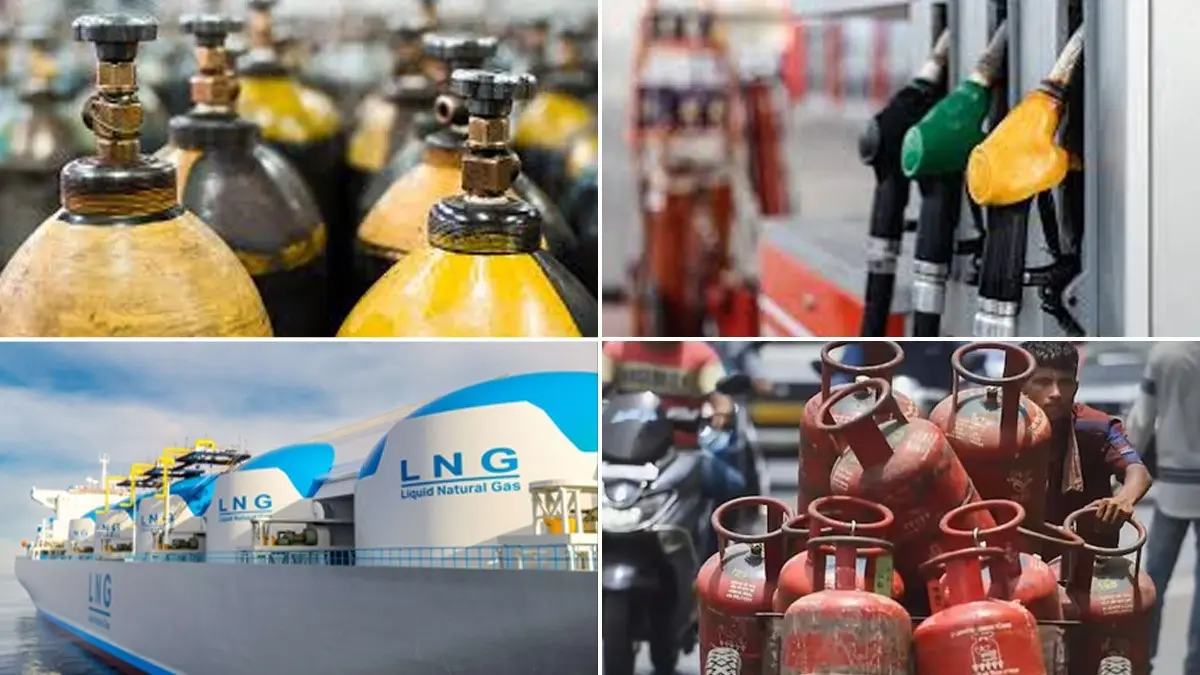
New Delhi: As the conflict in West Asia disrupts global energy corridors, the Indian government has moved to prioritise the variety of gases that power the nation’s kitchens and transport.
With shipments through the Strait of Hormuz effectively stalled, the Ministry of Petroleum and Natural Gas (MoPNG) recently invoked the Essential Commodities Act to ensure that domestic supplies are diverted to sectors that most directly impact citizens.
While these terms, LPG, PNG, CNG, and LNG, are often used interchangeably, they represent vastly different forms of energy with unique storage, safety, and delivery requirements.
The Kitchen Staples: LPG vs. PNG
For the average Indian household, the primary choice is between the traditional red cylinder and the modern pipeline.
- LPG (Liquefied Petroleum Gas):
Composed of propane and butane, LPG is a byproduct of oil refining. It is liquefied under moderate pressure for easy portability in cylinders.
Under the new 2026 government mandate, domestic LPG production has been fast-tracked to prevent shortages, even as commercial prices for restaurants have increased.
- PNG (Piped Natural Gas):
This is methane delivered directly to homes via underground pipes. Unlike LPG, which is heavier than air and can pool on the floor if it leaks, PNG is lighter than air and disappears upward, making it a safer alternative for high-rise urban living.
Mobility and Industry: CNG and LNG
While LPG and PNG dominate the home, the other two gases are most significant for the economy and transport.
- CNG (Compressed Natural Gas):
Primarily used in the transport sector, CNG is natural gas (methane) compressed to less than 1% of its volume.
It is a cleaner alternative to petrol and diesel, fueling the buses, taxis, and autos that keep Indian metros working.
- LNG (Liquefied Natural Gas):
This is the bulk traveller. To transport natural gas across oceans, it is cooled to a staggering -162°C, turning it into a liquid that occupies 1/600th of its original volume.
India’s current crisis is largely due to a disruption in these LNG shipments, which normally feed into the national grid to be vaporised for use as PNG or CNG.
Priority Allocation in 2026
The government’s latest order establishes a clear hierarchy for gas distribution. Domestic PNG and CNG for transport are at the top of the list, receiving 100% of their required allocation.
In contrast, heavy industries and refineries have seen their supplies slashed to 65–80% as the nation manages its limited reserves.
As the bridge to a cleaner energy future, understanding these fuels is no longer just for engineers; it’s a necessity for every consumer navigating the current energy landscape.