
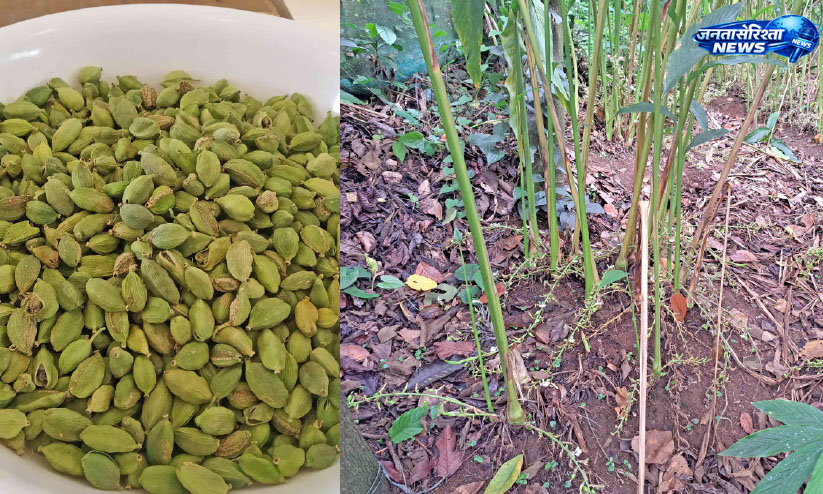
Kerala: The impact of climate change and a lack of rainfall is now clearly visible on spice crops. A problem where cardamom plants failed to flower this year has emerged in Kerala and surrounding areas, signaling a likely decline in production. This has directly affected the market, leading to a sharp rise in cardamom prices.
The average market price of cardamom has crossed ₹3,000 per kilogram. A significant surge in prices has been observed over the past month due to falling production and rising demand. According to experts, the maximum price has risen by approximately ₹1,000, while the average price has increased by about ₹500.
According to the latest auction data, 58,306.6 kg of cardamom was sold during an online auction conducted by ‘Speciality Indian Food Parks Exports Pvt. Ltd.’ at the Puttady Spice Park on Tuesday; the entire stock was sold out. The highest price at this auction was ₹3,819 per kg, while the average price stood at ₹2,928.43 per kg.
Additionally, strong trends were observed in the auction held on Monday by the ‘Idukki Women Cardamom Growers Company,’ where the maximum price reached ₹4,207 per kg and the average price was ₹2,858.6 per kg. On the same day, the average price at the ‘RNS Spice Company’ auction rose to ₹3,001.04 per kg.
Market experts state that erratic weather and a lack of rainfall are the primary reasons for the decline in cardamom production. The failure of plants to flower has impacted the crop yield, resulting in reduced supply.
Meanwhile, traders from North India have become active ahead of the upcoming festive season, particularly Diwali. Rising demand has intensified competition in the auction market, directly influencing prices.
Traders believe that if weather conditions do not improve, cardamom prices could rise even further in the coming months. Currently, there is sustained demand for high-quality cardamom in the market, while supply remains limited.
According to agricultural experts, the impact of climate change is no longer confined to crop yields alone; it is also directly influencing prices in the spice market. This situation could prove challenging for both farmers and traders in the near future.


