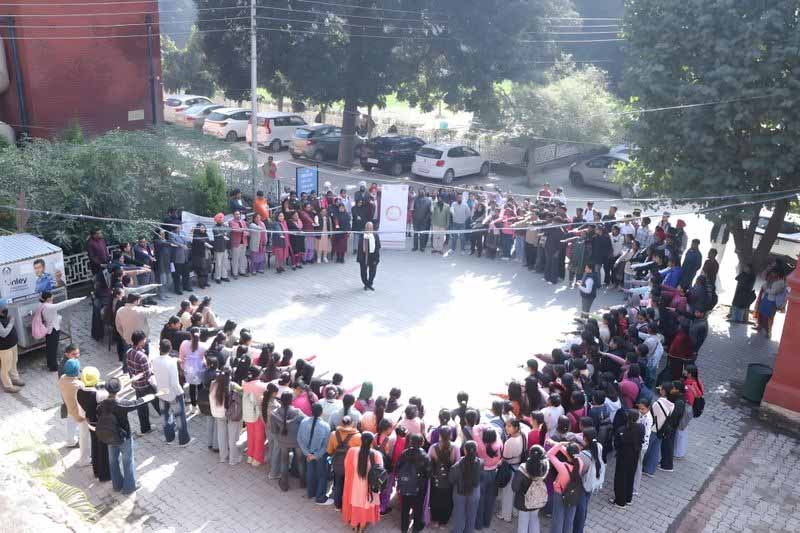
Jalandhar: In the age of social media and short video reels, traditional forms of art and literature are facing serious challenges. One such powerful medium is street theatre, or street theater, which many believe is gradually losing its luster in the digital age. However, writers and theater experts believe that while the traditional form is under pressure, its relevance has not completely vanished. Dr. Jaswant Rai, District Research Officer of the District Language Department and a well-known author, says that today is undoubtedly the era of social media and reels. He believes that almost every form of literature has been affected, and street theatre is no exception. However, he completely disagrees with the idea that literature or street theater has ceased to exist. According to him, the impact of social media posts, reels, and online content is temporary and cannot play a lasting role in social change. Dr. Rai further explains that many people believe they are winning social battles from home through social media, but in reality, very little meaningful work is done on the ground. In contrast, street theatre has always worked among the people. From large public gatherings to small courtyards, it has raised political, social, economic, religious, and cultural issues with limited resources and strong ideological commitment. Due to this direct impact, those in power have often felt threatened by street theatre, and artists like Safdar Hashmi have even sacrificed their lives for it. He believes that while time may try to tarnish street theatre, it can never destroy its original power. Ashok Puri, a renowned street theatre artist and director of Bahu Rang Kala Manch, shares his thoughts on the past, present, and future of street theatre.
He explains that the development of any society depends not only on individual thinking but also on its cultural, literary, and political activities. Street theatre in India emerged around the 1970s and soon flourished in Punjab through groups like IPTA and Plus Manch. Initially, street theatre focused primarily on political themes, and artists like Safdar Hashmi and Gursharan Singh gave it dignity and recognition. Ashok Puri recalls that his group began working in this field in 1989, when street theatre actively addressed social and political concerns. However, with the expansion of television channels and the easy availability of mobile phones, public participation in social events declined. Many artists turned their attention to television, films, and social media. He also points out that today street theatre has often become a mere formality under CSR-funded programs, where performances are organized solely to meet needs, not to raise social awareness. He says that such programs contribute nothing meaningful to society or the art form. Renowned author Dr. Dharampal Sahil offers a balanced perspective on the changing times. He says that in this modern era of social media, street theatre has truly lost its traditional luster. However, he believes that street theatre has also evolved into a new hybrid form. According to him, street theatre has adapted to social media through reels shot in public spaces, OTT platforms, and digital storytelling. These new formats reach a wider audience and attract a larger audience, and as a result, more artists are joining the field. Dr. Sahil also warns that while this digital transformation has increased recognition, the traditional form of street theatre is gradually losing its place. He says the challenge is to balance the original spirit of connecting directly with people with the opportunities provided by modern technology. Experts agree that street theatre is not on the verge of extinction. Some dedicated and passionate individuals will continue to use it as a tool for social change. Their dedication will ensure that even in this rapidly changing digital age, the voice of street theatre remains alive and relevant.
Jalandhar: Street theatre is facing a digital challenge, yet it remains relevant.