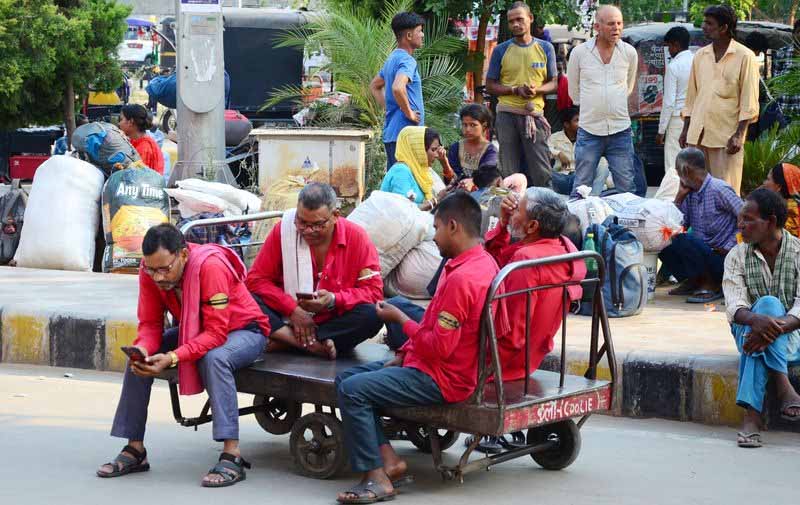
Jalandhar: For decades, railway porters—also known as “coolies”—have been the unseen backbone of railway stations, carrying passengers’ luggage, yet they have never received the respect and basic amenities of rest. Despite their essential role in helping passengers, many porters continue to work in difficult conditions, lacking access to designated restrooms or necessary welfare infrastructure. At one of the region’s busiest railway stations, the lack of proper rest facilities has become a clear symbol of administrative negligence. Porters, who spend long hours on platforms in scorching heat, heavy rain, and bitter cold, are forced to sit on stairs, under tin sheds, or in open corridors between work. With no access to rest, luggage storage, or drinking water and sanitation facilities, their working conditions are far from humane.
According to several porters at the station, repeated verbal appeals have been made to the authorities over the past few years. “We carry loads of up to 40-50 kilograms on our heads and shoulders. After working for hours at a stretch, we need a place to rest for a few minutes. But there’s no place for us,” said a senior porter who has been working at the station for over two decades. Another worker said that during peak travel season and festive rush, they often work 12 to 14 hours a day without proper breaks. He points out that the station has undergone significant modernization in recent years. Platforms have been renovated, digital boards have been installed, and passenger lounges have been upgraded. However, the basic needs of porters—officially licensed workers under the railway system—have been neglected. Many of them are registered workers who pay their fees on time and follow railway regulations, yet they claim they haven’t received commensurate welfare benefits. Social activists argue that this issue reflects a larger pattern of neglect of informal and semi-formal labor within the public infrastructure system. A local labor rights advocate said, “Porters are essential service providers. Without them, elderly passengers, women with children, and passengers with heavy luggage would be extremely difficult. It’s sad that their well-being isn’t prioritized.” When contacted, railway officials acknowledged the concerns and said they would look into the matter. A senior station official stated that space constraints and administrative approvals had delayed the provision of separate rest areas, but assured that the matter would be investigated. However, no clear timeline for action was provided.
The lack of rest areas not only impacts the physical health of porters but also their morale and dignity. Many of them come from economically disadvantaged backgrounds and depend entirely on daily earnings from passengers. With no fixed salary and dependent on passengers, their livelihood is uncertain. In such circumstances, the lack of even a basic resting place only compounds their difficulties. Providing a small, airy restroom with basic amenities wouldn’t cost much, yet it would significantly improve the dignity and working conditions of those who tirelessly help millions of train passengers every day. The continued denial of this basic facility raises serious questions: Are the hands that bear the nation’s burden being forgotten in the path of progress?