
FSSAI and UPFSDA Seize Over 13,000 Litres of Adulterated Oil and Food Items in Kanpur Raid
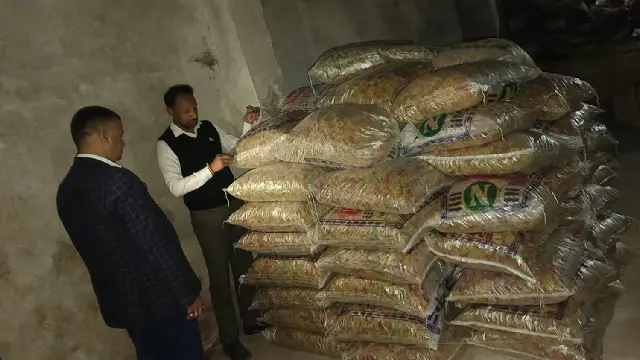
Kanpur: The Uttar Pradesh Food Safety and Drug Administration (UPFSDA), in collaboration with the Food Safety and Standards Authority of India (FSSAI), launched an intensive crackdown on food adulteration in Kanpur, resulting seizing of more than 13 thousand litres of adulterated oil and over 1,000 KG of coloured waste.
The operation resulted in the seizure of 13,972 litres of adulterated oil and 1,350 kg of coloured waste. Additionally, officials raided a fake ghee manufacturing unit in Kalyanpur, and goods valued at ₹5.45 lakh were seized. All seized samples have been sent to a laboratory for further analysis, according to an official statement.
This campaign was launched at food outlets across the city as the festival season approaches. FSDA also conducts rapid raids in Lucknow during Ramadan and Holi. The campaign includes surprise inspections of cold storage facilities and dairies. During the raid, 1,320 kg of dates were seized. Along with that, 1,418 kg of coloured Kachri was also seized.
“Action was taken at Swaroop Cold Storage in Aishbagh. An inspection of Himalayan Cold Storage on Ayodhya Road was also conducted, and a raid was also carried out on dairies in the Havetmau area of Rae Bareli Road, with samples also taken from sweet shops. Food items were seized from the warehouse of a businessman in Aminabad. Strict action continues against adulteration ahead of the festivals,” the statement read.
Earlier, the Food Safety and Standards Authority of India (FSSAI) launched a Comprehensive Online Training Programme on Food Safety Risk Assessment, along with a dedicated digital training portal, marking a significant milestone in strengthening India’s science-based food regulatory framework.
The training framework is aligned with international risk analysis principles while being tailored to India’s regulatory requirements, ensuring both global relevance and national applicability. As food systems grow increasingly complex due to emerging contaminants, antimicrobial resistance, technological innovations, and changing dietary patterns, building institutional capacity for risk assessment is essential to protect public health and ensure credible regulatory decision-making.
A core component of the training was Dietary Exposure Assessment, which was developed with WHO’s technical support and delivered by JECFA (Joint Food and Agriculture Organisation (FAO)/WHO Expert Committee on Food Additives), JEMRA (Joint FAO/WHO Expert Meetings on Microbiological Risk Assessment), and JMPR (Joint Meeting on Pesticide Residues) experts.
(ANI)