
Four families set an example of humanity by pledging to donate their bodies following the passing of their loved ones.
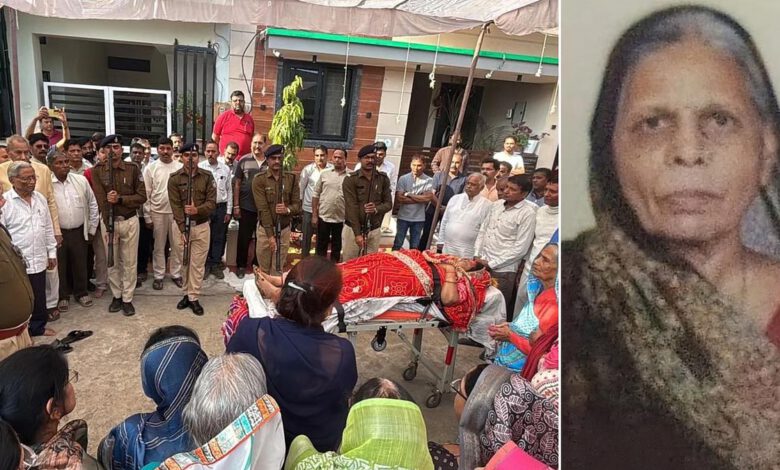
Indore: Demonstrating a spirit of humanity, social responsibility, and selfless service, the families of four deceased individuals have decided to donate their loved ones’ bodies (or organs). Amidst the profound grief of losing their dear ones, these families chose to prioritize the welfare of society—an truly inspiring initiative. In one such instance, following the passing of Ashalata Devi Kabra, a senior member of the ‘Dadhichi Mission,’ her family facilitated the donation of her eyes. Her son, Mahesh Kabra, informed the organization of her passing, after which her eyes were donated to the Eye Bank at MGM Medical College. This gesture by the family has brought hope that others in need may gain the gift of sight.
Dr. Sandipan Arya of the ‘Muskan Group’ shared that Ashalata Devi Kabra was a senior member of the Dadhichi Mission. After her passing, her son, Mahesh Kabra, reached out to the organization and assisted with the eye donation process. With the family’s consent, her eyes were donated to the Eye Bank at MGM Medical College. This decision, made during a time of deep sorrow, serves as a powerful example of social service and human compassion.
Losing a loved one is an emotionally challenging experience for any family. Choosing to donate organs or a body during such a difficult time—with the aim of bringing a positive change to the life of someone in need—reflects a profound sense of social responsibility. The initiative taken by the families of these four deceased individuals could help raise awareness about organ and body donation within society.
Eye donation is considered of immense importance in the medical field. Corneas obtained from donated eyes after death can be used for transplants in eligible patients. For those suffering from corneal blindness, eye donation offers a new ray of hope. However, the feasibility of a transplant depends on the medical evaluation of the donated tissue and the health status of the recipient.
In the case of Ashalata Devi Kabra, the timely notification provided to the organization by her son, Mahesh Kabra, was crucial to the success of the eye donation process. The process of eye donation following death must be completed within a specified medical timeframe. This requires contacting the relevant eye bank and a trained medical team. The consent and cooperation of family members play a crucial role in this entire process.
Along with eye donation, the donation of one’s entire body also holds significant importance for medical education and research. Through body donation, students in medical colleges gain the opportunity to understand the structure of the human body. Donated bodies contribute substantially to the practical training of medical students and to medical research. Consequently, the benefits of body donation can eventually reach many people in society through future medical services.
Eye donation and whole-body donation are distinct processes. The primary objective of eye donation is to help restore vision to patients in need, whereas whole-body donation is utilized—in accordance with established regulations—for medical education and research. Both processes must adhere to the medical and legal standards set by the relevant institutions.
Social organizations play a vital role in raising awareness about eye, organ, and body donation. These organizations provide information regarding the importance of these processes, the necessary formalities, and their broader social benefits. Access to accurate information also helps in dispelling common misconceptions.
Individuals interested in donating their eyes or body should discuss their decision with their family members in advance. Information about the required procedures can be obtained by contacting the relevant medical college, eye bank, or authorized institution. This ensures that, when the time comes, family members are better prepared to carry out the decision and complete the necessary formalities.
The initiative taken by the family of Ashalata Devi Kabra serves as an example of how an individual can continue to serve society even after their passing. By choosing to donate her eyes during a time of profound grief, the family has demonstrated deep compassion for those in need. Such humanitarian initiatives can be encouraged through organizations like the Muskan Group and the Dadhichi Mission.
The decision by the families of four deceased individuals to donate their bodies serves as an inspiring message to society. It has been reported that the process for the eye donation of Ashalata Devi Kabra has been completed. Meanwhile, detailed information regarding the identities of the other three deceased individuals and the status of their body donation processes is not yet available. The initiative taken by these families stands as an example that strengthens the spirit of humanity, altruism, and social responsibility.