
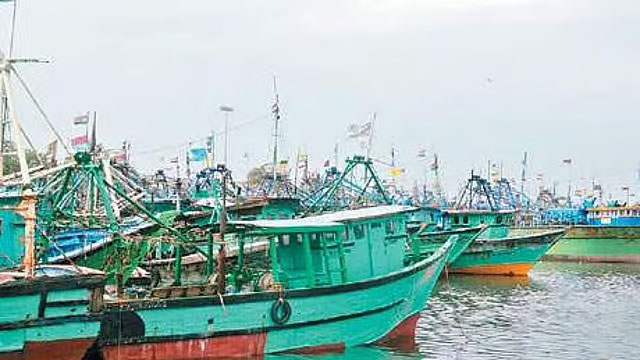
Rameswaram: Fishermen in Rameswaram, Tamil Nadu, continued their protest for the second consecutive day, demanding the release of Indian fishermen arrested by the Sri Lankan Navy. A large number of fishermen persisted with their strike, deciding not to venture out to sea, and urged the central and state governments to intervene and ensure the early release of the detained fishermen.
Fishermen’s associations have stated that their agitation will continue until all Indian fishermen held in Sri Lankan jails are safely released and their boats are returned. Due to the strike, a silence prevailed at the Rameswaram fishing harbor, with hundreds of mechanized boats remaining docked at the shore.
According to reports, over 2,500 fishermen from Rameswaram had set out to sea for fishing on the morning of last Wednesday (July 22) in mechanized boats (with approximately 400 horsepower engines) after obtaining the necessary permits from the Fisheries Department. The fishermen claim they were fishing within the designated area. During this time, the Sri Lankan Navy intercepted them, accusing them of crossing the maritime boundary to fish.
Taking action, the Sri Lankan Navy arrested nine Indian fishermen. The arrested fishermen have been identified as Malikdina (63), Gayas (31), Senthil (41), Krithisan (41), Praveen (46), Arul Loyola (43), Sabari Vinothvin (42), Devasahayam (39), and Inbest Prasad (36). Following their arrest, all the fishermen were taken to Sri Lanka, where they were sent to Vavuniya Jail after the completion of legal formalities.
During the hearing of the case, a Sri Lankan court ordered that all nine fishermen be remanded to judicial custody until August 6. Following this court decision, anxiety has mounted among the families of the fishermen and the fishing community of Rameswaram. The families state that their livelihoods depend entirely on fishing, and the imprisonment of the family’s breadwinner has deepened their financial crisis.
Fishermen participating in the strike alleged that the maritime boundary issue between India and Sri Lanka has long been a subject of dispute, leading to the periodic arrest of Indian fishermen. They explain that, driven by fish availability and traditional fishing grounds, fishermen often inadvertently drift close to the international maritime boundary. They argue that a humanitarian approach should be adopted in such cases, and the arrested fishermen should be released immediately.
Fishermen’s associations have demanded that the central government take up this issue firmly with the Sri Lankan government. They urge that a permanent solution be found through diplomatic dialogue between the two nations to prevent the recurrence of such incidents. Additionally, they have demanded the early return of the boats seized along with the fishermen, as these vessels are their primary means of livelihood.
Fishing is the main source of livelihood for thousands of families in the Rameswaram region. Consequently, the recurring arrests and seizure of boats severely impact the fishermen’s economic stability. Many families purchase boats by taking loans, and their income relies entirely on fishing activities at sea. The strike is also affecting local fish markets and associated businesses.
Locals and fishermen’s associations state that a permanent resolution to the maritime boundary dispute and issues concerning fishermen’s safety is the need of the hour. They believe that regular dialogue, clear guidelines regarding maritime boundaries, and a humanitarian approach could help reduce such incidents.
For now, the fishermen of Rameswaram remain steadfast in their demand for the safe release of their colleagues. They state that their protest will continue until all Indian fishermen currently held in Sri Lankan jails return home. The fishing community now looks forward to a positive resolution through concrete initiatives by the central and state governments, as well as diplomatic efforts between India and Sri Lanka.


