
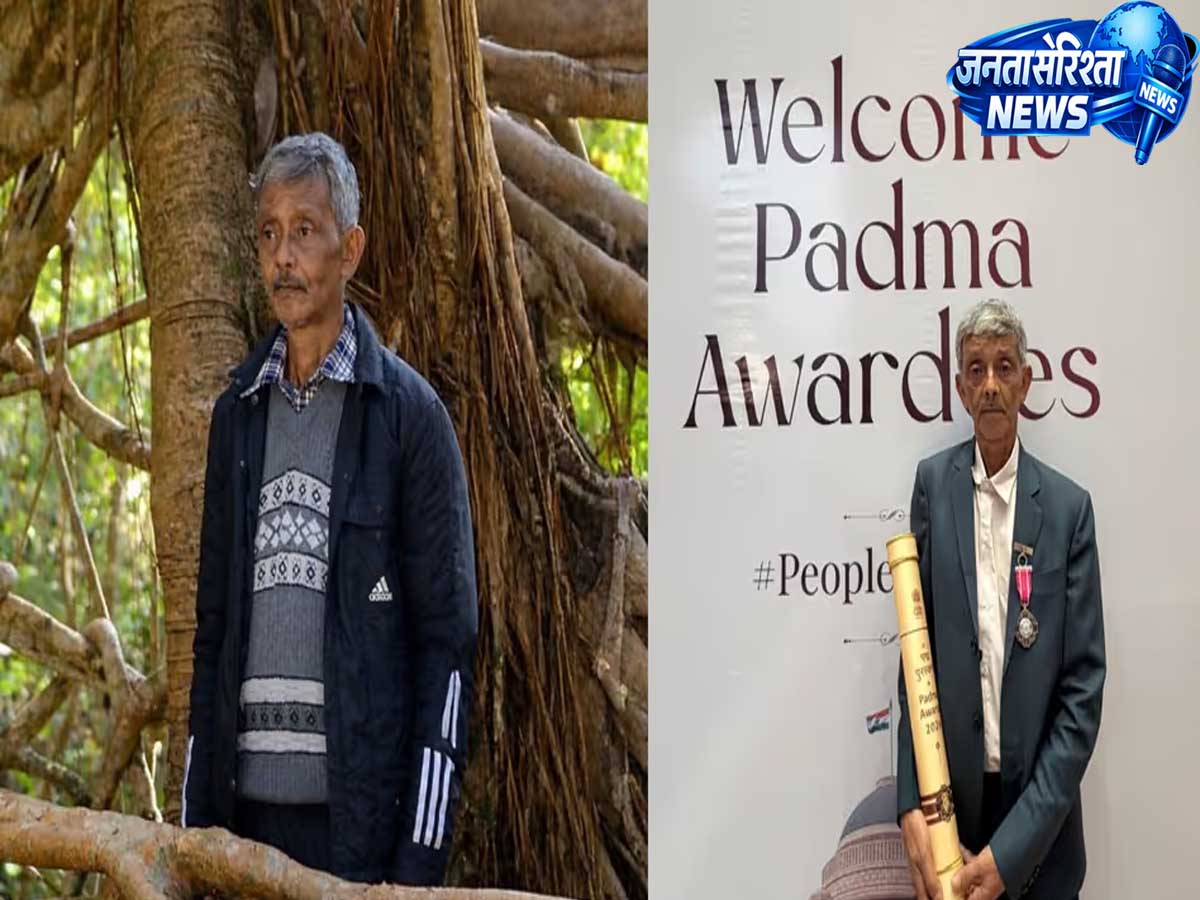
Meghalaya : Meghalaya conservationist Hally War was conferred the Padma Shri by President Droupadi Murmu on May 25, earning national recognition for his decades-long work in preserving the state’s iconic living root bridges.
Sharing the news, Meghalaya Chief Minister Conrad K Sangma said he was “honoured to witness Shri Hally War being conferred the Padma Shri” by the President. Recalling his visit to Siej village, Sangma said he was “deeply inspired by Bah Hally’s immense knowledge, quiet dedication, and profound respect for the environment”.
War, a resident of Siej village in East Khasi Hills, has spent much of his life nurturing the aerial roots of rubber fig trees to create and maintain the traditional living root bridges, locally known as Jingkieng Jri.
He began learning the practice as a child under the guidance of his grandfather. “At first, it was like a game for us children, helping the roots grow in the right direction. Later, I realised that these bridges are not just useful, they are part of who we are,” War had said.
Over the years, he has helped maintain several root bridges in and around Siej village whilst also teaching younger villagers how to protect the surrounding ecosystem. These natural structures, formed by guiding the roots of Ficus elastica trees across streams and ravines, can survive for centuries in Meghalaya’s heavy monsoon climate.
“These bridges take many years to become strong. If we do not care for them, we will lose something that cannot be replaced by concrete,” he said.
Congratulating War, Sangma said his journey showed that “true nation-building also lies in preserving our heritage, protecting nature, and passing on traditions that define who we are”. He added that the honour was “richly deserved”.
The living root bridges of Meghalaya have drawn global attention in recent years, with India submitting a nomination dossier for the Jingkieng Jri cultural landscape to UNESCO for possible World Heritage inscription during the 2026–27 evaluation cycle.


