
Dolphin, Water and Biodiversity: Schools in the Northeast win National Sustainability Awards.
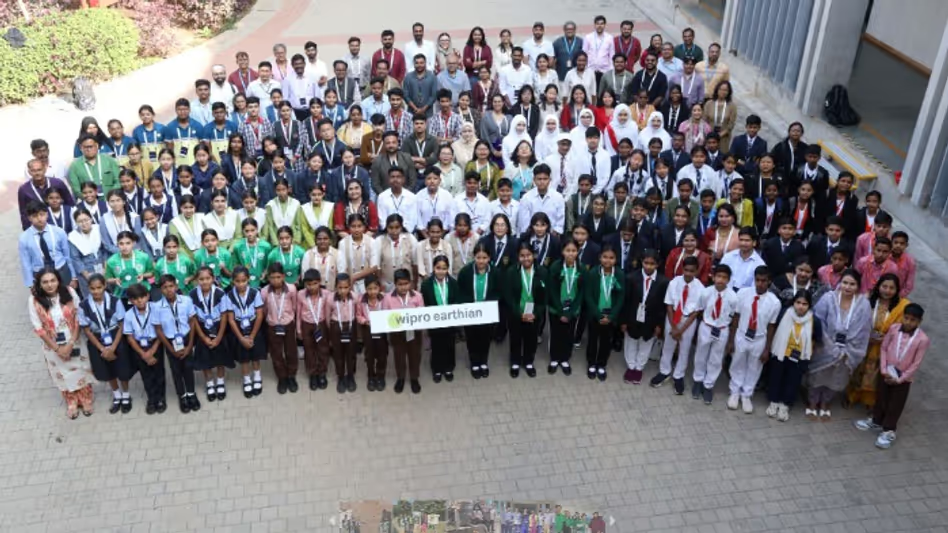
Assam: Four schools from Northeast India have been selected for the Earthian Sustainability Awards 2025. These schools worked on projects that explored local environmental challenges through hands-on research, community engagement, and the use of traditional knowledge.
The awards were presented at the 15th edition of the event held at Azim Premji University in Bengaluru. This year, the initiative received over 2,000 entries from across the country, of which 25 teams were selected by an independent jury.
According to the organizers, the shortlisted projects focused on issues related to water, waste, and biodiversity, combining field-based investigations with reflective learning. Many entries were rooted in local ecological contexts and involved direct engagement with surrounding communities.
Of the four winning schools from the Northeast, two are from Assam and one each from Arunachal Pradesh and Nagaland.
At Auniati Kamaldev Higher Secondary School in Guwahati, students investigated local water challenges by documenting traditional conservation methods and community approaches to water management. The team collaborated with IIT Guwahati to test water quality, conducted workshops on sustainable water use, and interviewed residents and elders to record traditional water conservation methods and observe the impacts of climate change on these practices. Students from North Guwahati Girls High School focused on biodiversity in their school premises and surrounding areas. Their activities included a Ganges River Dolphin conservation campaign, vulture conservation-themed art, building bird nests, and making neem soap with local self-help groups. The students also reared stingless Melipona bees on campus to study pollination. Interactions with fishermen and boatmen helped them understand community perceptions of ecosystem services. In Arunachal Pradesh, Intaya Public School in Ezengo studied the biodiversity of its school campus and the Lower Dibang Valley, analyzing how human activities affect bird diversity in different microhabitats. The project incorporated traditional ecological knowledge, including Mishmi folk tales about wildlife and a seasonal calendar developed in the Idu language, connecting biodiversity to food security, water sustainability, and cultural identity. PM Shri Government High School, Kiruphema, Nagaland, surveyed water sources on the school campus and in Peducha village, noting variations in water quality. Students interacted with local farmers to understand everyday water usage and developed 3D models demonstrating rainwater harvesting, drip irrigation systems, and basic water purification methods as part of their sustainability learning.
Representatives from the organizing foundation presented certificates and cash prizes to the winning teams. The organizers explained that the Earthian program, launched in 2011, connects schools and colleges across India through project-based learning on sustainability-related topics.