
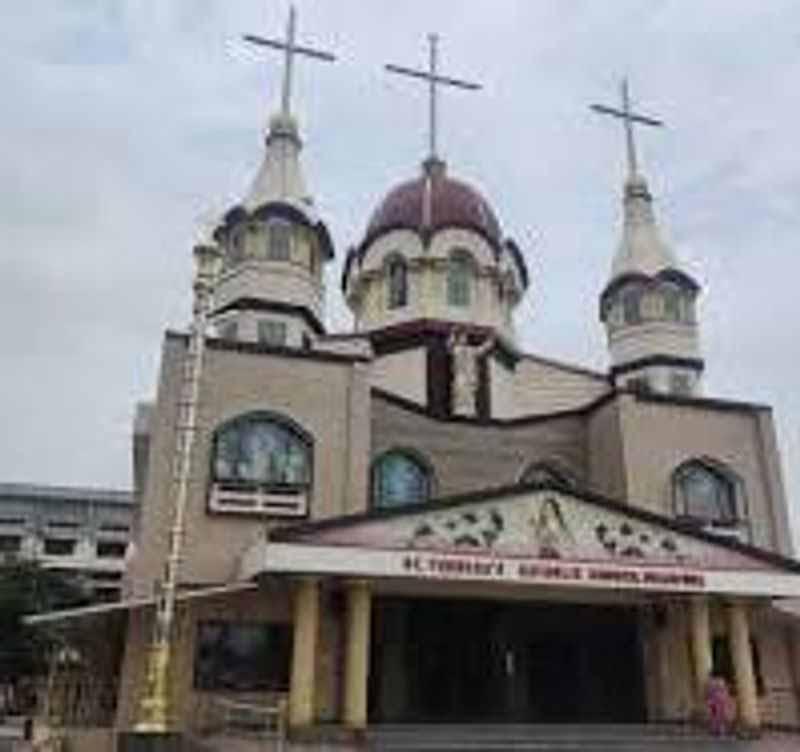
Punjab: Dhariwal Township, considered one of the most renowned towns of the British era, was designed in such a way as to reflect the power, architecture, and administrative framework of that empire. The Dhariwal Woolen Mills—over 150 years old and also known as the ‘New Egerton Woolen Mills’—stands as a prime example of British-era planning and construction. Furthermore, Dhariwal is home to several renowned churches. The town’s vibrant Christian community often views these religious sites as “hospitals for sinners, rather than museums for saints.” These churches focus primarily on two objectives: providing support to the needy and preserving their heritage.
By the mid-19th century, Dhariwal had evolved into a significant settlement. The British colonialists left an indelible mark of their grandeur, prestige, and status upon this town. The woolen mill, in particular, became an integral part of the local identity. Nearly every household in the area possesses a story connected to this mill; residents either supplied raw materials to the mill, purchased finished goods from it, or had at least one family member employed by the company. The town’s layout was distinctly different from that of neighboring towns such as Batala and Gurdaspur. Its buildings—including several hospitals—continue to bear traces of their colonial origins to this day. From the modest cottages of pre-independence government officials to the opulent bungalows of merchants and the humble dwellings of laborers—glimpses of the ‘Raj’ (British rule) are clearly visible everywhere.
Local elders recount that the British administration was particularly keen on mapping out this entire region, believing that accurate maps were essential for a comprehensive understanding of the local terrain and geographical landscape. Maps of Dhariwal and its surrounding towns were prepared to aid in governance and administration. As Dhariwal expanded, new maps were created—not only for formulating development plans but also with the specific objective of promoting trade and industry. The city is also renowned for its entire ecosystem linked to the ‘Upper Bari Doab Canal’ (UBDC). This canal divides the city into two distinct parts—’Old Dhariwal’ and ‘New Dhariwal’—and is often referred to as the city’s ‘lifeline.’
It stands as one of Punjab’s oldest and most vital irrigation systems. The UBDC canal originates at the ‘Madhopur Headworks,’ located in the neighboring district of Pathankot, where it branches off from the Ravi River. This irrigation canal supplies water to a vast expanse of agricultural land spanning the districts of Gurdaspur, Pathankot, Tarn Taran, and Amritsar; the canal’s total network extends over 3,000 kilometers. Dhariwal is the fifth-largest town in the Gurdaspur district and is administered by a Municipal Council. It has also gained renown for hosting “temporary” churches. On weekdays, certain houses function merely as private residences, but come the weekend, they are transformed into places of worship. Hundreds of Christian converts gather here to offer prayers, sing hymns, and listen to the message of the Gospel. In this town, Christian pastors claim to possess the ability to miraculously cure any ailment. These pastors, who identify themselves as “followers of God,” promise to completely eradicate even grave diseases such as cancer and AIDS. Name any illness, and the pastor claims to have a cure for it.


