
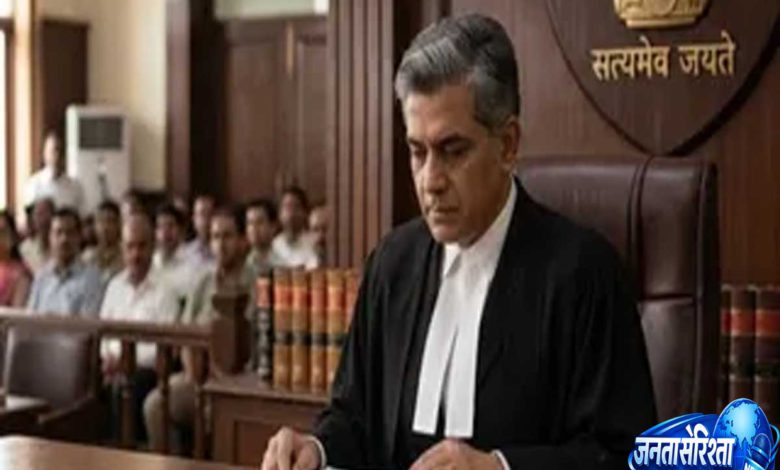
Delhi: The Central Government has moved the Supreme Court challenging the Delhi High Court’s decision which had canceled the tender process issued by the Ministry of External Affairs (MEA) for consular, passport and visa (CPV) services in four countries. The government says that due to this order, services in Indian missions have been seriously affected and millions of Indian citizens, OCI cardholders and foreign visa applicants are facing problems.
What is the whole matter?
The Delhi High Court recently quashed the tender process adopted for consular, passport and visa services in the Indian missions located in Abu Dhabi (UAE), Kuwait, Singapore and Canberra (Australia). The court said that there are serious questions related to transparency and fairness in the technical evaluation process and directed the government to issue a fresh tender (RFP).
What did the central government say in the Supreme Court?
It was argued in the Supreme Court by the Central Government that after the order of the High Court, the outsourced consular, passport and visa services in the four countries have almost come to a standstill. According to the government-
Indian missions have had to deploy their staff in emergency services.
Normal visa and passport services have been affected.
A large number of Indian citizens, OCI cardholders and foreign applicants are being affected.
Therefore, the matter requires urgent hearing and interim relief.
Which countries were affected?
The order of Delhi High Court has affected these four Indian missions—
Abu Dhabi (United Arab Emirates)
Kuwait
singapore
Canberra (Australia)
Passport, Visa, OCI, document verification and other consular services are provided through outsourced agencies at these locations.
Why did the High Court cancel the tender?
The High Court said in its decision that there was not enough transparency in the technical evaluation process. According to the court-
The basis of evaluation was not clearly recorded.
Reasons for disqualification of some bidders were not adequately explained.
The entire process does not meet the standards of fair public procurement.
For these reasons, the court canceled the tender process and directed to issue a fresh tender.
What will happen in the Supreme Court now?
On the petition of the Central Government, the Supreme Court has agreed to list the case for early hearing. Now the apex court will decide that-
Should an interim stay be imposed on the High Court order?
Should the current arrangement be continued temporarily?
Or should some alternative arrangement be made during the new tender process?
What could be the impact on Indian citizens?
If services remain disrupted for a longer period, Indians and other applicants living in the affected countries may have to—
Delay in passport renewal,
Delay in disposal of visa application,
Trouble with OCI and document verification services,
Additional time to obtain consular assistance
Such problems may have to be faced. However, the government says that Indian missions are making alternative arrangements to continue emergency services.
Foreign Ministry’s concern
The Center says a large number of Indian missions abroad conduct consular services through outsourced agencies. In such a situation, cancellation of the tender process affects not only the administrative system but also the daily needs of a large number of people.