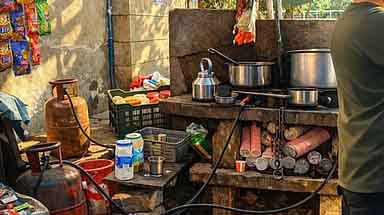
Delhi: The shortage of cooking gas cylinders in the capital has now begun to severely impact the livelihoods of street vendors. Consequently, many individuals are being forced to shut down their shops. Some have even been compelled to take on heavy debts.
Naresh Chawla, who runs a fast-food stall near PVR Saket, stated, “A small shop serves as the source of livelihood for 8 to 10 people. Four migrant workers from small villages work at my stall. To make ends meet, many shopkeepers are taking out loans. If these conditions persist, 30 percent of street vendors will lose their livelihoods. As their savings dwindle, it is becoming increasingly difficult for them to manage household expenses and care for their elderly parents.”
Vicky, who runs a food stall in Adarsh Nagar, explained, “To keep my stall running, I purchased a small cylinder for ₹4,000. The result was that when I raised the prices of food items by ₹10, customers turned away immediately without making a purchase.”
Upendra Gupta, who sells tea and samosas in Sangam Vihar, mentioned that he was able to keep his shop open only because he had purchased a small cylinder from the black market for ₹2,200. In contrast, Rafiq Ahmed, a pani-puri vendor in Northwest Delhi, was forced to close his shop due to the cylinder shortage.
Due to the long queues at LPG cylinder distribution camps and the prevailing uncertainty regarding cylinder availability, using domestic cylinders for commercial purposes in shops has become virtually impossible. Manoj, a chaat vendor in Southeast Delhi, raised the pertinent question: if he were to use his domestic cylinder for his shop, how would he manage to cook meals for his family at home? Some vendors also noted that, until the situation improves, many have been compelled to take up temporary wage-labor jobs to survive. Due to the ongoing war situation in West Asia, the Central Government has imposed certain restrictions on the supply of cooking gas cylinders. Consequently, owing to a sudden shortage of commercial gas cylinders, the entire hospitality sector—including restaurants—has been severely affected across the country.