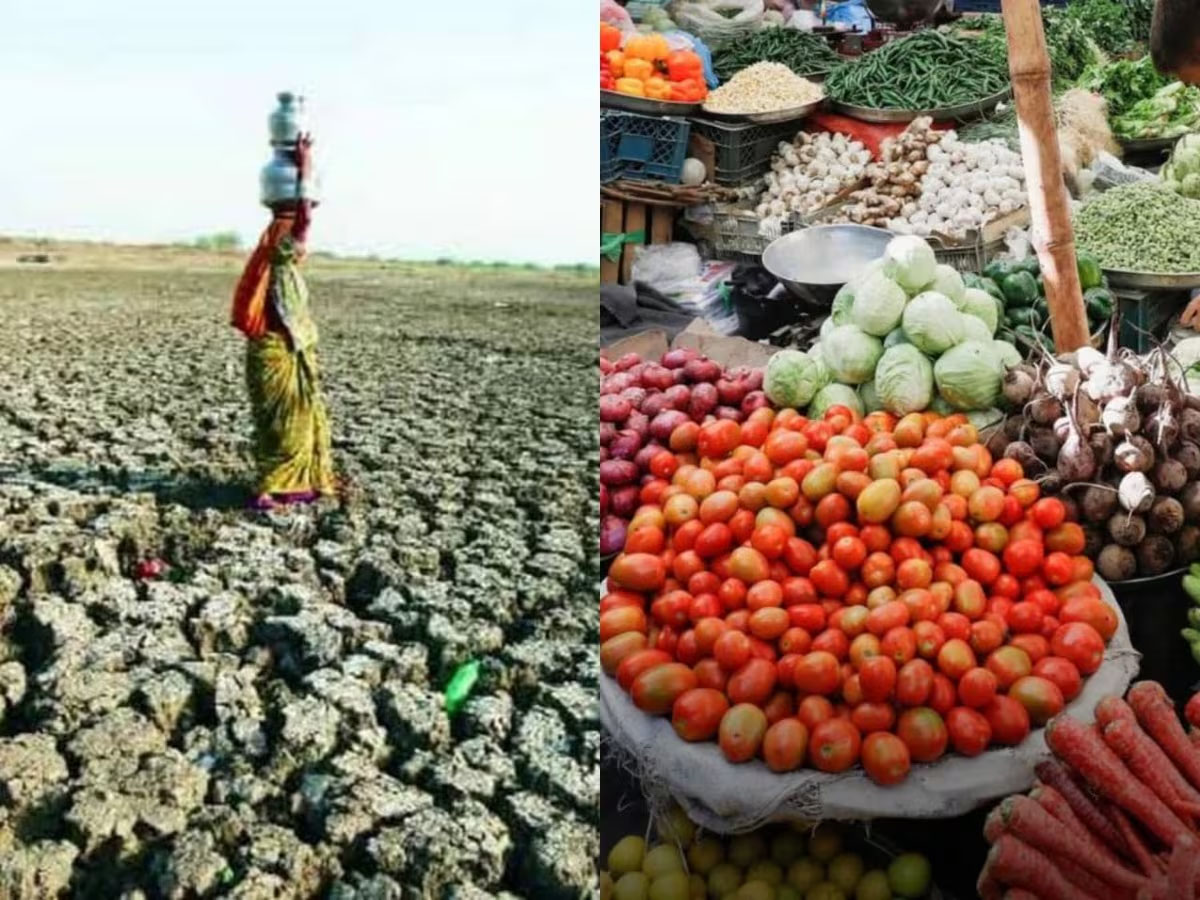
New Delhi. The impact of climate change is no longer limited to extreme weather events such as rising temperatures, drought, floods and excessive rainfall. Changing climate has also started affecting food production in many parts of the world. Its direct impact is visible on the prices of kitchen and food items of common people. Drought, record heat and extreme rainfall have affected the production of food commodities such as coffee, meat, vegetables, potatoes and seaweed, leading to sharp increases in prices in many areas.
The old cycle of weather is constantly changing due to climate change. In some areas it is not raining for a long time, while in some areas there is a sudden situation of excessive rain and floods. Record temperatures are becoming a new challenge for crops in many places. Its greatest impact is on agriculture and food production, because crop production largely depends on temperature, rainfall and available moisture in the soil.
In recent years, unusual weather-related events have been observed in many major food producing regions of the world. At some places crops were affected due to drought and at other places fields were flooded due to incessant rains. Due to extreme heat, there was a decline in both the quality and production of many crops. Reduction in production impacts availability in the market and prices start rising as supply falls short of demand.
Coffee is also included among those food items on which the impact of changing weather is clearly visible. Coffee production requires a certain temperature and rainfall. Excessive heat or less rainfall may affect production. The impact of inclement weather in key growing regions reaches the international market and could send coffee prices rising. The current strong El Nino has also increased risks in many agricultural sectors.
Extreme weather also has a direct impact on crops like vegetables and potatoes. Excessive heat can affect crop growth, while excessive rain can damage standing crops in the fields. If production decreases, supply in the local markets reduces and prices start increasing within a short time.
Climate change may also have an indirect impact on meat prices. During drought, the availability of fodder and water for animals is less. This may increase the cost of animal husbandry. Decrease in fodder production and increase in temperature also affect the health and production capacity of animals. All these factors can affect the supply and prices of meat.
Seafood production is also not untouched by the changing climate. Rising sea water temperatures and conditions such as marine heatwaves can affect fish, marine plants and algae. Changes in marine ecosystems also affect communities and industries that depend on food products from the sea.
The role of El Nino is also considered important in this entire incident. El Nino is a natural climate phenomenon associated with the Pacific Ocean, in which sea surface temperatures become warmer than normal. Due to this, the pattern of rain and temperature may change in different parts of the world. Drought may increase in some areas, while the risk of heavy rains and floods may increase in other parts.
When El Nino becomes active in an already warming world, its effects can be even more severe. Climate change is driving global temperatures higher and may combine with natural climate events to increase the risk of extreme weather. From farming point of view, this means that farmers may have to face more uncertainty of weather.
The increase in food prices impacts low and middle income families the most. Such families spend a major part of their income on food. If vegetables, grains, meat or other essential food items suddenly become expensive, the household budget is affected. People’s food preferences may also change if prices remain high for a long time.
Food inflation due to climate change is not limited to just one country. The impact of decline in production in one region due to global trade can be felt in other countries as well. If a country is a big producer or exporter of a food item and its production falls due to bad weather, then the price of that item may increase in the international market.
This further increases costs for import dependent countries. Expensive food items reach consumers after transportation, storage and energy costs are added. In this way, the impact of drought or flood in a distant country can reach the kitchens of people living thousands of kilometers away.
Experts have long stressed that it will be necessary to adapt food production to the changing climate. Steps like change in farming methods, development of crops that require less water, better irrigation system, accurate weather information and diversification of crops can help in reducing risks in future.
Overall, climate change is no longer just an environmental issue. Its impact has reached people’s everyday needs and pockets. Drought, record heat, extreme rainfall and events like El Nino are affecting food production. Decrease in production affects supply and subsequently prices increase. Inflation seen in coffee, meat, vegetables, potatoes and marine products can become a big challenge for food security and the global economy in the future.