
Chennai HC notice to Minister N. Anand and other public representatives.
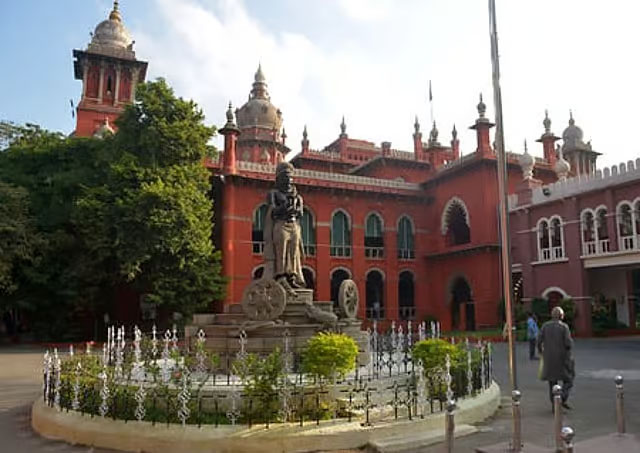
Chennai: The Madras High Court has directed Tamil Nadu government minister N. Anand, DMK MLA Manoj Pandian, and other concerned parties to file responses to election petitions challenging their elections. The Court has asked all respondents to present their side within the stipulated timeframe. Legal proceedings regarding these election matters will move forward following this High Court order.
This matter pertains to petitions challenging elections held during the Assembly polls. One of the key petitions relates to the Thyagaraya Nagar (T. Nagar) constituency in Chennai, where ‘TVK’ candidate N. Anand won the election. According to the results, he defeated his nearest rival, AIADMK candidate Sathya, by a margin of 13,207 votes.
A voter named Balasubramanya Sharma has filed an election petition in the Madras High Court challenging N. Anand’s victory. The petition seeks to set aside the election result and calls for a judicial inquiry into the legality of the election process. Citing alleged irregularities during the election and other legal grounds, the petitioner has appealed to the Court for intervention.
During the hearing, the High Court admitted the petition, deeming it worthy of consideration prima facie, and ordered the issuance of notices to the concerned parties. The Court directed Minister N. Anand to file a detailed response to the allegations raised in the petition. Instructions were also issued to other respondents to present their respective cases.
In the same vein, the Court took cognizance of election petitions filed against DMK MLA Manoj Pandian and other concerned elected representatives. Notices were issued to the respective MLAs and respondents in these cases as well, directing them to file their responses. However, the Court has not yet made any comments regarding the veracity of the allegations in any of these matters.
According to legal experts, an election petition is a significant legal mechanism within the democratic system. If a candidate, voter, or other eligible person believes that the law was violated during the election process or that the result was influenced by an irregularity, they may file an election petition in the High Court under the provisions of the Representation of the People Act.
Experts state that the admission of an election petition does not imply that the court has accepted the petitioner’s allegations as valid. At the preliminary stage, the court merely examines whether the petition is maintainable. Subsequently, the respondents file their replies, evidence is presented, and the court delivers a final verdict only after hearing arguments from both sides.
In the case of N. Anand, the petitioner contends that certain circumstances arose during the election process that warrant judicial review. However, a detailed hearing regarding the allegations raised in the petition is yet to take place. Meanwhile, the respondents will also have a full opportunity to present their side and refute the allegations before the court.
Political analysts observe that petitions challenging election results in Tamil Nadu have been filed from time to time. In many instances, courts uphold the election results following a detailed hearing, whereas in cases where serious irregularities are proven, orders for further action may be issued. Consequently, each case is decided based on its specific facts and the available evidence.
Meanwhile, political parties are also keeping a close watch on the matter. Opposition parties view these election petitions as significant from both political and legal perspectives, while the ruling party maintains that its elected representatives will present their case before the court within the framework of the law. As of now, no final judicial conclusion has been reached regarding the allegations raised by either party.
Under the legal process, the concerned minister, MLA, and other respondents are now required to file their respective replies. Subsequently, the court will consider the arguments from both sides during the next hearing. If necessary, documentary evidence, witness statements, and other records may also be presented before the court.
For the time being, the Madras High Court’s order is limited to issuing notices and seeking responses. The court has not yet set aside any election results, nor has it made any final observations regarding the election of any public representative. All eyes are now fixed on the next hearing, where the respondents will present their case before the court, after which the future course of the matter will be determined. The court’s final verdict in these election-related cases will clarify the merits of the allegations raised in the petitions and determine whether any legal action is warranted.