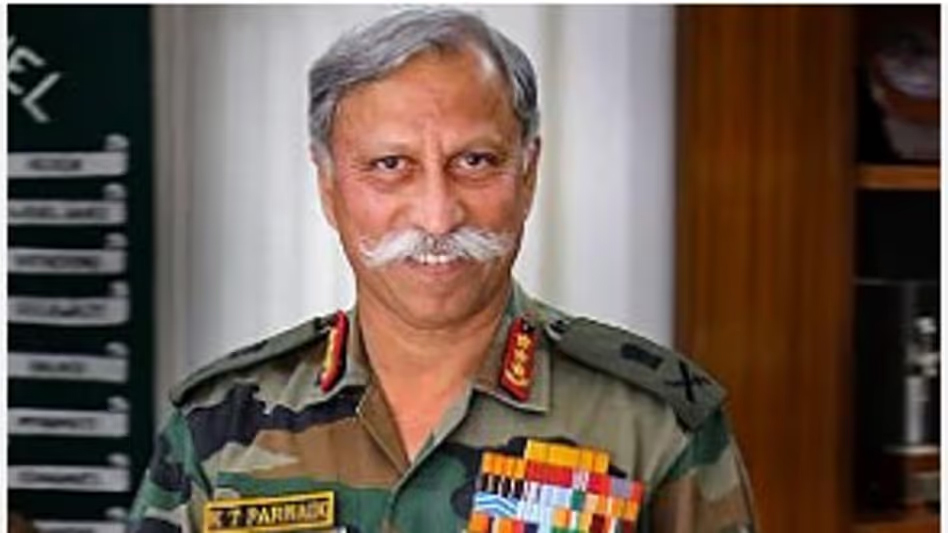
Arunachal Pradesh: On March 23, the Governor of Arunachal Pradesh, K.T. Parnaik, released a book on prison reforms in India. He stated that across the country, prisons are gradually transforming into centers of change, hope, and rehabilitation.
The book is titled Prison Reforms in India: Legal Framework, Judicial Role, and Institutional Mechanism. It has been authored by Dr. Muluvesalu Keho, who serves as the Head of the Department of Police Administration and Assistant Professor of Law at the Rashtriya Raksha University (National Defence University), located at the Pasighat Campus in the East Siang district.
The book was released during a two-day “China Seminar” held at the Likabali Military Station in the Lower Siang district.
Addressing the gathering, Governor Parnaik observed that, driven by prison reforms in India, correctional institutions are no longer merely centers for punishment; rather, they are gradually evolving into institutions focused on rehabilitation and social reintegration. He noted that the modern criminal justice system is shifting away from a “retributive” approach to embrace a “reformative” perspective—one aimed at restoring human dignity, rebuilding lives, and instilling a renewed sense of purpose in individuals.
“Our broader vision,” he stated, “is to ensure that when an inmate walks out through the prison gates, they step into a future filled with responsibility, inclusivity, and opportunity.”
Emphasizing the significance of this publication, the Governor described the book as an invaluable guide for policymakers, a practical reference for administrators and practitioners, and a vital resource for scholars in the fields of law, criminology, penology, and human rights.
He further added that the true strength of any nation lies not merely in its ability to punish wrongdoers, but in its capacity to reform individuals, steer them away from the wrong path, and successfully reintegrate them into the mainstream of society. Appreciating the author’s scholarly contribution, Parnaik stated that this book reflects his deep academic understanding of the justice system as well as his humanistic perspective. This book effectively serves to bridge the gap between academic knowledge and institutional reforms.
Book on Prison Reforms Released in Arunachal Pradesh